

The Short Answer
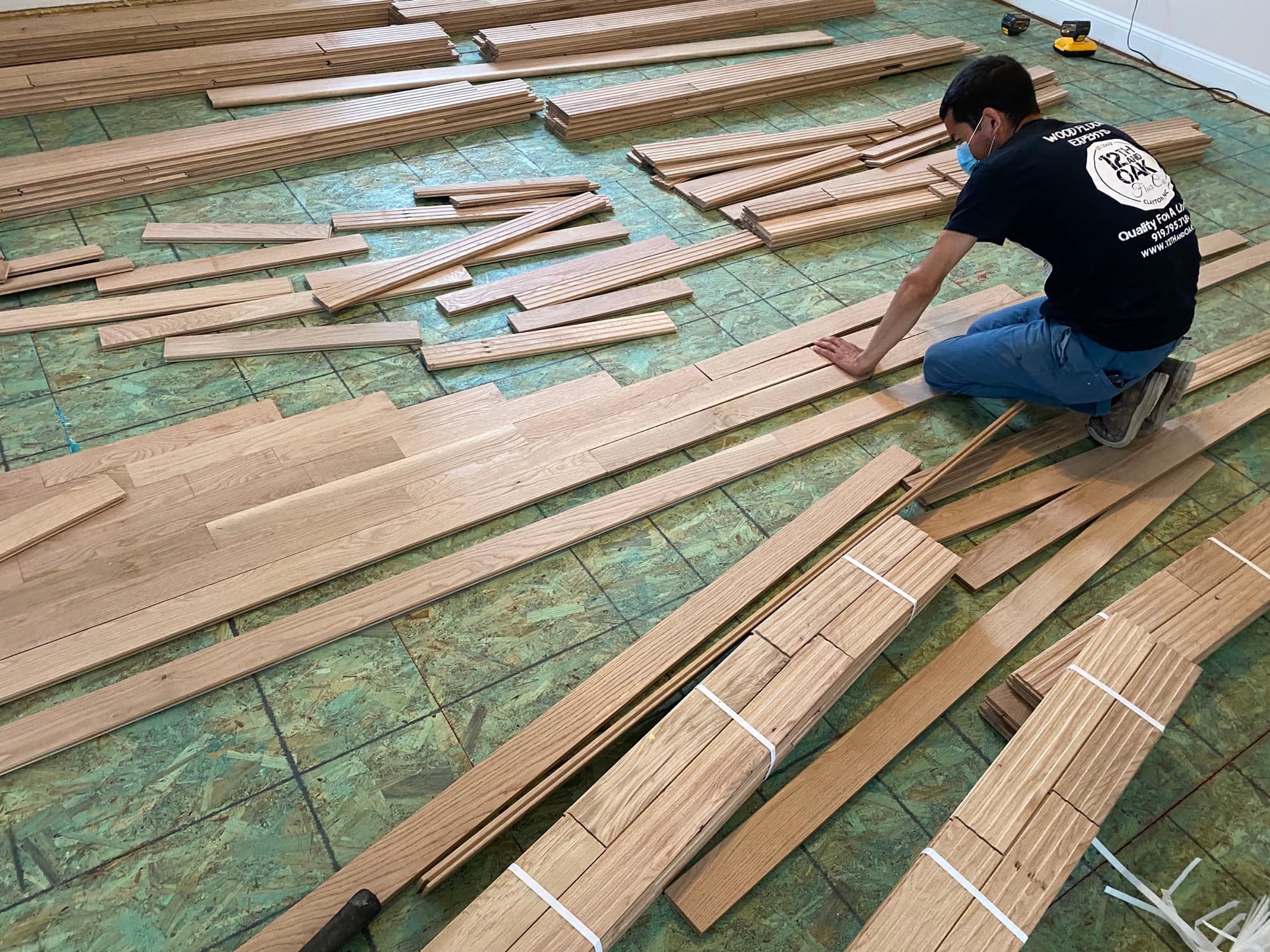
Wood takes on moisture from humid air and gives it back to dry air, and it changes size as it does. A floor installed at the wrong moisture level keeps moving after it is down: it shrinks and opens gaps, or swells and cups. So acclimation is not a time thing. It usually takes 5 to 7 days for us, but the question is never how many days the boxes have been in the house. The question is what the wood reads, what the subfloor reads, and whether the two agree. When they do, and the house is at normal living conditions, the floor is ready to go down. That is how we run every hardwood floor installation.
The Readings We Look For
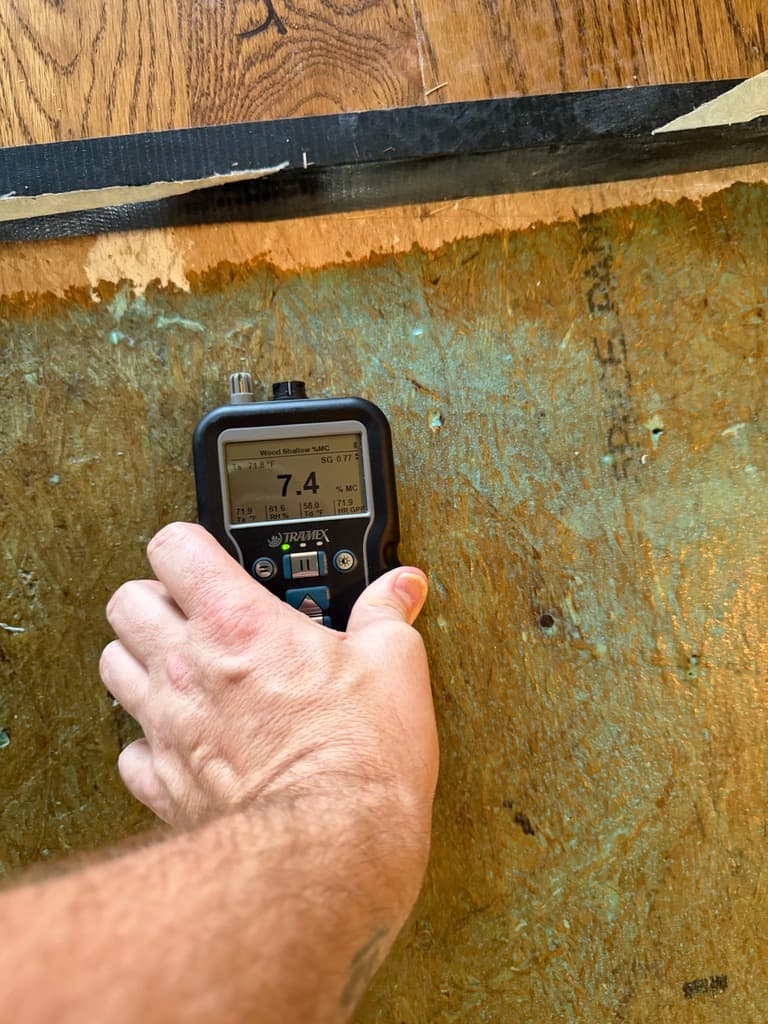
Subfloor: under 12%. In our area a dry plywood or OSB subfloor usually reads around 10%. A reading above 12% means we find out why before any wood goes over it. Common causes are a damp crawl space, a past leak, or the weather the house sat through during construction.
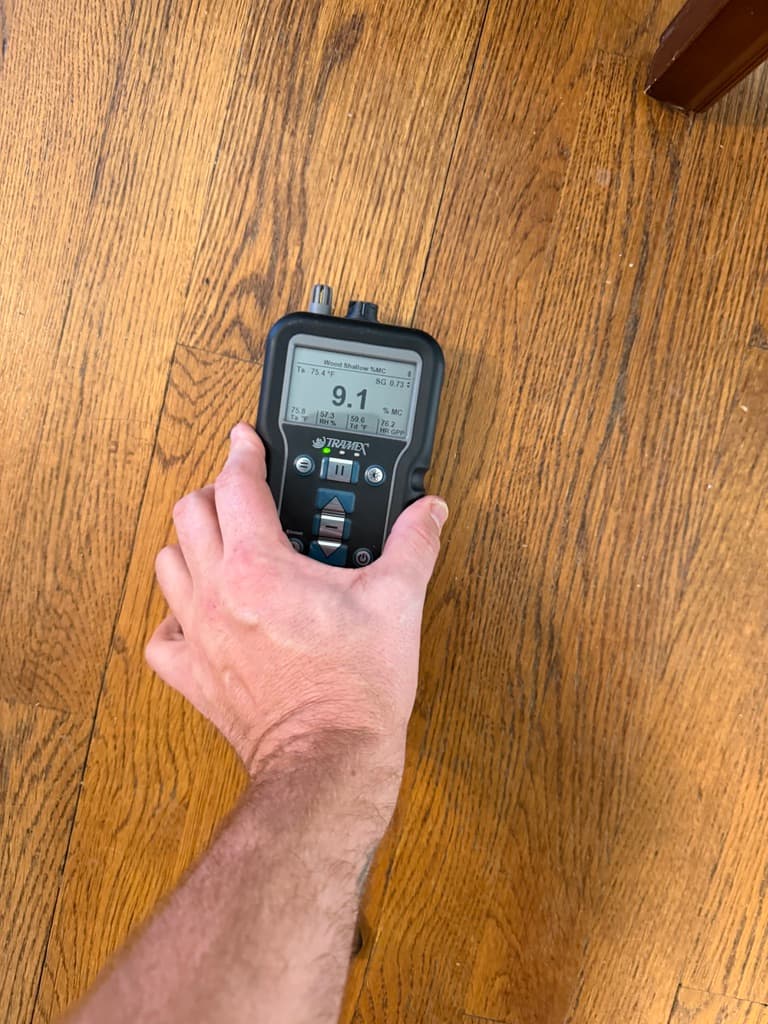
Hardwood: 8 to 10%.That is what we usually look for in a Triangle home. The right number follows the home's normal living conditions, so a house kept drier can read a little lower. New wood is not installed until it has reached equilibrium with the house and reads within tolerance of the subfloor.
The difference between them. The readings also have to be close to each other. The National Wood Flooring Association (NWFA) guideline is that the flooring and the subfloor read within 4 percentage points of each other for strip flooring, boards under 3 inches wide such as 2-1/4 inch, and within 2 percentage points for plank flooring, boards 3 inches and wider such as 3-1/4 inch and up. A wide board moves more across its width with every change in moisture, so it gets less room for error. The flooring manufacturer's installation instructions apply too, and we follow whichever is stricter.
How We Measure
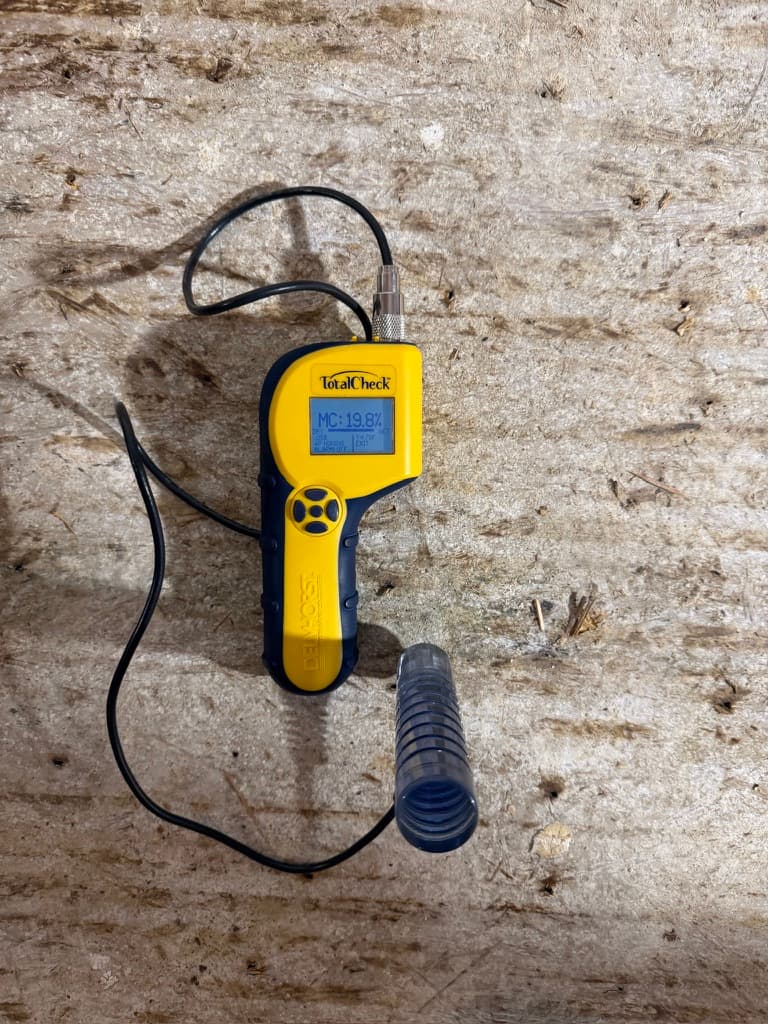
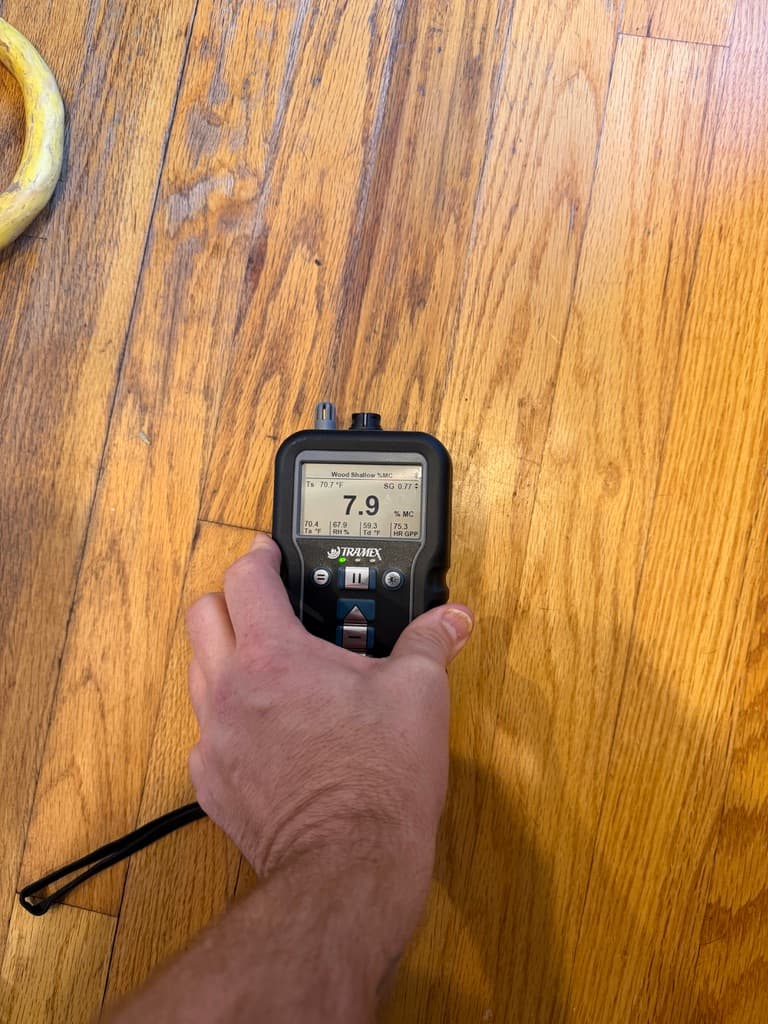
We carry two meters on every installation. The Tramex MEX5 is a pinless meter that reads through the surface without marking the wood, which lets us check a lot of boards and a lot of subfloor quickly. The Delmhorst Total Check is a pin meter that reads into the wood itself, which confirms a number when a spot looks off.
A single number on its own does not tell us much. We measure boards from different bundles, measure the subfloor in every room the floor will cover, and compare both to known dry areas of the house. If one room reads high, that room has a story, and we want to know it before the floor goes in.
The house matters too. Air temperature and humidity should be at normal living conditions, with the HVAC running the way it will run once you live on the floor. Wood measured in a house with the power off and the windows open is settling to conditions it will never see again.
When New Hardwood Ties Into an Existing Floor
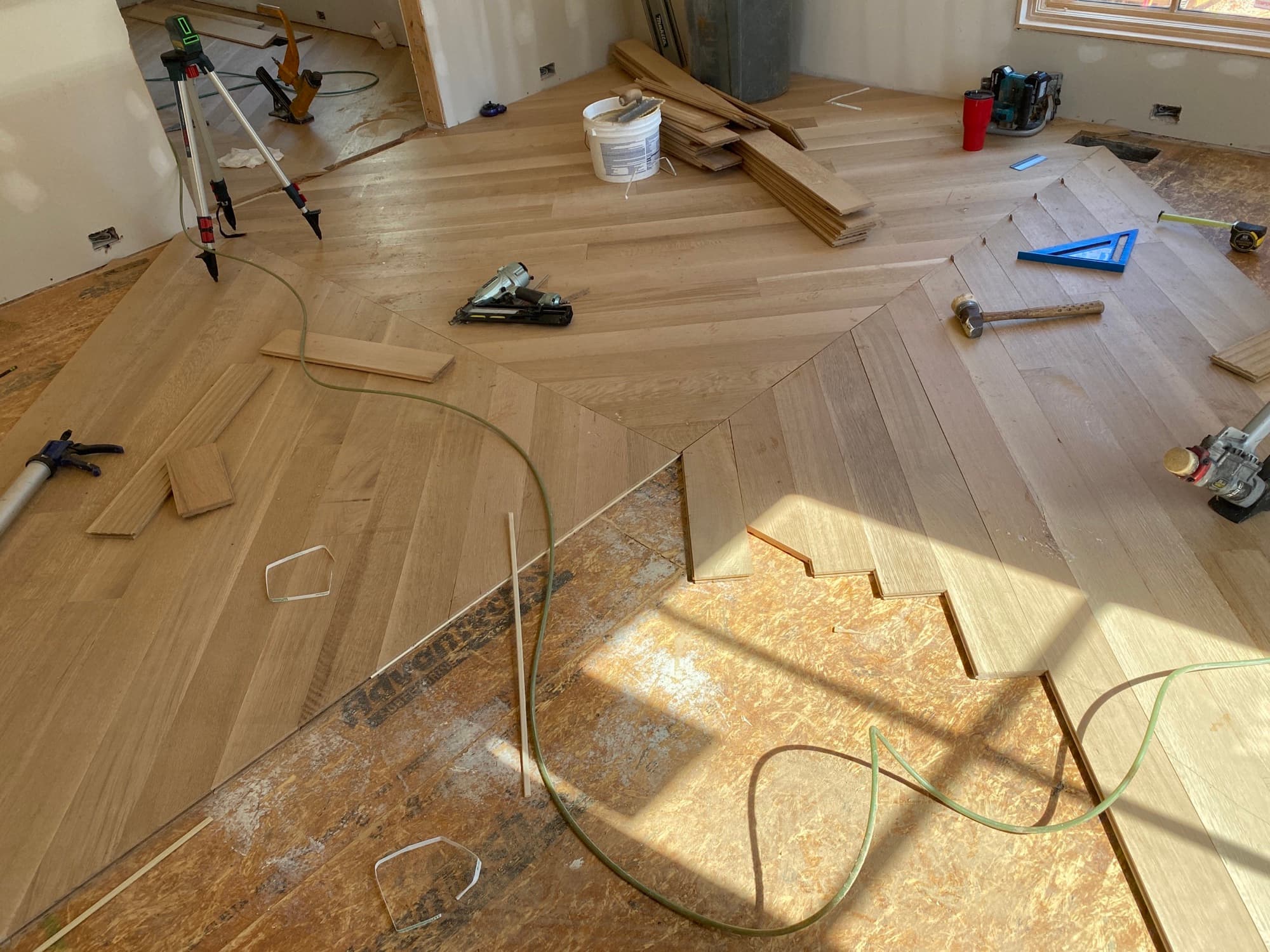
Many of our installations connect to hardwood that is already in the house: a kitchen that runs into an existing living room, an addition, or a lace-in where new boards weave into the old floor. In those jobs the target is simple. The new boards should closely match the moisture of the existing floor.
The reason is that the new wood will end up at the same moisture level as the floor around it. The existing floor has already settled to your house. If the new boards go in wetter, they dry down after they are installed, shrink, and open gaps right along the seam you wanted to disappear. If they go in drier, they take on moisture, swell, and can cup or push against the old floor. Matching the readings before installation keeps old and new moving together.
Why We Install in Two Phases
Every site-finished installation we do is split into two visits. The first is demolition and installation. The second, later, is sanding and finishing. The time between lets the new wood acclimate even further to the conditions in your home: not only to the air temperature and humidity, but to the subfloor it is now fastened to, and to the moisture level of the existing hardwood in the house.
That matters even when every reading is within the NWFA guideline. New wood can be within spec of the subfloor and still read lower than the existing floor in the house. If we sanded and finished right after installation, the new boards can keep taking on moisture as they come toward the existing floor, and that late swelling is what can cup a floor after it is finished. So before we sand, we take readings again and make sure the new wood has come up to the existing floor. Wood keeps responding to the seasons for the life of the floor; the goal is that it starts that life at the same moisture level as everything around it. There is no extra charge for the second visit. It is part of how we do the work, because we want this floor to last.
Once we return, the sand and finish runs on the same schedule as a refinish, 4 to 6 days. On a waterborne system that is one sealer coat plus two coats of finish. Each coat dries in about 4 hours, so socks are fine 4 hours after the final coat. Drying is not curing: the finish cures over 3 to 5 days, so furniture goes back on felt pads at 24 hours and rugs wait 3 to 5 days.
What Happens When the Readings Are Off
If the subfloor reads wet, we do not cover it up. We look for the source, whether that is a crawl space, a plumbing leak, or water that came in during construction, and the floor waits until the subfloor reads dry. A floor that had a leak is its own subject, and our post on a water leak under a hardwood floor covers how we dry, measure, and rebuild.
If the wood reads well outside what we expect for your home, or too far from the subfloor or the existing floor, it is not installed. It stays in the house until it is in equilibrium and within tolerance of the subfloor. For us that usually takes 5 to 7 days, but the readings decide, not the calendar. Some wood reads ready sooner and some takes longer, depending on how it was stored before it reached you and on the conditions in your home, which is exactly why we measure instead of counting days.
Board construction plays a part too. Engineered hardwood, with its cross-ply core, moves less than solid wood with the same change in moisture. Our guide to engineered vs. solid hardwood explains when that stability is worth choosing.
What It Costs
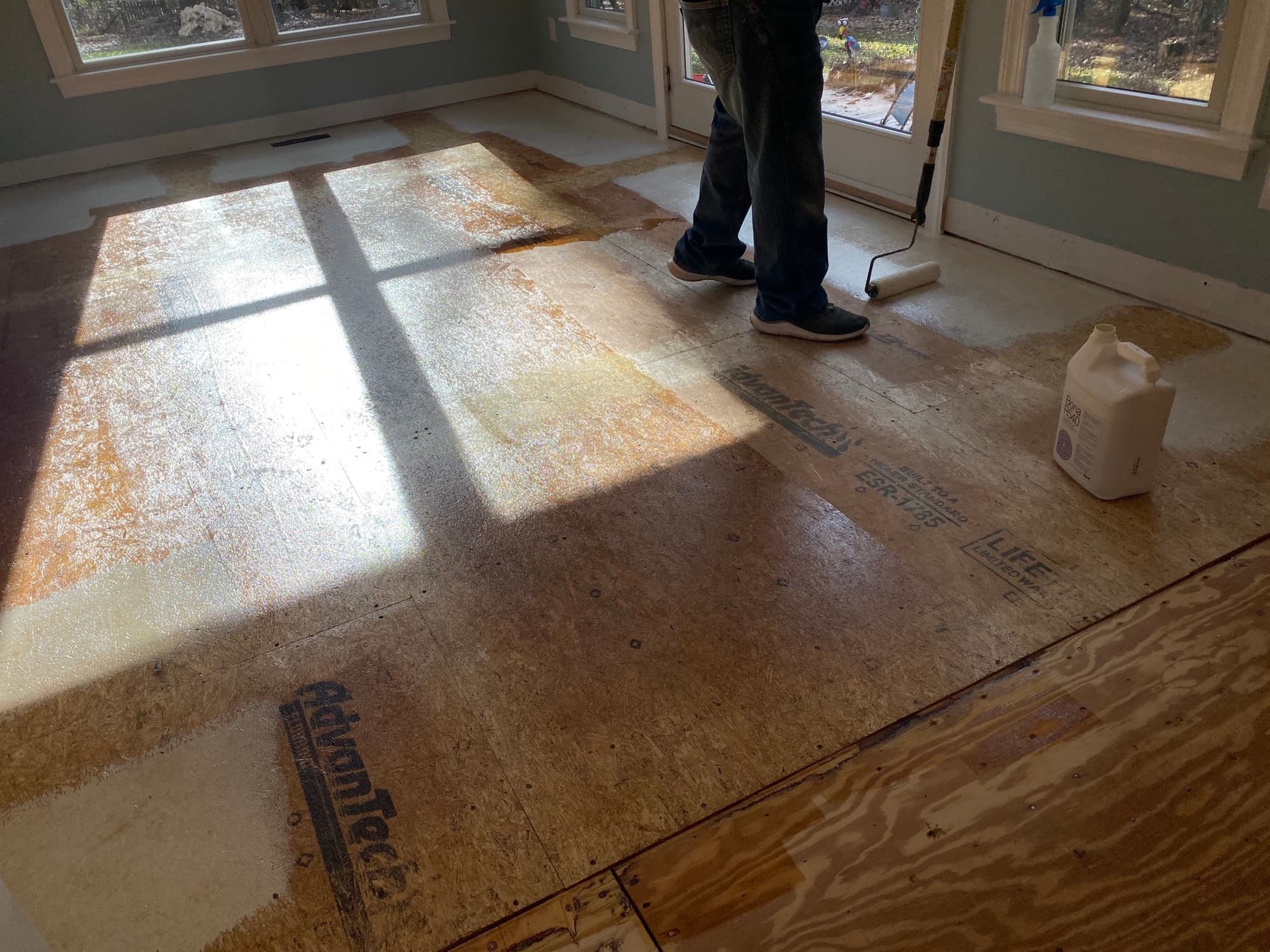
Site-finished hardwood installation runs $15 to $25 per square foot turnkey, covering material, installation, sanding and finishing, with a $1,500 minimum. It includes shoe molding and usually carpet removal, and every installation gets a roll-on liquid moisture barrier. Demolition of existing hard flooring, subfloor repairs, furniture moving and sales tax are separate. Our hardwood installation cost guide walks through what moves a job within that range.
Frequently Asked Questions
How long does hardwood flooring need to acclimate before installation?
Acclimation is not a time thing. It is decided strictly by moisture readings: we measure the new wood and the subfloor, compare them to each other and to known dry areas of the house, and install when they line up. In practice it usually takes 5 to 7 days for us, but that is what is typical, not a rule. Some deliveries read ready sooner and some need longer, depending on how the wood was stored and on the conditions in the home.
What moisture content should a subfloor be before installing hardwood?
We look for subfloor moisture under 12%, and in the Raleigh, Clayton and Triangle area it usually reads around 10%. A subfloor reading higher than that is not ready: we find out why before any wood goes down.
What moisture content should hardwood flooring be before installation?
We usually look for the hardwood at 8 to 10% in our area; the right number follows the home's normal living conditions. Just as important is how the wood compares to the subfloor under it, and, when the new floor ties into an existing one, how it compares to that floor.
How close do the hardwood and subfloor readings need to be?
The National Wood Flooring Association (NWFA) guideline is within 4 percentage points for strip flooring, boards under 3 inches wide such as 2-1/4 inch, and within 2 percentage points for plank flooring, boards 3 inches and wider such as 3-1/4 inch and up. Wider boards move more with each change in moisture, so the allowed difference is smaller. The flooring manufacturer's instructions apply too.
Should new hardwood match the moisture of my existing floor?
Yes. When new boards tie into an existing hardwood floor, the new wood should closely match the moisture of the existing floor, because it will end up at the same moisture level as the floor around it. If it goes in wetter, it shrinks and gaps as it dries. If it goes in drier, it swells as it takes on moisture and can cup or push against the existing floor.
Why do you install and sand hardwood on separate visits?
A site-finished installation is done in two phases: demolition and installation first, then sanding and finishing later. The time between lets the new wood acclimate further to your home: the air, the subfloor it is fastened to, and the moisture level of the existing hardwood. New wood can be within the NWFA guideline and still read lower than the existing floor; sanding it right away and letting it swell afterward is what can cup a finished floor. We recheck the readings before we sand. There is no extra charge for the second visit.
What does hardwood floor installation cost in the Raleigh area?
Site-finished hardwood installation runs $15 to $25 per square foot turnkey, which covers material, installation, sanding and finishing, with a $1,500 minimum. That includes shoe molding and usually carpet removal. Demolition of existing hard flooring, subfloor repairs, furniture moving and sales tax are priced separately. Your written proposal confirms the price for your home.
Planning new hardwood and wondering when it can go in? Request a free estimate. Send us photos and a few details for a free preliminary estimate. When we come out, we measure the subfloor and any existing floor the new wood will meet, so the plan starts from real readings.
Crawl space homes, slab homes and new construction all read differently across the Triangle, so we measure every house before the wood goes down. We handle hardwood floor installation across the Triangle, including Raleigh, Clayton, and Garner. Request a free estimate: send a few photos and project details for a free preliminary estimate, and if your floor needs an on-site assessment, we explain it and any assessment fee before scheduling.