
Owner · Bona Certified Craftsman · NWFA Member
Every homeowner shopping for hardwood floor installation in the Triangle eventually hits this question. Engineered and solid hardwood look nearly identical once installed, but they behave differently under North Carolina conditions, install differently depending on your subfloor, and age differently over time. This guide covers what actually matters for homes in Raleigh, Clayton, Cary, Wake Forest, and surrounding areas.
What Each Product Actually Is
The names sound like one is a lesser version of the other. That is not accurate. They are different products built for different situations.
Solid hardwood
A solid hardwood board is milled from a single piece of wood, top to bottom. Standard thickness is three-quarters of an inch. Because it is one continuous piece, it expands and contracts as a unit in response to humidity changes. Solid hardwood can be sanded and refinished many times over its lifespan, which is why properly maintained solid floors in older homes throughout Raleigh and Clayton are still in service after 50 or 60 years. The limitation is where it can be installed: solid hardwood requires a wood subfloor above grade. It cannot go over concrete and is not suitable for below-grade spaces.
Engineered hardwood
Engineered hardwood is a real wood product. It is not laminate. The wear surface is a genuine hardwood veneer, anywhere from 1mm to 6mm thick depending on the product. That veneer is bonded to a plywood or high-density fiberboard core with alternating grain directions in each layer. Those cross-ply layers are what makes engineered hardwood dimensionally stable: each layer resists the expansion and contraction of the layers above and below it, so the floor moves much less with humidity changes than solid wood does. Engineered hardwood can be installed over concrete, on slab foundations, over radiant heat systems, and in spaces where solid hardwood would fail.
Why Humidity Makes This Decision for Most NC Homeowners
North Carolina is a humid climate. The Triangle area regularly sees relative humidity above 60 percent in summer and can drop below 35 percent in winter when HVAC systems run continuously. That swing is significant for hardwood floors.
Solid hardwood expands when humidity rises and contracts when it drops. In a well-controlled home with consistent HVAC, a properly acclimated solid floor handles this movement without visible problems. In homes with crawl spaces, fluctuating thermostat habits, or seasonal humidity spikes, solid hardwood can cup in summer and gap in winter, and a floor that keeps moving is a floor that starts to squeak. We see this regularly on jobs throughout Raleigh, Cary, and Wake Forest where older solid floors were installed without adequate subfloor moisture barriers.
Engineered hardwood tolerates the NC humidity range significantly better. The cross-ply core resists movement in both directions, which means less gapping, less cupping, and fewer calls to us for hardwood floor repair related to moisture movement. For new installations, especially in homes without a dehumidifier system or in areas with crawl space moisture history, engineered is often the more practical choice.
Where Each Can Be Installed
| Installation Type | Engineered | Solid |
|---|---|---|
| Wood subfloor above grade | Yes | Yes |
| Concrete slab (glue-down) | Yes | No |
| Below grade / basement | Yes (with moisture control) | No |
| Over radiant heat | Yes (species dependent) | Not recommended |
| Floating installation | Yes | No |
Many Triangle-area homes, particularly newer construction in areas like Apex, Holly Springs, and Fuquay-Varina, are built on slab foundations. For those homes, engineered hardwood is the only real hardwood option.
Refinishing Lifespan
This is where solid hardwood has a genuine advantage, though it matters less in practice than most people assume.
A three-quarter inch solid hardwood floor can be sanded and refinished six to ten times over its lifespan when each sanding is kept light, and more on a floor that is maintained between sandings. That is multiple generations of use. Engineered hardwood with a 2mm veneer can be refinished one to three times depending on texture and bevels, a 3mm to 4mm veneer three to seven, and a 6mm veneer, sanded conservatively, about as many times as solid. Most homeowners refinish their floors once every 10 to 15 years, so even a mid-thickness wear layer gives decades of refinishing potential before the veneer is exhausted.
If you are planning to be in the home for 20 or 30 years and want maximum refinishing flexibility, solid hardwood on an appropriate subfloor is the right call. If you are installing on a slab, in a space with humidity variability, or you want the security of a more stable product, engineered with a 4mm or thicker veneer gives you real refinishing options without the moisture risk. We offer hardwood floor refinishing for both solid and engineered floors throughout the Triangle.
Appearance: Can You Tell the Difference?
Once installed and finished, most people cannot. The wear surface of engineered hardwood is genuine wood with the same grain, character, and finish options as solid. You can choose the same species, the same stain colors, and apply the same finish systems.
The main visual distinction is that engineered hardwood is typically available in wider planks more easily than solid, because wider solid planks move more dramatically with humidity changes. Wide plank white oak in engineered format, which we have installed in homes throughout Raleigh, Cary, and Clayton, delivers the look of a premium installation without the moisture risk that comes with wide solid planks in a humid climate. For a closer look at how species choice affects the final result, see our white oak vs. red oak comparison.
Cost Comparison
At comparable grades, engineered and solid hardwood materials are priced similarly. Budget-grade engineered starts lower, but a mid-grade engineered white oak and a mid-grade solid red oak run close in material cost.
Where cost differences emerge is in installation method. Solid hardwood on a wood subfloor is nail-down only. Engineered over concrete is glue-down, which uses more material per job but eliminates the need for the subfloor preparation that concrete-to-solid-wood installations would require. On a like-for-like wood subfloor above grade, total installed cost between the two is generally comparable. For specific installation pricing in your area, see our cost guides for hardwood floor installation in Raleigh or use our estimate form for a quote on your specific project.
Which One Is Right for Your Home?
Choose solid hardwood if...
You have a wood subfloor above grade, your home has consistent HVAC and humidity control, you want maximum long-term refinishing potential, and you are installing in a bedroom, living room, or dining room with no moisture risk.
Choose engineered hardwood if...
You are installing over a concrete slab, in a home with humidity variability, over radiant heat, in a basement or lower-level space, or if you want wider planks without the moisture risk. Engineered is also the right call in NC crawl space homes where the subfloor vapor barrier is unknown or older.
Either works well if...
You have a wood subfloor above grade with a good vapor barrier, consistent indoor humidity between 35 and 55 percent year-round, and you are installing in a main-level living space. In that scenario the choice comes down to species, finish, and budget.
Hardwood Floor Installation Across the Triangle
12th And Oak Floor Co. installs both engineered and solid hardwood throughout the Raleigh metro. We assess subfloor conditions, perform moisture testing, and recommend the right product for your specific home and space before any work begins. Visit the page for your city for more detail:
What Engineered Actually Saves, and What You Give Up
Prefinished engineered hardwood arrives with the finish already on it, so there is no sanding and no finish system applied in your home. That step takes a real share of labor and finish material out of a solid hardwood price. Whether the whole job ends up cheaper depends entirely on the product, because engineered planks range from budget lines to premium European oak that costs more than solid.
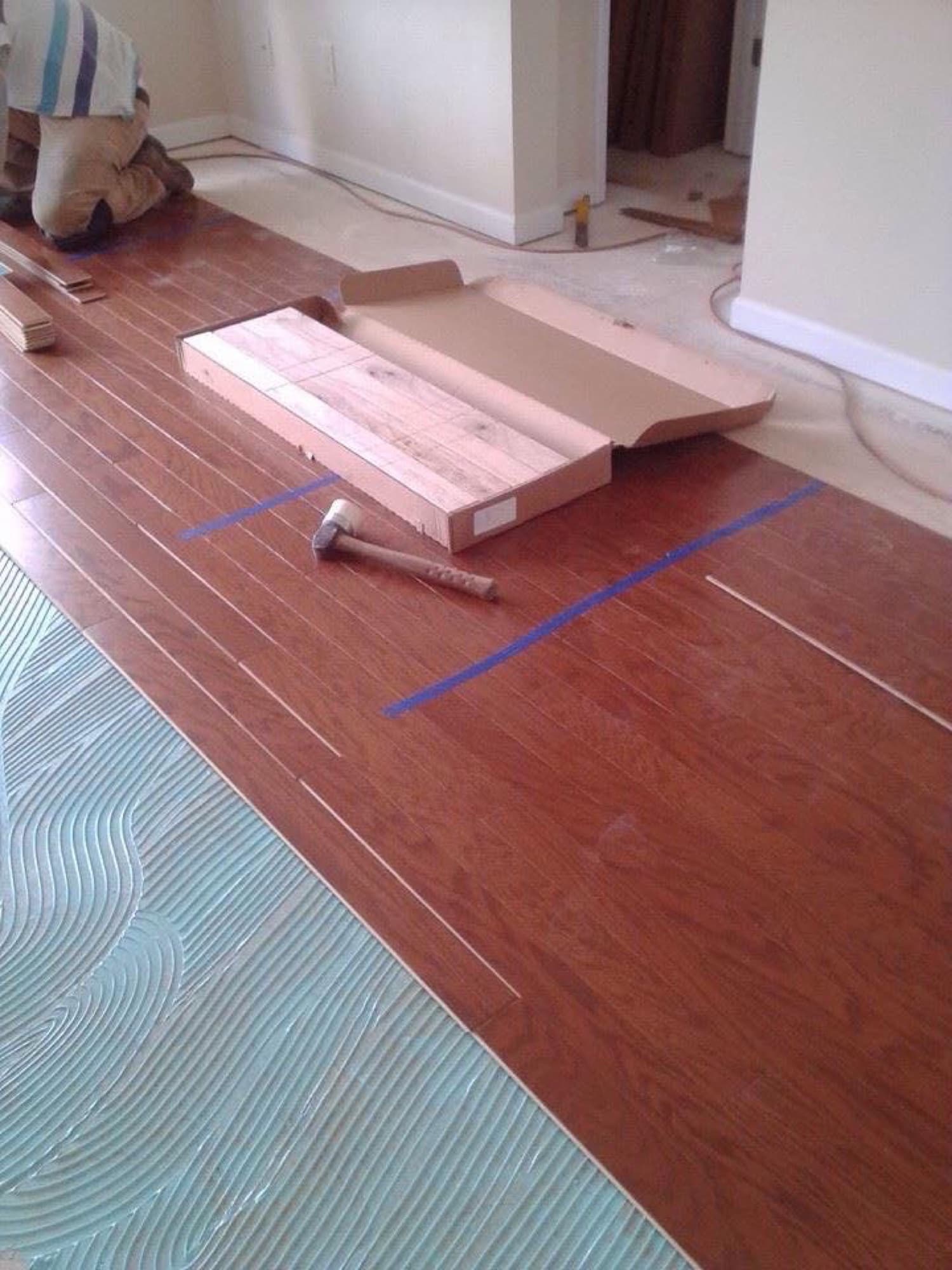
On one house we priced all three ways: a mid-range half-inch engineered line came in under #1 Common solid red oak, a budget three-eighths inch line came in further under, and a 7.5 inch European white oak engineered plank came in above the Select-grade solid floor. That is one house. Your proposal shows the comparison for yours. So engineered is a way to spend less, but only with a specific product in hand, and we will not quote it as a category.
What you give up: the choice of finish system and stain, because the finish is the factory's. Refinishing later on the thinner lines, because a two or three millimeter wear layer takes one light sanding at most. And, on the least expensive products, some of the feel underfoot that a three-quarter inch solid floor has.
Questions and Answers
Is engineered hardwood as good as solid hardwood?
For most homes in North Carolina, engineered hardwood performs as well as or better than solid in terms of stability. NC humidity swings significantly between summer and winter, and engineered hardwood handles that seasonal movement without the gapping, cupping, or crowning that solid hardwood can develop when humidity is not tightly controlled. Solid hardwood has a longer refinishing lifespan, but most homeowners never sand a floor more than once or twice, so that advantage rarely matters in practice.
Can engineered hardwood be refinished?
Yes, but the number of times depends on the veneer thickness and on how gently each sanding is done. Most engineered hardwood sold today has a 2mm to 6mm wear layer. A 2mm veneer is the thinnest we will sand, and it can take one to three light refinishes depending on texture and bevels. A 3mm to 4mm veneer can take three to seven. A 6mm veneer sanded conservatively can be refinished about as many times as a solid floor. Smooth, square-edged faces get the high end of each range; hand-scraped textures and deep bevels have to be flattened first. Always confirm the veneer thickness with your supplier before purchasing if long-term refinishing is a priority.
Which is better for NC humidity: engineered or solid hardwood?
Engineered hardwood. The Triangle area sees relative humidity swings from around 30 percent in winter to 70 percent or higher in summer. Solid hardwood expands and contracts with those changes, which causes gapping in winter and cupping or buckling in summer if the floor was not acclimated properly or if the subfloor has a moisture issue. Engineered hardwood, with its cross-ply plywood core, is dimensionally more stable and handles the humidity range common to Raleigh, Clayton, Cary, and surrounding areas with less risk.
Can you install hardwood floors over concrete in NC?
Engineered hardwood, yes. Solid hardwood, generally no. Concrete slabs are common in NC homes with crawl spaces or full basements, and they hold moisture that solid hardwood cannot tolerate long-term. Engineered hardwood can be glued directly to a concrete slab as long as moisture testing confirms the slab is within acceptable ranges. This makes engineered the right choice for basement installations and main-level slabs throughout the Triangle.
How much does engineered hardwood cost compared to solid in NC?
It depends on the product more than the category. Engineered skips the on-site sand and finish, which takes a real share of labor and finish material out of the price, but the planks themselves range from budget lines to premium European oak that costs more than solid. On one job we priced both ways, a budget and a mid-range engineered line came in under solid red oak and a premium wide European oak came in above Select solid. Whether you save depends on the product and the project, so pick a specific product and we price it against solid on the same visit.
What species of engineered hardwood works best in NC?
White oak and red oak are the most common and most practical choices for Triangle-area homes. White oak is denser, takes stain more evenly, and is widely available in engineered format. Red oak is slightly softer but stains well when water-popped before application and is typically less expensive. Hickory and maple are options for buyers who want a harder surface, though both are more challenging to stain evenly.
For installation standards, moisture testing guidelines, and species performance data, the National Wood Flooring Association publishes technical resources used by certified installers throughout the industry.
Not Sure Which Product Is Right for Your Home?
Request a Free Estimate
Izral Daniels evaluates your subfloor, tests for moisture, and recommends the right product before any work is quoted. Serving Raleigh, Clayton, Cary, Wake Forest, Garner, Apex, Knightdale, Fuquay-Varina, Holly Springs, Wendell, Zebulon, Selma, Smithfield, and Durham.
Request Free EstimateNot sure which construction your home calls for? Request a free estimate. We look at your subfloor and your rooms before recommending either one.
We install both, and the subfloor and the room usually make the decision for you. We handle hardwood floor installation across the Triangle, including Apex, Wendell, and Wake Forest. Request a free estimate and we will look at your floor in person before we talk numbers.