
What Cupping Actually Is
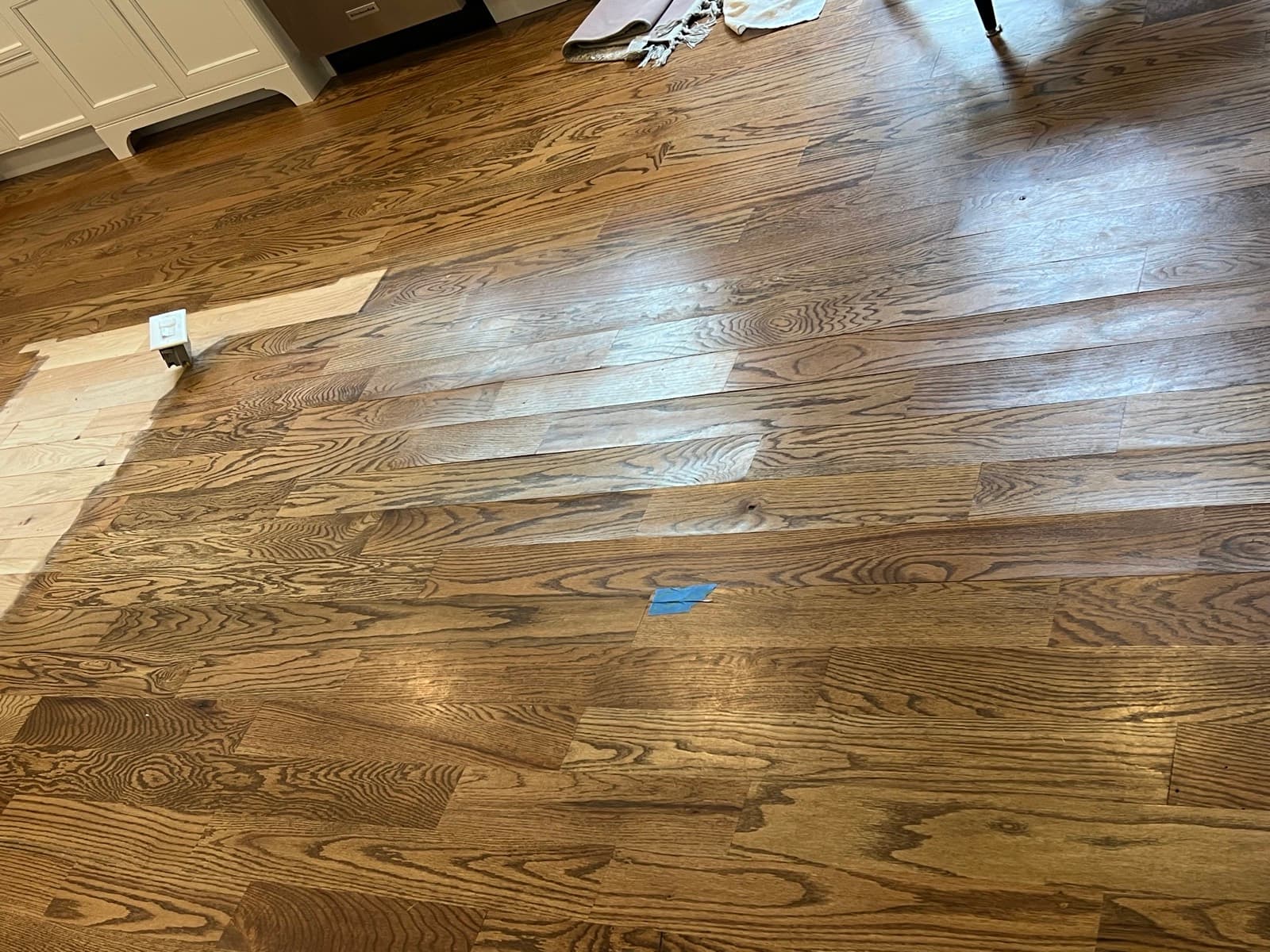
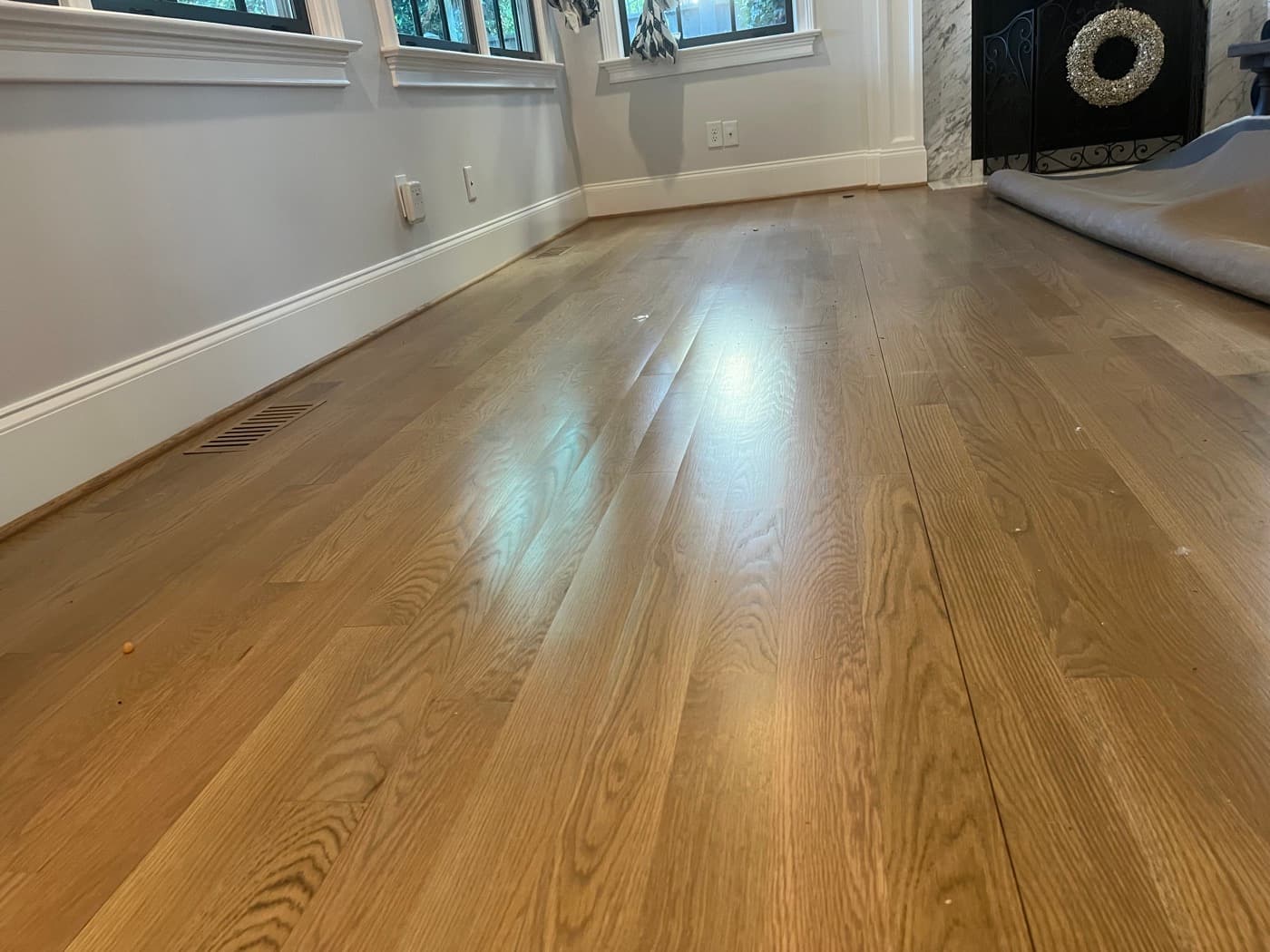
Wood moves with moisture. When the bottom of a board takes on more moisture than the top, the bottom expands while the top stays put, and the board curls upward at its edges. Multiply that across every board in a room and the floor develops a washboard texture you can feel in socks and see in raking light.
That direction matters, because it tells you where the water is. Cupping almost always means moisture from below: the underside of the flooring is wetter than the surface. The floor is not failing. It is reporting a moisture imbalance in the structure underneath it, and it will keep reporting until the source is fixed.
Why North Carolina Homes Cup So Often
The Triangle sits in a humid subtropical climate, and most homes here interact with that humidity in one of two ways. Older homes in Raleigh, Clayton, and across Johnston County typically sit over vented crawl spaces. In July and August, hot outdoor air loaded with moisture flows through those vents, hits cooler surfaces under the house, and pushes humidity into the subfloor from below. The flooring above absorbs it from the bottom up, which is the exact recipe for cupping. Crawl space moisture is the single most common repair call we run in Clayton and the eastern Triangle.
Newer construction on slab-on-grade foundations trades that problem for a different one: moisture migrating up through concrete, which is why moisture testing before installation matters so much on slabs. And every NC home rides the same seasonal swing, humid summers that push boards to expand and dry heated winters that shrink them. That is why the same floor can show cupping in August and thin gaps between boards in January. The wood is doing what wood does. Keeping indoor relative humidity between 30 and 50 percent year-round is what keeps that movement small enough not to matter.
Board width amplifies all of it. A 5 inch plank moves roughly twice as much as a 2.25 inch strip, which is why wide-plank floors show cupping sooner and why installation method matters more as planks get wider.
Step One Is Always the Same: Find the Moisture
Cupping is a symptom. Sanding it, refinishing it, or replacing boards without finding the water is treating the fever and ignoring the infection, because the new floor will cup the same way. In order of how often we find them, the sources are:
Crawl space humidity. The big one. Missing or failed vapor barriers, standing water after storms, blocked drainage, or simply an unconditioned vented crawl space doing what vented crawl spaces do in an NC summer.
Slow plumbing and appliance leaks. Dishwashers, ice maker lines, and refrigerator connections leak small amounts for months before anyone notices. Cupping concentrated in front of an appliance or around an island is a tell.
HVAC condensation and exterior drainage. Ductwork sweating under the house, gutters dumping water against the foundation, and grading that slopes toward the house all end up in the same place: under your floor.
At every repair assessment we measure, rather than guess, with a Tramex MEX5 pinless meter and a Delmhorst Total Check pin meter, reading both the flooring and the subfloor. Readings above roughly 12 percent moisture content, or a big spread between the top and bottom of the assembly, mean the floor is still wet and no repair should start yet.
The Mistake That Turns Cupping Into Crowning
Here is the most expensive wrong move in this entire subject: sanding a cupped floor while it is still wet. A sander flattens whatever is highest, and on a cupped floor that means the board edges. Sand it flat while the wood is still swollen, and the floor looks fixed. Then the moisture source dries out, the boards relax back toward their original shape, and every board is now higher in the middle than at its freshly sanded edges. That is crowning, it cannot be fixed with anything short of a second full sanding, and it is entirely preventable by waiting for the meters to say the floor is dry.
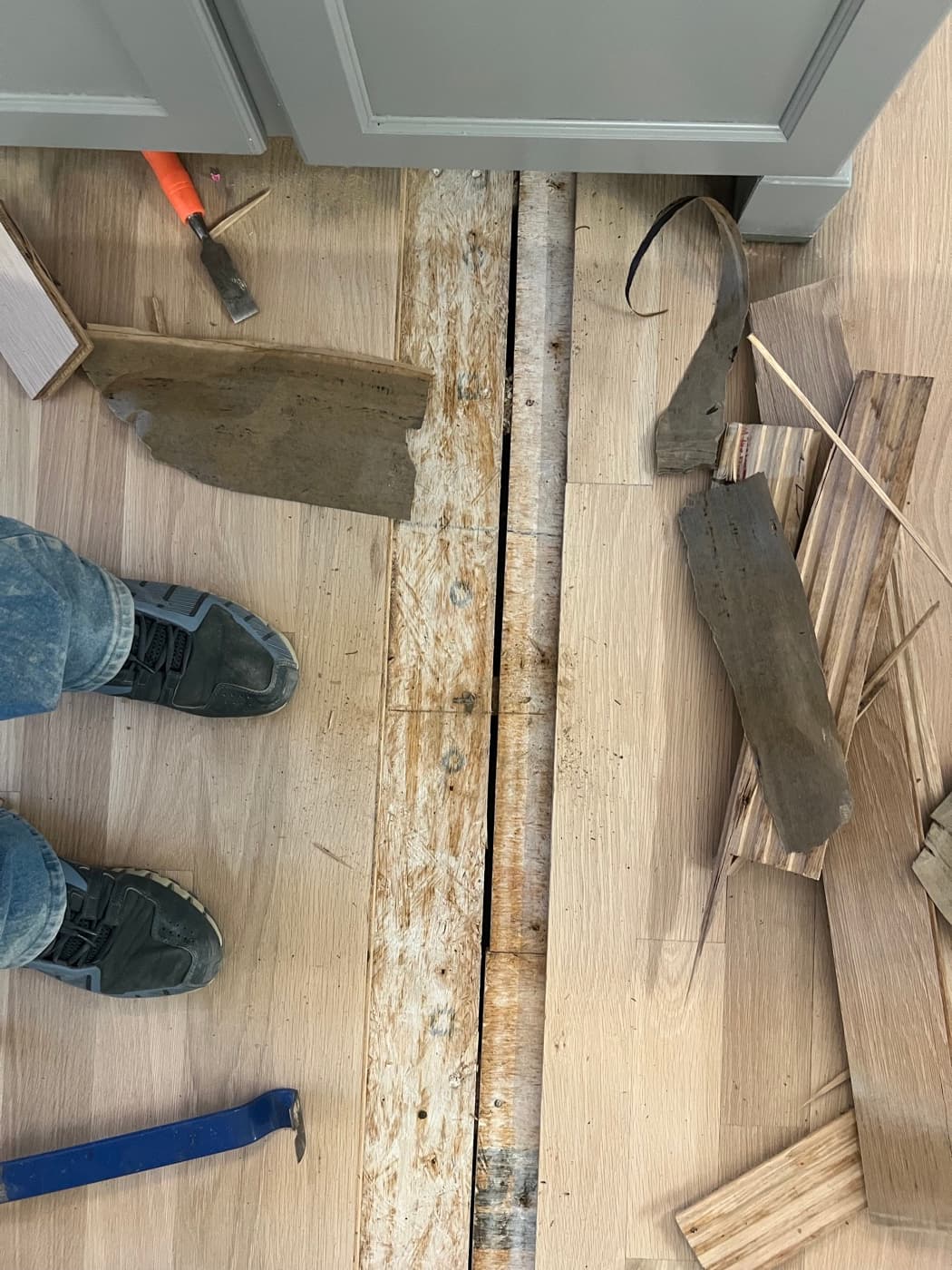
We were called into a Hayes Barton home in Raleigh after exactly this sequence: another contractor sanded white oak while it was still cupped from moisture, the boards dried and crowned, and the family lived with a washboard floor through three failed fix attempts. The rescue required replacing the water-damaged boards, then sanding the entire floor back to flat under raking LED light. The floor survived, but the homeowners paid for the same job more than once.
Will It Flatten on Its Own?
This is the question that decides everything, and the straight answer is: often yes, if you catch it early and fix the source. Wood that cupped over one humid season, or from a leak that got repaired quickly, will usually release back toward flat as its moisture content normalizes. That takes patience. Weeks at minimum, sometimes a full heating season, and a crawl space correction or dehumidifier to help it along. We would far rather tell a homeowner to wait and re-measure in six weeks than sand a floor that was about to fix itself.
Cupping that has been sitting for years is a different story. Wood held in a deformed shape long enough takes a permanent set and will not fully release even when dry. That floor needs to be sanded flat and refinished, and the only requirement is the one that never changes: bone dry first, confirmed by meters, not by eyeballs or calendars.
Repair, Refinish, or Replace
Once the source is fixed and the floor is dry, the decision tree is short. If the boards relaxed flat, you may need nothing at all, or just a recoat if the finish scuffed along the raised edges while it was cupped. If the cupping set permanently but the wood is sound, the floor gets sanded flat and refinished, typically $5.50 to $8.00 per square foot for existing hardwood. If boards buckled, stained black, or delaminated, those boards get cut out and replaced with matching wood laced into the floor, which is repair work with a $1,000 minimum, quoted after moisture testing at the in-home assessment.
And if the damage runs across whole rooms, that is the moment to zoom out and weigh the floor as a whole. Our refinishing vs. replacement guide walks through that bigger decision with costs on both sides.
Keeping It From Coming Back
Prevention is humidity control, and in North Carolina that means: keep indoor relative humidity between 30 and 50 percent year-round, run the air conditioning or a dehumidifier through the sticky months, and give the crawl space real attention, an intact vapor barrier at minimum, and dehumidification or encapsulation on homes that cup repeatedly. Fix appliance and plumbing leaks the week you find them, keep gutters moving water away from the foundation, and never wet-mop a hardwood floor. If the finish took scuffing while the floor was cupped, our deep clean, recoat, or refinish guide covers the right way to restore the surface.
For technical standards on wood flooring moisture, acclimation, and job site conditions, the National Wood Flooring Association publishes the industry guidelines certified professionals work to nationwide.
Frequently Asked Questions
Will cupped hardwood floors flatten out on their own?
Often, yes, if the moisture source is found and fixed early. Minor cupping from a humid summer or a short-lived leak can flatten back out once the wood dries to normal moisture content, and that process takes weeks, sometimes a full season, not days. The mistake is giving up on a floor too early or sanding it too early. If cupping has been sitting for a long time, the wood can take a permanent set, and at that point flattening it requires sanding once the floor is fully dry.
Can you sand cupped hardwood floors flat?
Yes, but only after the floor is dry and the moisture source is fixed. Sanding a floor while it is still cupped from moisture is one of the most expensive mistakes in this trade: the sander removes more wood from the raised edges than the centers, and when the boards later dry and relax, every board ends up crowned, higher in the middle than at the edges. Then the entire floor has to be sanded again. We confirm moisture content with a Tramex MEX5 pinless meter and a Delmhorst Total Check pin meter before any sanding begins.
What is the difference between cupping and buckling?
Cupping is a shape change within each board: the edges sit higher than the center, making the floor feel like a washboard. The boards are still attached to the subfloor. Buckling is more severe: boards lift completely off the subfloor, sometimes several inches. Cupping usually points to a slow, ongoing moisture imbalance like crawl space humidity. Buckling usually points to a significant water event like a plumbing failure, and buckled boards almost always need to be replaced.
What humidity level should I keep my house to protect hardwood floors?
Keep indoor relative humidity between 30 and 50 percent year-round. In North Carolina that usually means running air conditioning or a dehumidifier through the humid summer months and watching for over-drying from heating in winter. Wide swings between seasons are what work boards apart: gaps in winter, cupping in summer.
Does cupping mean my subfloor is damaged?
Not necessarily, but it has to be checked. Cupping means the bottom of the boards has been wetter than the top, and whatever moisture reached the flooring passed through or came from the subfloor side. On crawl space homes we check the crawl space conditions and subfloor moisture readings as part of the assessment. If the subfloor reads dry and sound, the repair is limited to the flooring. If it reads wet or shows deterioration, the source has to be corrected before any floor work makes sense.
How much does it cost to fix cupped hardwood floors?
It depends on what the moisture did. If the floor flattens on its own after the source is fixed, the cost can be zero. If the cupping has set and the floor needs to be sanded flat and refinished, refinishing existing hardwood typically runs $5.50 to $8.00 per square foot. If boards buckled or stayed damaged and need replacement, repair work carries a $1,000 minimum and is quoted at the in-home assessment after moisture testing.
Floors feeling like a washboard? Request an in-home assessment. We measure moisture in the floor and subfloor with professional meters, find the source, and tell you honestly whether your floor needs time, a repair, or nothing at all.
Cupping calls come in every summer, and most of them start with a moisture reading, not a sander. We handle hardwood floor repair across the Triangle, including Knightdale, Zebulon, and Wendell. Request a free estimate and we will look at your floor in person before we talk numbers.