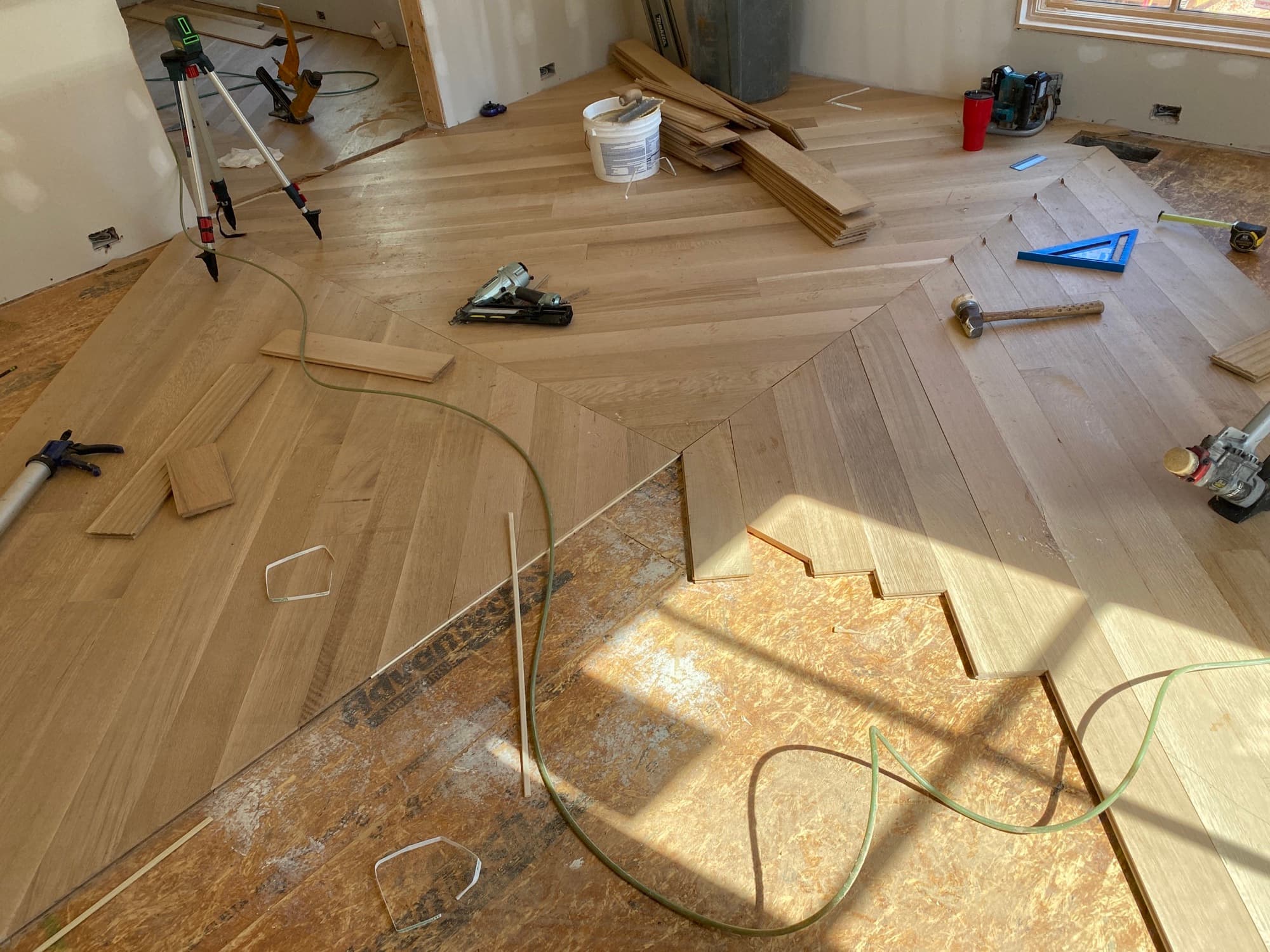

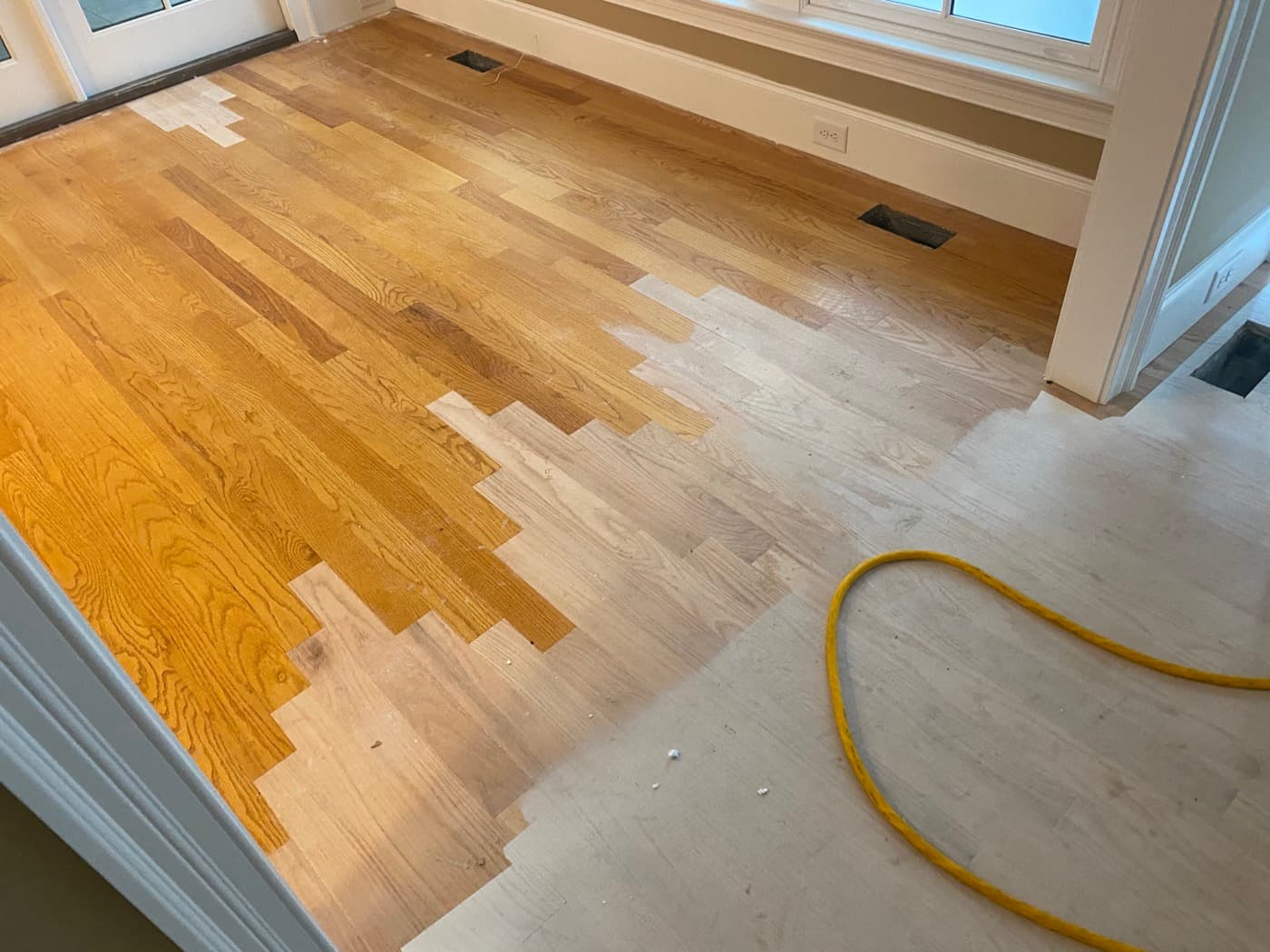
What a Lace-In Actually Is
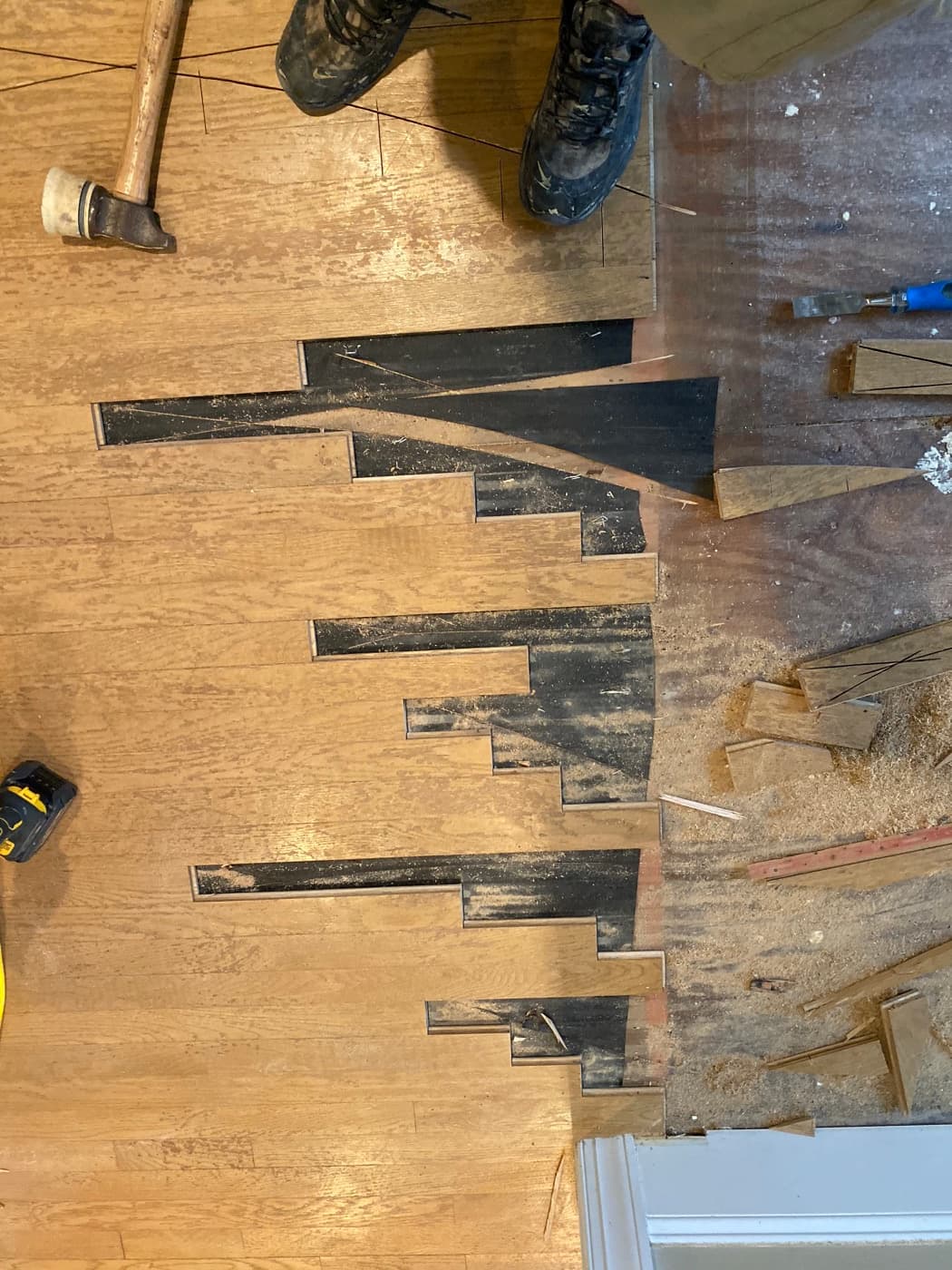
A lace-in is not a threshold or a T-molding. Those are strips that cover a seam. A lace-in removes the seam. We cut back the last few rows of the existing floor in a staggered pattern, then run new boards into those cuts so the end joints interlock the way they do everywhere else in the floor. When it is done right and the whole floor is sanded together, you cannot find where old ends and new begins.
Condition One: The Species Has to Match
This is the rule that does not bend. Red oak and white oak look similar in a photo and completely different side by side on a floor. The grain pattern, the pores, and the base color are all different, and no stain hides it. If your existing floor is red oak, the new wood is red oak, and the same is true the other way. Almost every Triangle home built before 2005 has red oak, and that is one reason red oak is often the smarter choice for an addition or a blend. Our white oak versus red oak guide shows the difference. The new boards also have to measure the same moisture as the existing floor before they go in, and our post on when hardwood is ready to install explains why.
Condition Two: The Old Floor Has to Be Solid, With Life Left in It
Solid three-quarter inch hardwood can be sanded several times over its life. If your existing floor has been refinished once or twice, it almost certainly has enough left for this. A thin engineered floor does not, and a floor that has cupped from a leak or has loose boards is a repair conversation first. When the goal is a patch after water damage, the color question is its own topic: our post on patching a water-damaged hardwood floor so it does not show compares a repair alone with a repair and full refinish.
Condition Three, and the One People Miss: Is the Old Floor Prefinished?
Most 2-1/4 inch strip flooring installed in the 1990s and 2000s came prefinished from the factory, with a small bevel along every board edge. Those bevels have to come out before old and new can read as one floor, which means a heavier first cut on the sanding. It is normal work for us, and it changes the price of that area slightly. On the Clayton job the existing foyer and dining floor was prefinished red oak, and we priced it that way.
What the Seam Costs
The lace-in itself is priced by the foot along the line where old meets new, and that line is measured on site, not guessed from a plan. On the Clayton house we estimated about 20 feet of seam between the dining room and the living room. Every foot is a few boards cut and woven, so a wide open floor plan with a long seam costs more than a doorway.
When It Is Not Worth It
If the existing floor is a different species than what you want, if it is engineered with a thin wear layer, or if it has moisture damage, replacement is the better answer and we will say so. And if you are changing widths, say 2-1/4 inch existing to 5 inch new, the blend works structurally but the width change is visible, so most people replace instead.
What It Saved on a Real House
Keeping the existing red oak meant no demolition of that area, no new wood for it, and no new moisture barrier under it. The old floor still got the full sand and finish along with the new wood. Against replacing the whole house in the same grade it came out lower, with the seam priced in. How much a lace-in saves depends on how much floor is kept and how long the seam is, so your proposal prices it both ways when it is a real option.
Frequently Asked Questions
Will you be able to see the seam?
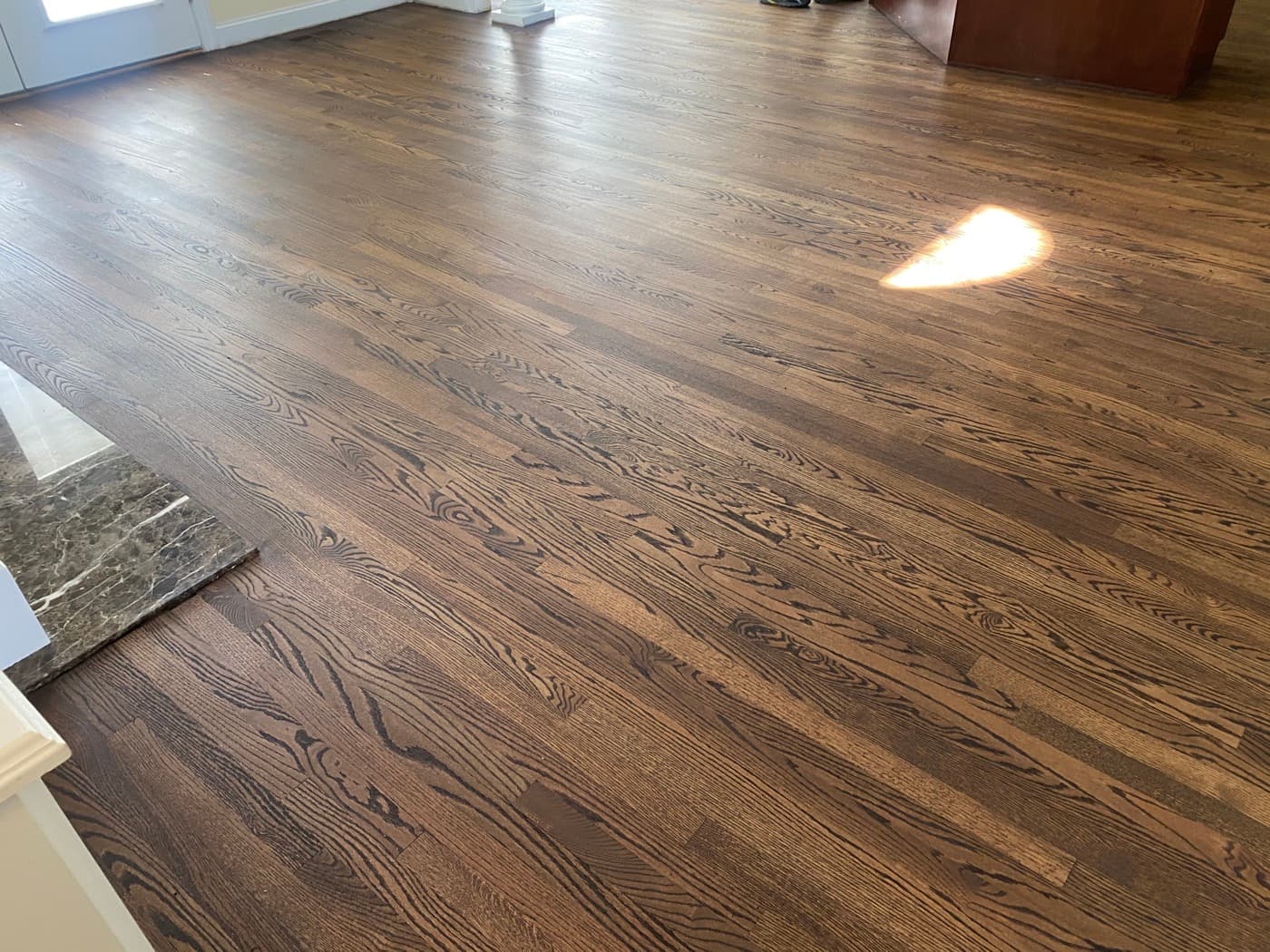
Not if the species matches and the floor is sanded and finished as one. The interlocking pattern hides the transition the same way the rest of the floor hides its end joints.
Does the old floor have to be sanded too?
Yes. The whole floor, old and new, is sanded and finished together. That is what makes it one floor. Leaving the old finish on would leave a visible line.
What if my existing floor is prefinished?
We sand the factory bevels out along with the old finish. It is a heavier first pass on that area and is priced accordingly, but the result is the same.
Can you lace new wood into an engineered floor?
Rarely. Most engineered floors have too thin a wear layer to take the sanding a blend needs. We check the product before promising anything.
Have a patch of original hardwood you would like to keep? Request a free estimate. We check the species and whether it is prefinished on the first visit and tell you honestly whether a blend works.
Blends come up on most carpet-to-hardwood jobs in older Triangle neighborhoods, where a foyer or dining room kept its original red oak. We handle hardwood floor repair across the Triangle, including Knightdale, Wendell, and Fuquay-Varina. Request a free estimate: send a few photos and project details for a free preliminary estimate, and if your floor needs an on-site assessment, we explain it and any assessment fee before scheduling.