The Short Answer
If your floors are solid hardwood and structurally sound, refinishing almost always makes more sense. It costs roughly a third to half of what replacement costs, finishes faster, skips demolition entirely, and gives you back the original wood in any color you want. Old-growth oak and heart pine in Raleigh's established neighborhoods is often denser and more stable than anything you can buy today, and refinishing is the only option that keeps it.
Replacement earns its price in a shorter list of situations: the wood itself is used up or damaged beyond repair, the subfloor underneath needs work, the floor is a thin engineered product that cannot be sanded, or you genuinely want a different floor. The rest of this article walks through how to tell which side of that line your floor is on.
The honest rule we work by: nobody should pay replacement money for a floor that a refinish would have saved, and nobody should pay refinishing money for a floor that cannot hold a finish. The assessment exists to sort that out before you spend anything.
Cost: Refinishing Wins, and It Is Not Close
In the Raleigh and Clayton market, refinishing existing hardwood typically runs $5.50 to $8.00 per square foot depending on floor condition, stain, and the finish system, with a $1,500 project minimum. Installing new hardwood runs $15 to $25 per square foot with labor and materials. Our refinishing cost breakdown covers what moves the number inside that range.
Put real square footage on it and the gap gets loud. A 1,000 square foot main level costs roughly $5,500 to $8,000 to refinish versus $15,000 to $25,000 to replace with new hardwood. Even replacing with quality LVP at $7.25 to $11 per square foot installed typically costs more than refinishing the hardwood you already own. The only time the math tightens is on small areas, where the refinishing minimum and setup costs narrow the gap.
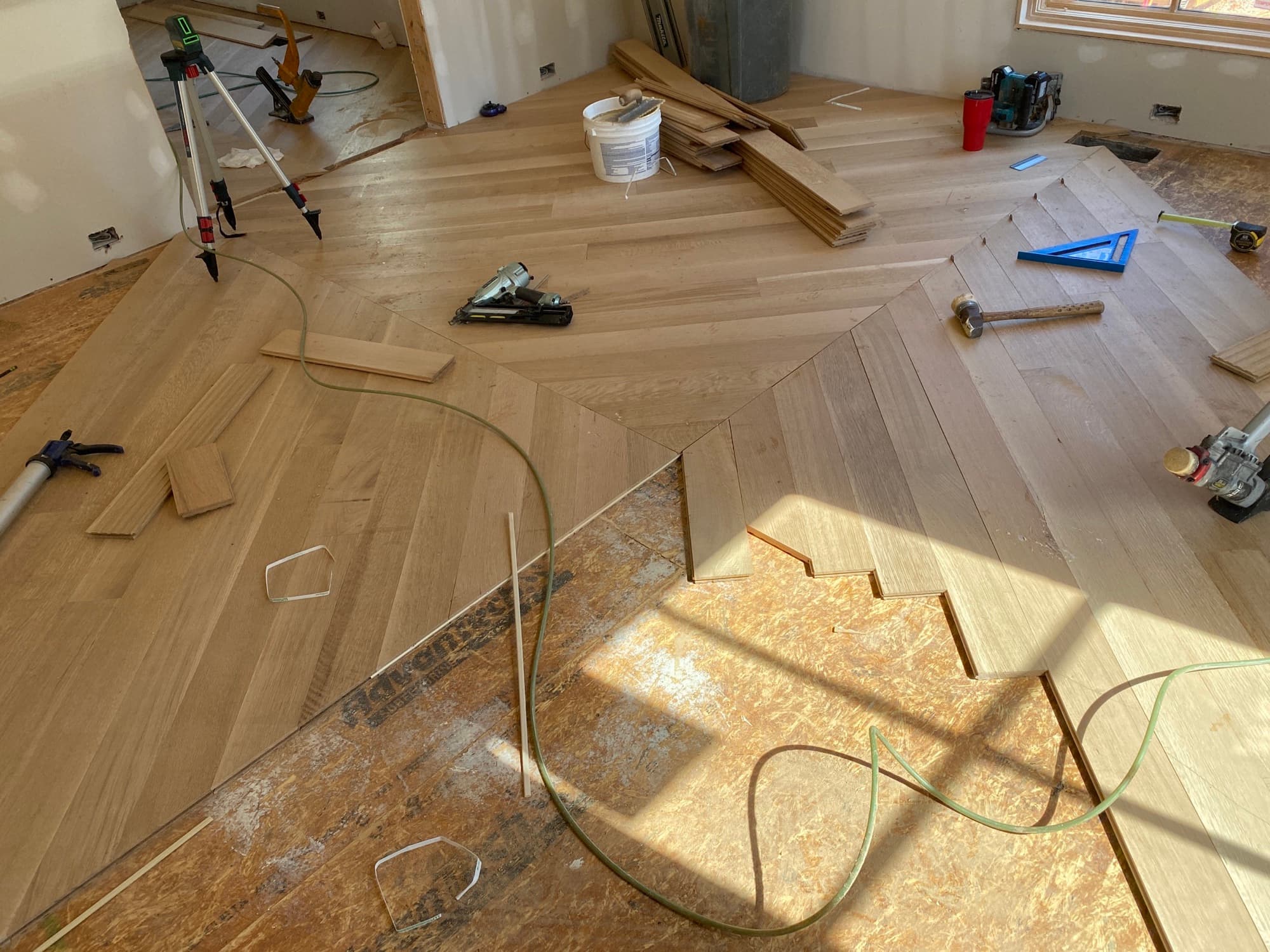
Replacement also carries disruption that refinishing never touches: subfloor prep, new shoe molding, and often door and transition adjustments because the new floor sits at a different height. Refinishing works with everything already in place.
Timeline: Days, Not Weeks
A typical refinish runs 4 to 6 days: sanding to bare wood, optional stain with water popping before color, then the finish system built up in coats. You can walk the floor in socks four hours after the last coat, and full cure runs 3 to 5 days depending on the product. Our day-by-day refinishing timeline breaks the whole schedule down.
New hardwood depends on the product. Site-finished hardwood runs 5 to 10 days, because installation is followed by sanding and finishing in place. Prefinished hardwood installs on roughly the same timeline as LVP, usually 1 to 3 days. Either way, the wood acclimates to the home before the first board goes down, and acclimation is about moisture and temperature rather than a number of days: the boards are ready when their moisture content matches the house, and we verify that with a meter instead of guessing.
Resale Value: Refinishing Is the Rare Project That Pays You Back
The National Association of Realtors Remodeling Impact Report has estimated cost recovery for hardwood floor refinishing at 147 percent of the project cost at resale, the highest of any interior project it tracked. New wood flooring was estimated at 118 percent. Both beat nearly every kitchen and bath project on the list, but refinishing gets there at a third of the spend.
The logic shows up in practice here. Listing agents in the Triangle routinely send sellers to us for a refinish before photos, because buyers walk into original hardwood in fresh condition and read the whole house as cared for. Spending $7,000 to refinish and recovering it, plus a faster sale, is a much easier decision than spending $20,000 on replacement to get a similar first impression.
When Refinishing Is Not Possible
This is the part most articles skip, and it is where our assessment earns its keep. A refinish requires enough sound wood to sand and a stable structure underneath. These are the conditions that take it off the table:
The wear layer is used up. Solid hardwood has roughly a quarter inch of usable wood above the tongue, good for six to ten refinishes over its life when each sanding is kept light. A floor that has already been sanded many times eventually runs out. The tell-tale signs: exposed nail heads, tongues visible at board edges, or boards flexing thin. Sanding a floor with nothing left destroys it. How the floor was sanded in the past matters as much as how often: our Bona PowerDrive planetary sander, owned by fewer than 2 percent of flooring contractors, removes less wood per pass than a typical drum cut, so floors we maintain keep more of their sanding life in reserve.
The floor is engineered with a thin wear layer. Engineered hardwood only offers whatever real wood sits above the core, sometimes 3mm or more, sometimes barely 1mm. Thin-wear-layer engineered floors cannot be sanded at all. We saw this on a hand-scraped engineered hickory floor in Holly Springs where refinishing was simply not an option; in that case a deep clean and polish removal brought the factory finish back without touching the wood, but had the finish itself been worn through, replacement would have been the only path.
12th And Oak Floor Co. · Field Guide
The Wear Layer
Solid Hardwood vs. Engineered Hardwood
The wear layer is the wood you see, walk on, and can refinish. It decides how many times a floor can be sanded, and how long the floor lives.
Solid Hardwood
One wood, top to bottom
The entire board is the same hardwood. Every sanding exposes a fresh surface of the same wood, all the way down to the top of the tongue.
Refinishing Potential
6 to 10 full refinishes with our process
About 1/4 inch of sandable wood above the tongue. Our planetary sanders remove less of it per pass than a typical drum cut, which is how we get 6 to 10 sandings where drum-sanded floors get far fewer. With a recoat every few years between sandings, a solid floor serves for generations.
Engineered Hardwood
Real wood face, built for stability
- 1Real wood wear layer. 1 to 3 mm on most products. The only part a sander can ever touch.
- 2Plywood core. Cross-laid plies for stability. It can never be sanded.
- 3Backing layer. Balances the board and resists moisture from below.
Refinishing Potential
It all depends on the wear layer
- 2 mm and under: 0 to 1 careful sanding
- 3 mm: 1 to 2
- 4 mm and up: 2 to 3
Counts assume a typical drum-sander cut. Our lighter planetary passes help every millimeter go further. Hand-scraped or beveled texture spends the layer faster.
The 12th And Oak Difference
More sandings. More life.
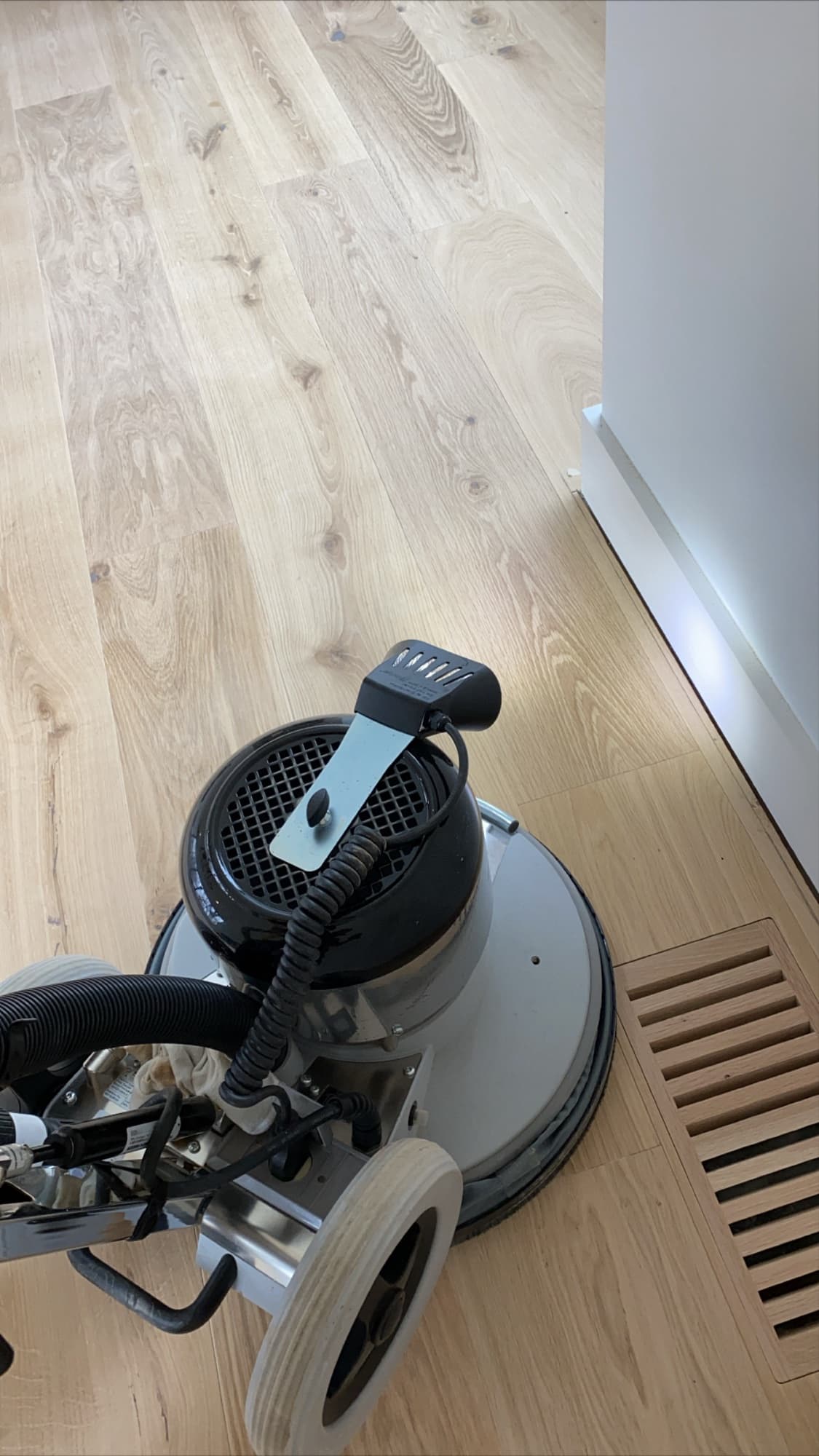
A drum sander takes a heavy cut of wear layer on every pass. Our Bona PowerDrive planetary sander, owned by fewer than 2 percent of flooring contractors, sands floors flatter while removing less wood each time. Less wood removed per sanding leaves more sandings in your floor, on solid and engineered alike.
At a Glance
- ·One board of real wood, top to bottom
- ·About 1/4 inch of sandable depth
- ·Nailed down over a wood subfloor
- ·Prefers stable, above-grade humidity
- ·Real wood face over a cross-laid plywood core
- ·Wear layer decides its future: 1 to 6 mm
- ·Stays flat over concrete slabs and humidity swings
- ·Can float, glue, or nail depending on the product
Why the Wear Layer Matters
Determines refinishing potential
Sets the floor’s lifespan
Impacts durability
Influences resale value
Pro Tip
A thicker wear layer means a longer-lived floor. We measure wear layer thickness at a floor vent or threshold before quoting any refinish, so you never pay to sand a floor that cannot take it.
Widespread water or structural damage. Localized damage is a repair: we cut out the affected boards, lace in matching wood, and refinish. But when moisture has buckled boards across whole rooms, soaked the subfloor, or left rot underneath, the floor system needs to come out so the structure can be fixed. If your floor is cupping rather than buckled, start with our guide to hardwood floor cupping in NC, because cupped floors often recover once the moisture source is corrected.
The floor was manufactured, not milled. Laminate, LVP, and prefinished products with aluminum oxide coatings and deep bevels either cannot be sanded or lose their identity when you try. And sometimes the right answer is that the floor is simply a product at the end of its life.
You want a fundamentally different floor. Refinishing can take red oak from golden to nearly any stain color, but it cannot make 2.25 inch strip oak into 7 inch European white oak planks. If the goal is a different species, width, or pattern, that is a replacement conversation, and a legitimate one.
Two Real Projects, One on Each Side of the Line
The fastest way to understand the decision is to see it made twice, in opposite directions.
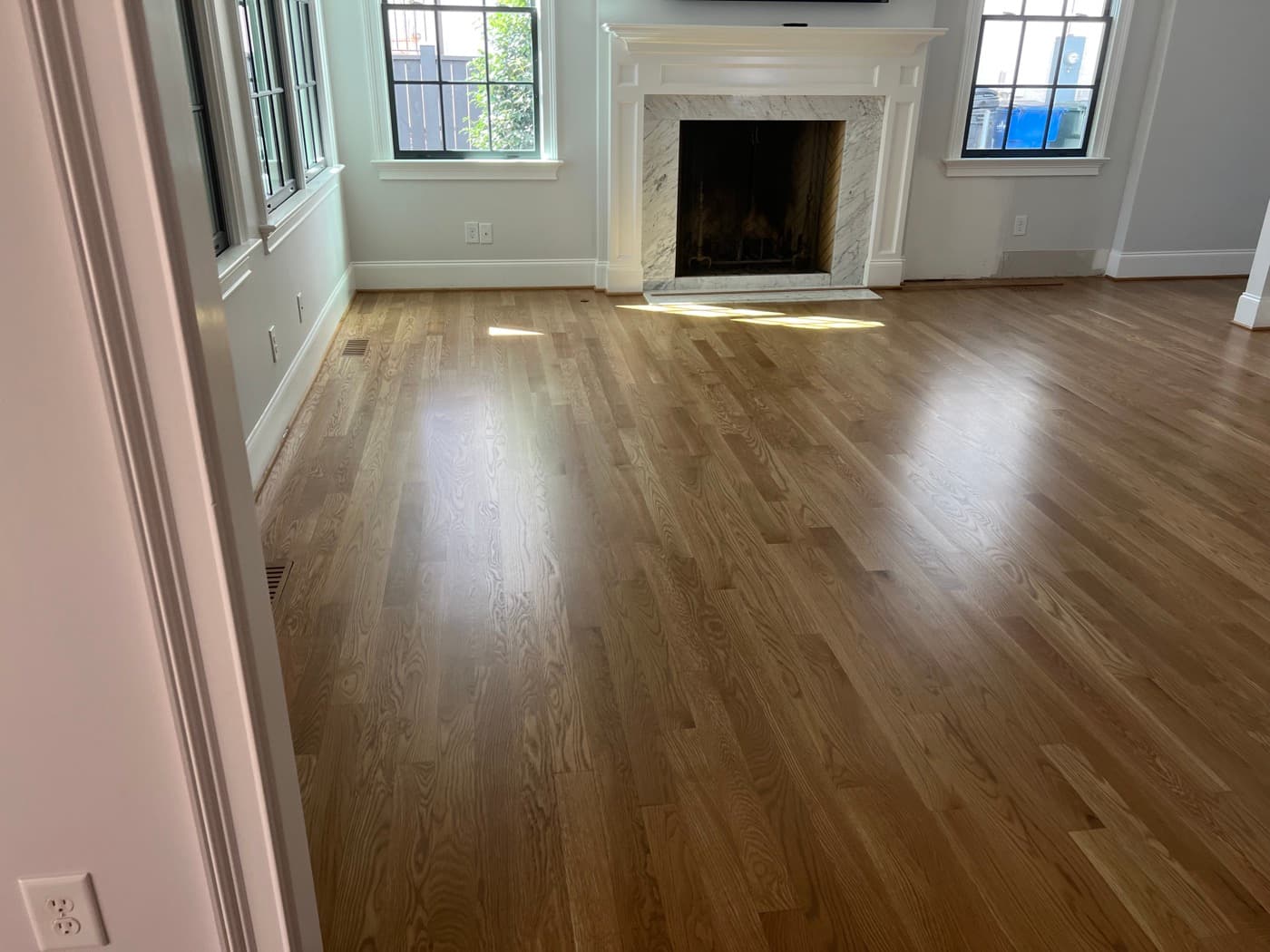
Saved: The Hayes Barton Floor Everyone Thought Was Gone
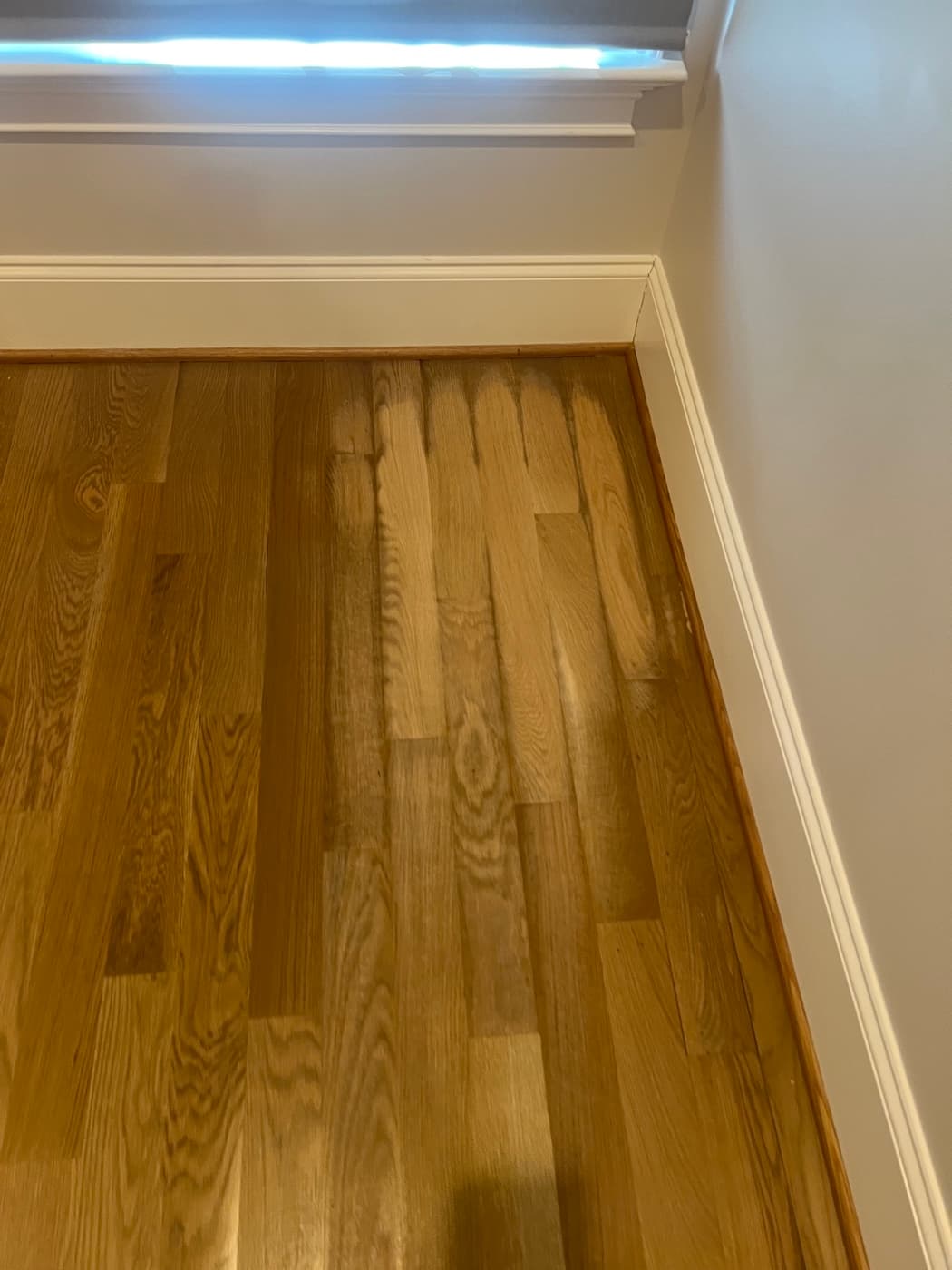
This Raleigh floor had been through three failed attempts by another contractor: boards crowned from being sanded while wet, hidden water damage, and a finish that scratched under normal living. Replacement was on the table. Instead, we replaced only the water-damaged boards, laced in matching 3.25 inch white oak, sanded the entire floor flat, and rebuilt it with a custom DuraSeal Weathered Oak blend under Bona Traffic HD. The original wood, which was worth saving, is still in the house.
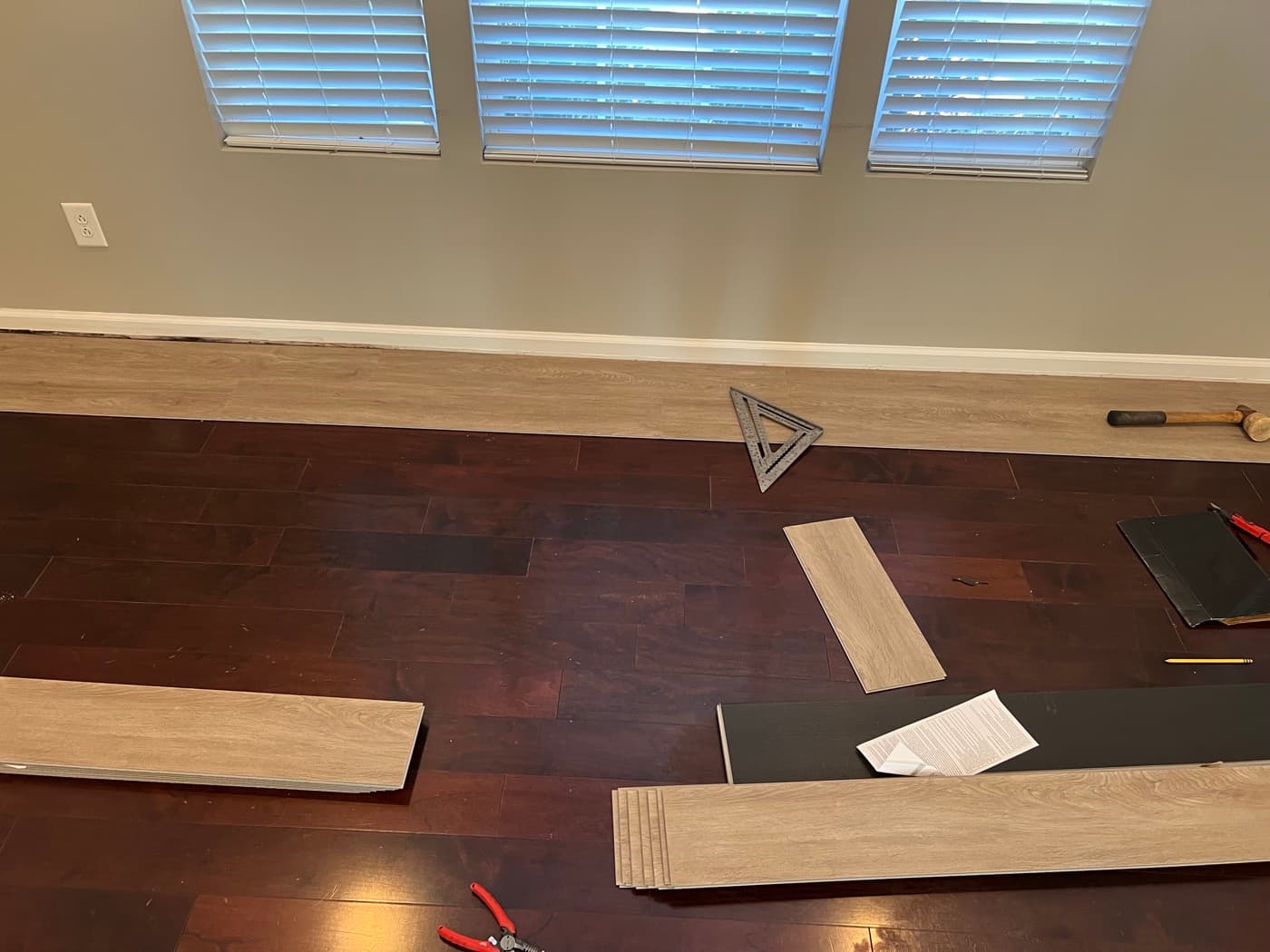
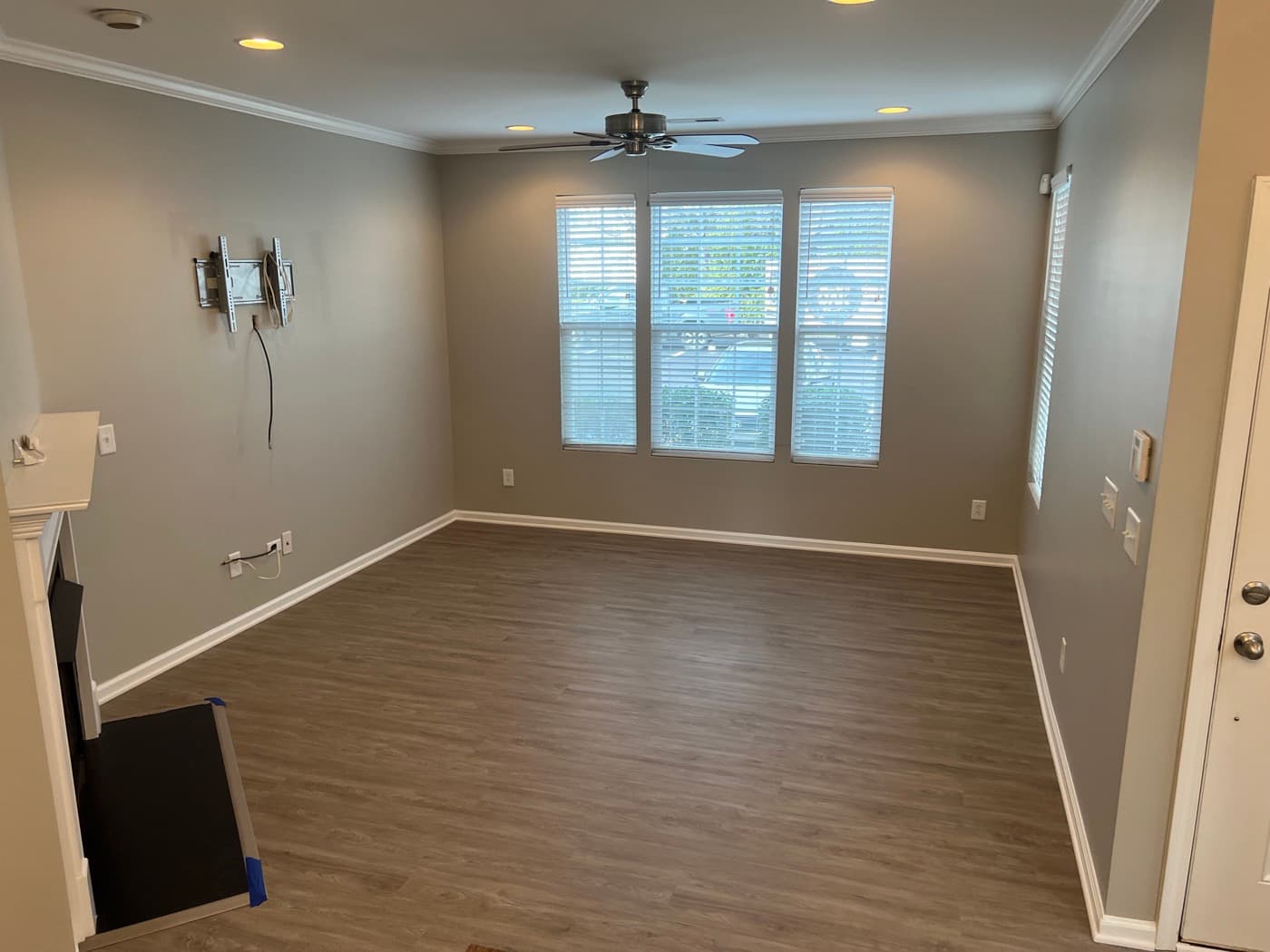
Replaced: The Garner Townhouse That Was Past Saving
The engineered hardwood in this Miriah Towns rental was worn and scratched beyond what its thin wear layer could give back. Refinishing was not a realistic option, and tearing out the old floor would have blown the budget on demolition. The right call was replacement with LVP floated directly over the existing floor: no demo, no disposal, and a durable surface ready for the next tenant in days.
How We Make the Call at Your Assessment
Every in-home assessment answers this question the same way, in order. First, what is the floor? Solid or engineered, and how much sandable wood is left, checked at a floor vent or threshold where the board edge is visible. Second, what is the damage? Surface wear and scratches sand out; buckling, rot, and subfloor movement do not. Third, what do you actually want? If the answer is these floors, but in great condition, that is a refinish. If it is a different floor entirely, we talk about new hardwood or LVP with real numbers on both.
Then you get a written recommendation for the option that solves your problem at the lowest cost, not the biggest ticket. Sometimes that recommendation is a $2.25 per square foot recoat because the floor never needed either of the big options. That honesty is cheaper for you and better for us, because it is why the reviews say what they say.
For technical standards on sanding, wear layers, and finish systems, the National Wood Flooring Association publishes the industry guidelines certified professionals work to nationwide.
Frequently Asked Questions
Should I refinish or replace my hardwood floors?
If your floors are solid hardwood, structurally sound, and have enough wood left above the tongue to sand, refinish them. Refinishing costs roughly a third to half of replacement, takes less time, and returns the original wood to like-new condition with any stain color you want. Replacement only makes more sense when the wood itself is gone: wear layer sanded away, widespread water or structural damage, subfloor problems underneath, or an engineered floor too thin to sand.
Is it cheaper to refinish or replace hardwood floors?
Refinishing is significantly cheaper. In the Raleigh and Clayton market, refinishing existing hardwood typically runs $5.50 to $8.00 per square foot with a $1,500 project minimum, while new hardwood installation runs $15 to $25 per square foot including labor and materials. On a 1,000 square foot main level, that is roughly $5,500 to $8,000 to refinish versus $15,000 to $25,000 to replace. Even replacing with LVP at $7.25 to $11 per square foot installed usually costs more than refinishing the wood you already own.
How many times can hardwood floors be refinished?
With our sanding approach, a true 3/4 inch solid hardwood floor can take 6 to 10 full refinishes over its life, and more than that on a floor maintained between sandings. There is roughly a quarter inch of usable wood above the tongue, and starting with the least aggressive grit on the Bona PowerDrive removes far less of it per refinish than the heavy 36-80-120 sequence, so floors sanded that way get noticeably fewer. Engineered hardwood depends entirely on its wear layer: a 6 mm wear layer sanded conservatively is about as refinishable as solid, 3 to 4 mm can take three to seven refinishes and 2 mm one to three depending on texture and bevels, and thinner than 2 mm cannot be sanded at all. At every assessment we check board thickness at a floor vent or threshold before recommending a refinish.
Do refinished hardwood floors add value to a home?
Yes, and at one of the highest rates of any interior project. The National Association of Realtors Remodeling Impact Report has estimated cost recovery for hardwood floor refinishing at 147 percent of the project cost at resale, and new wood flooring at 118 percent. Refinishing is one of the few home projects that has been estimated to return more than it costs, and real estate agents in the Triangle routinely have sellers refinish before listing for exactly that reason.
When is replacement the better choice even if refinishing is possible?
A few situations favor replacement even when the floor could technically be sanded: you want a different wood species or a much wider plank, the floor layout is changing in a renovation, there are large patched areas from old wall removals that will never blend, or the floor is a thin engineered product near the end of its sanding life and you would rather invest in a floor with a future. We walk through this honestly at the assessment, because refinishing a floor you do not actually want is not a good use of money either.
Can you replace just the damaged boards instead of the whole floor?
Very often, yes. Localized damage such as pet stains, water damage at a door or appliance, or termite-damaged boards can be cut out and replaced with matching wood laced into the existing floor, then the whole area is refinished so everything blends. Board replacement plus refinishing is a fraction of the cost of full replacement. Repair-only work carries a $1,000 minimum, and we quote the full scope at the in-home assessment.
Not sure which side of the line your floors are on? Request an in-home assessment. We check the wear layer, the structure, and the damage, then give you a written recommendation with real numbers for refinishing and replacement side by side.
We do both, so we have no reason to steer you toward the more expensive one. We handle hardwood floor refinishing across the Triangle, including Wendell, Knightdale, and Cary. Request a free estimate and we will look at your floor in person before we talk numbers.