
Why There Is a Gap at All
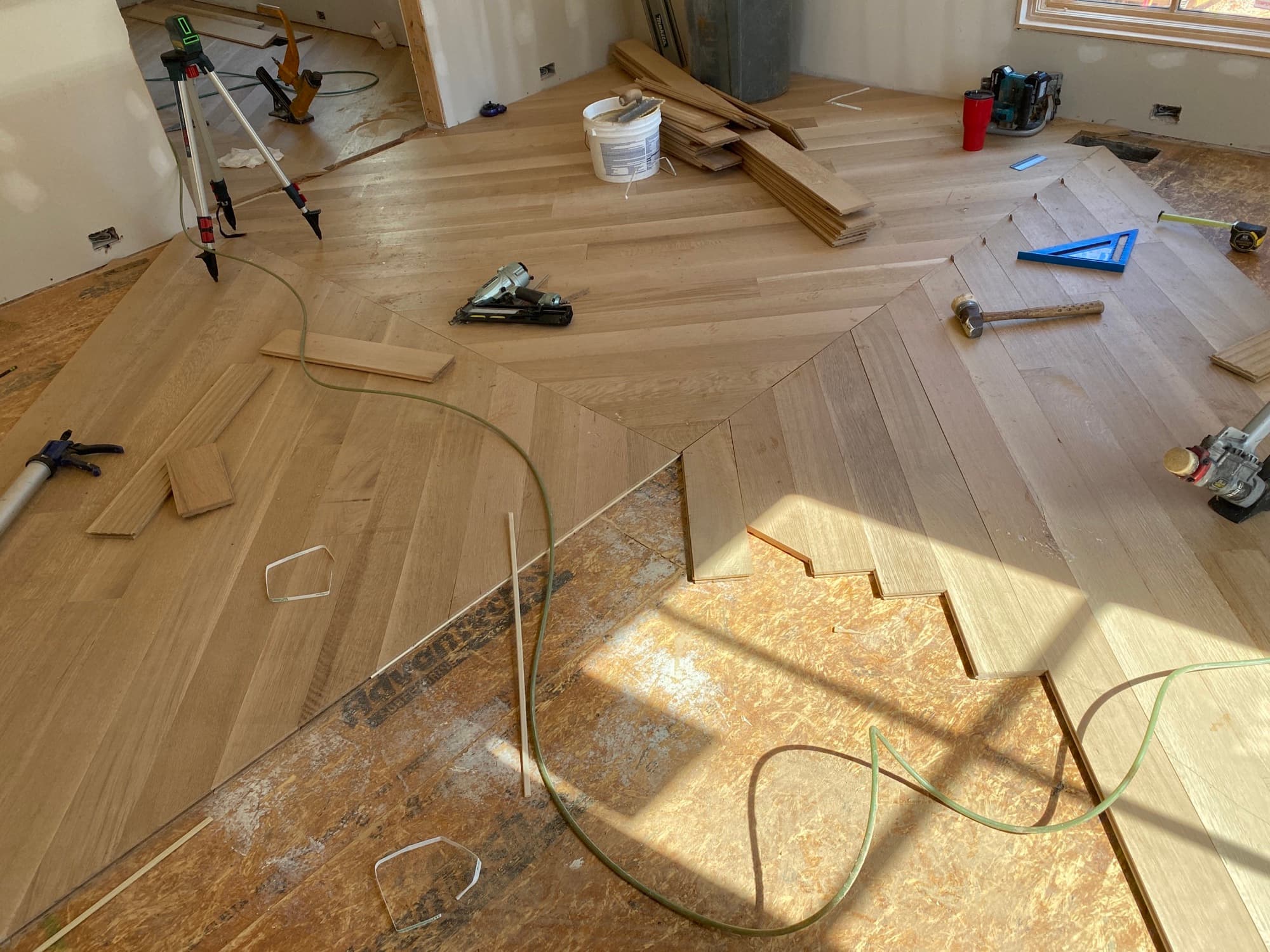
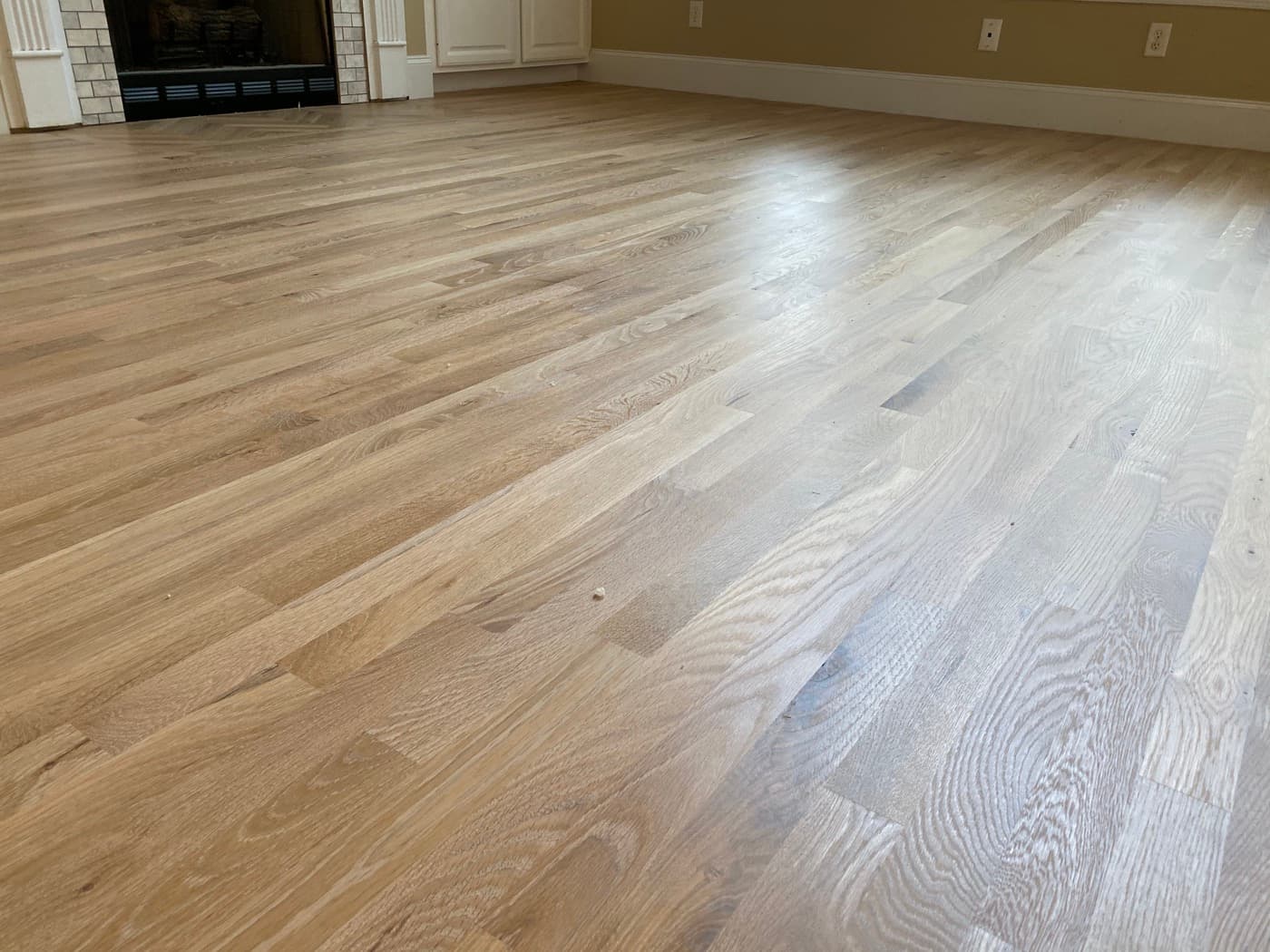
Solid hardwood moves. In a North Carolina summer it takes on moisture and widens; in a heated winter it gives moisture back and shrinks. We leave roughly a half inch at every wall so that movement has somewhere to go, and the trim covers it. This is not a shortcut. A floor installed tight to the wall buckles the first humid August. Our guide to cupping explains what that movement looks like when it goes wrong.
Option One: Keep Your Baseboards, Add Shoe Molding
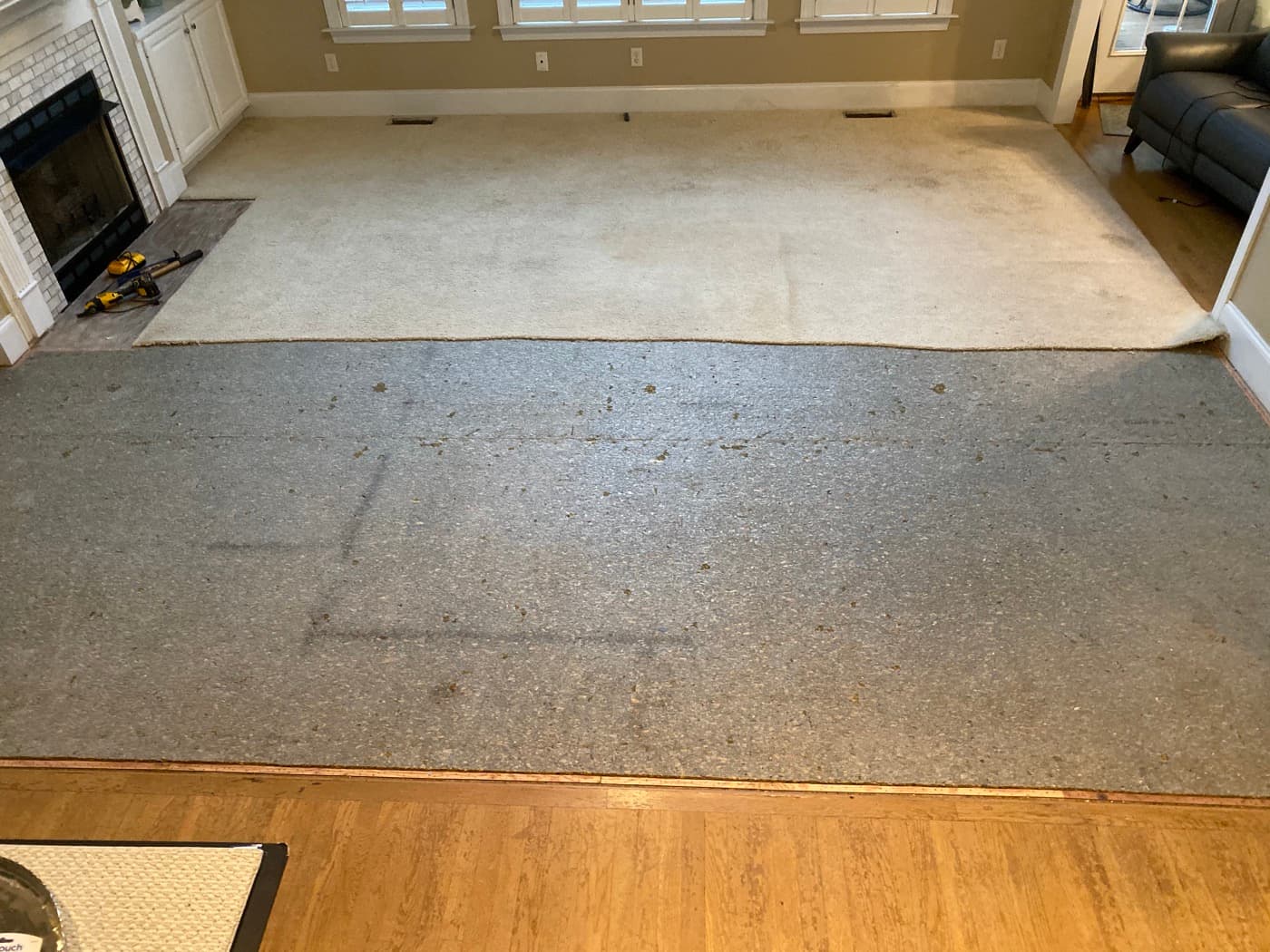
Shoe molding is a small rounded strip, about three quarters of an inch tall, that sits on the floor against the bottom of the baseboard. Your baseboards never come off the wall. We install the floor, sand and finish it, then nail the shoe to the baseboard, not the floor, and finish it to match the wood. If you already have shoe or quarter round, the old piece comes off before the new floor goes in and new shoe goes on after.
What it costs: on that Clayton house, 381 linear feet of new red oak shoe, installed and finished to match, was the base price of every option. It is the least expensive complete way to finish the edge of a new floor.
What it looks like: a small step at the base of the wall. Most homes built since the 1980s already have it, so it reads as normal.
Option Two: New Baseboard, No Shoe
Here the old baseboard comes off before the floor goes in. After the floor is finished, new primed baseboard is installed sitting directly on the new wood. There is no shoe, so the line where wall meets floor is one clean step instead of two. Homes going for a more modern or a more formal look usually want this.
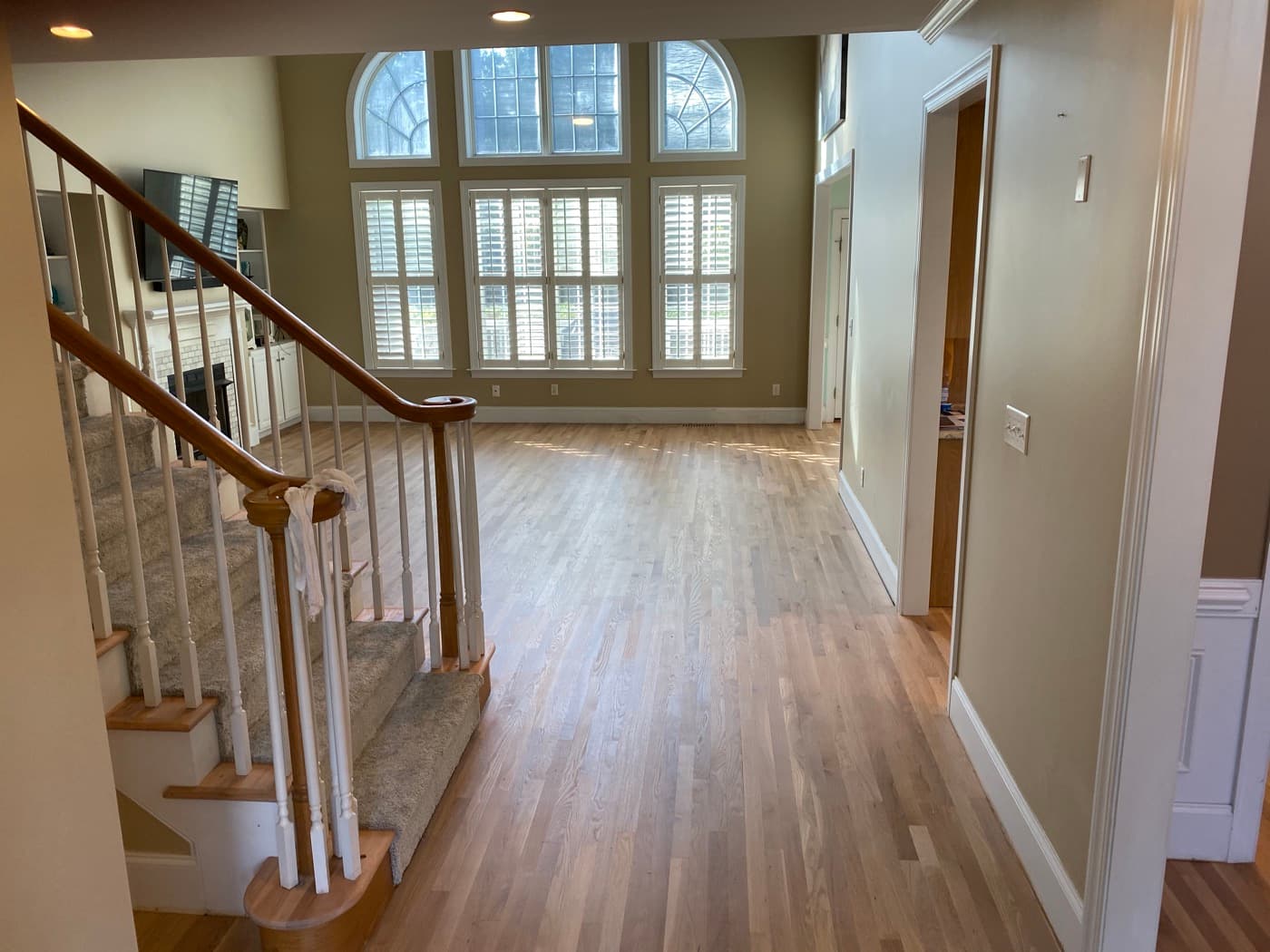
What it costs: more than the shoe option. On your proposal it appears as the whole difference between the two, with the shoe you are no longer buying already taken out. It covers removing the old baseboard, the new primed 1x6 or 1x8 material, and installing it.
What it does not include:paint. New baseboard goes in primed, not painted, and the nail holes and caulk line are your painter's work after we leave. Budget for that separately.
Option Three: Reuse Your Old Baseboards
This is the one everyone asks about, and it is the one we talk people out of. The thinking is reasonable: the baseboard is fine, why buy new? The problem is labor. Pulling a baseboard carefully, storing it, and reinstalling it after the floor is finished takes about the same time as installing new. Reusing the baseboards saves only a little against new baseboard, mostly the material, and then the reused boards still need caulk and paint touch-up because removal always cracks the old caulk line and chips the old paint. Older baseboards also split when they come off, and once one splits you are buying new anyway.
So the honest choice is: shoe molding, or new baseboard for more. Reuse sits in between and costs more headaches than it saves. How much more depends on the length of your walls, and your written proposal shows both prices for your home.
How We Put This on a Proposal
Every option on our hardwood installation proposals is priced with your baseboards left in place and new shoe molding included. New baseboard throughout is a single add-on you can select, priced at the difference. That way the choice is yours and the two numbers are side by side. If you are still deciding between species or grades, the trim decision is independent of both, and our note on plank width and cost covers the levers that actually move the price.
Frequently Asked Questions
Can you reuse my existing baseboards?
We can, and we will if you ask. But the labor is nearly the same as installing new, the old boards need paint touch-up either way, and some split on removal. Most clients who start here end up choosing shoe molding or new baseboard once they see the numbers.
Does the shoe molding get stained to match my floor?
Yes. We use the same species as the floor, red oak shoe on a red oak floor, and it is sanded and finished with the same system so it disappears into the floor line.
Who paints the new baseboard?
Your painter, after we finish. New baseboard is installed primed. Painting, caulking, and nail-hole fill are not part of a flooring scope, and we can coordinate our painter for you if you would rather not manage it.
Do you remove baseboards for a refinish?
No. A refinish sands the existing floor in place, and the edger gets right up to the baseboard. Trim only comes into it when a new floor is going in.
Replacing a floor and deciding on trim? Request a free estimate. We price both approaches side by side on one proposal so you can see the difference for yourself.
Trim is a small line on a big project, but it is the one clients ask about most after the wood itself. We handle hardwood floor installation across the Triangle, including Holly Springs, Knightdale, and Garner. Request a free estimate: send a few photos and project details for a free preliminary estimate, and if your floor needs an on-site assessment, we explain it and any assessment fee before scheduling.