
How Solid Hardwood Is Priced
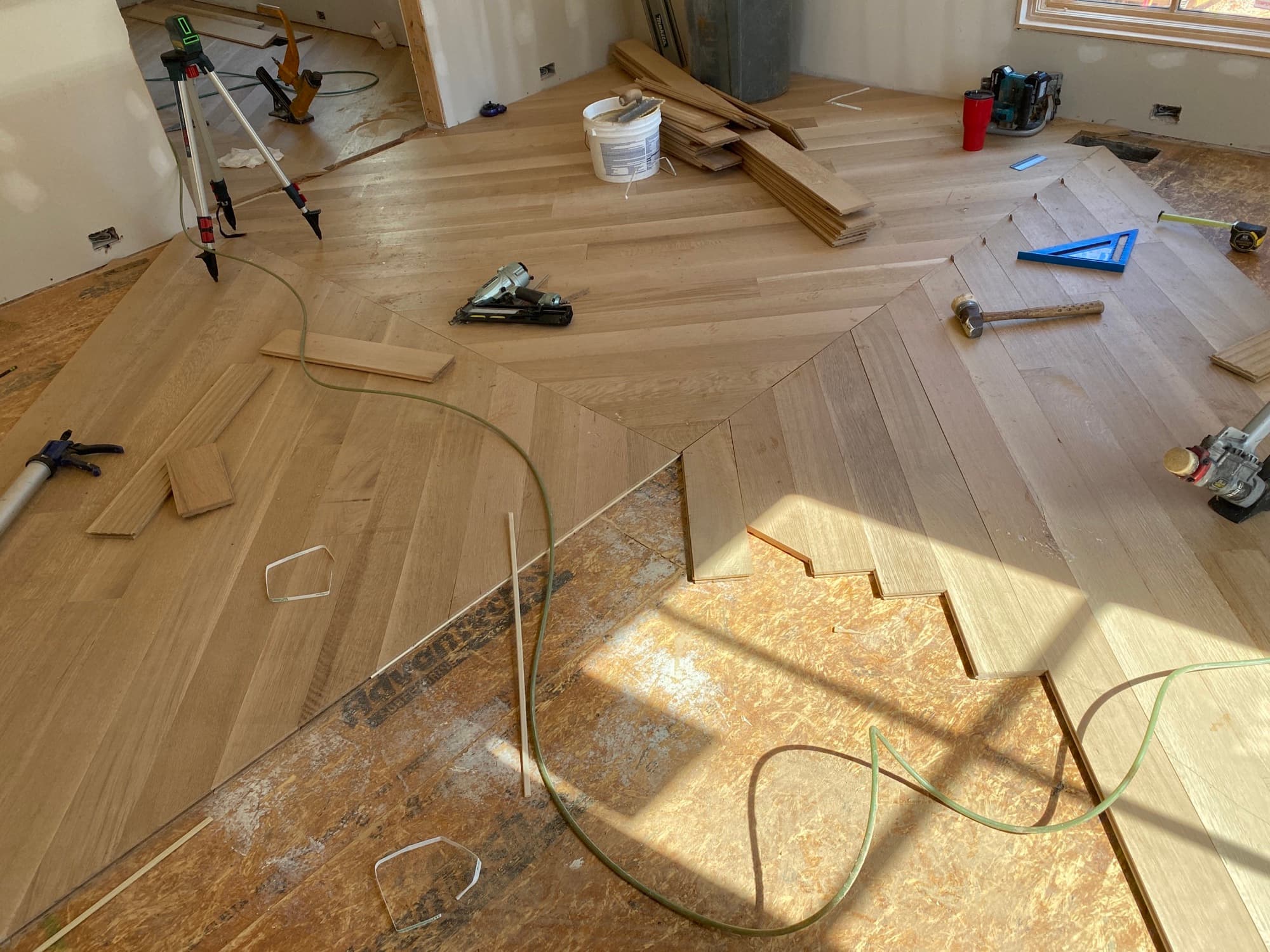
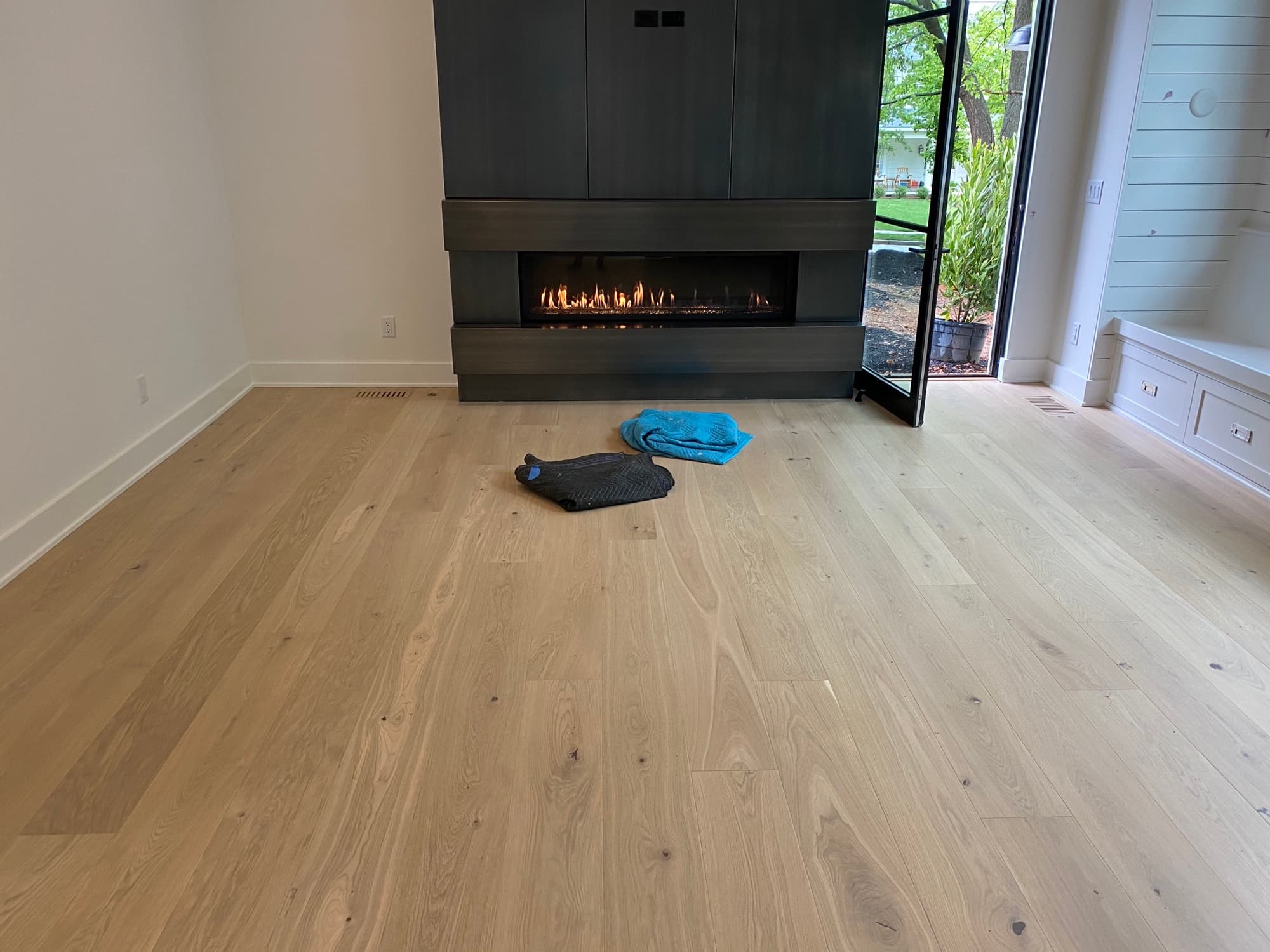
Unfinished solid hardwood is sold by the square foot, in bundles, and we order whole bundles with about eight percent extra for cuts and waste. A narrower board covers the same square footage with more pieces, and the mill charges about the same per square foot to produce it. In Select-grade white oak, the step from a 2-1/4 inch board to a 4 inch board changes the material by pennies per square foot. On a whole house that is a small difference on the total after everything is added up.
Species Is the Biggest Lever
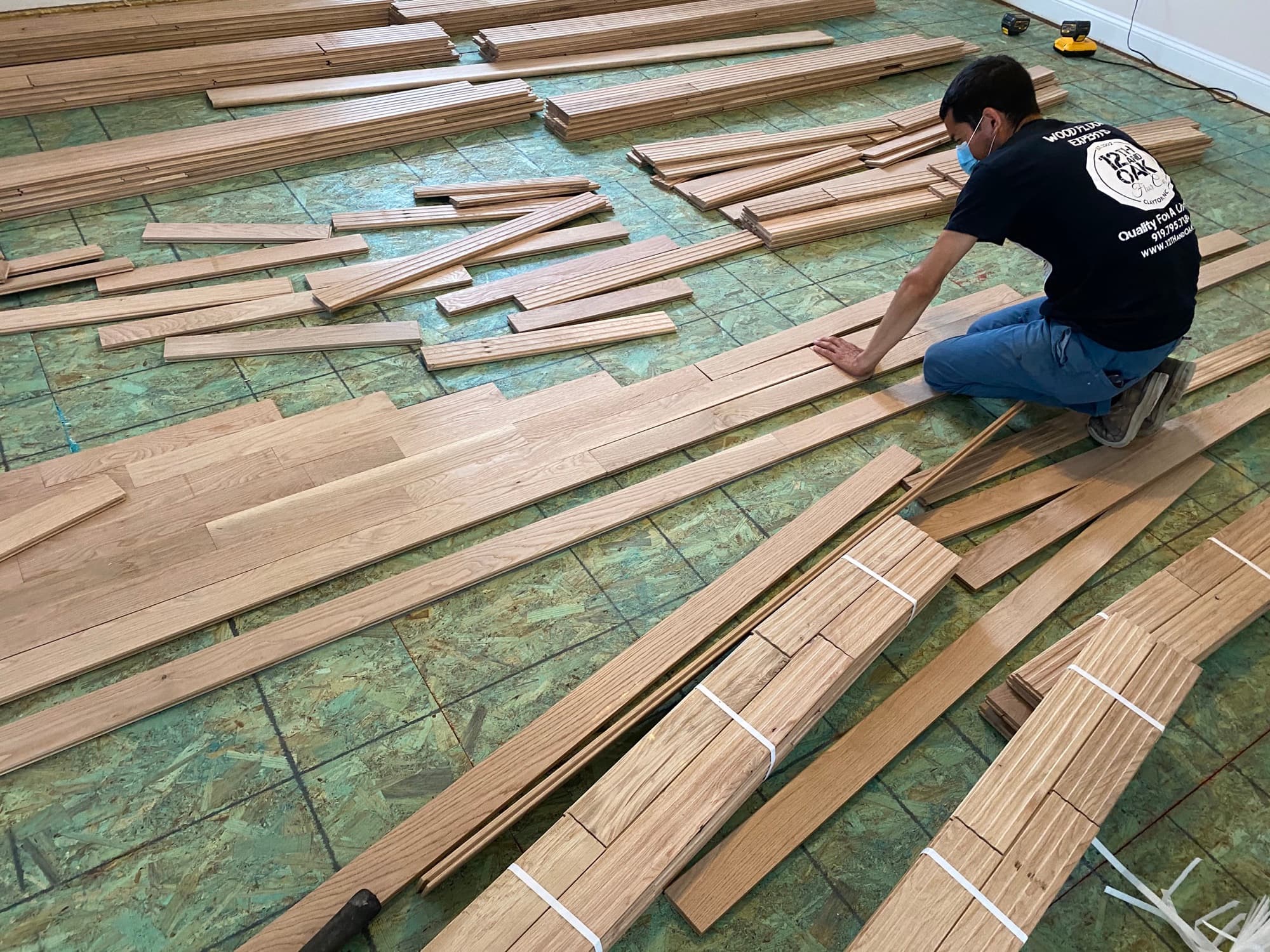
Red oak and white oak are the two species in almost every Triangle home, and white oak costs more. On the Clayton job, switching from #1 Common white oak to #1 Common red oak, across the whole house, took far more off the total than the width change would have. Same width, same grade, same finish. If your existing floors are red oak, matching them is also the right call for blending new wood into old, so the cheaper species is often the better one.
Grade Is the Second Lever
Grade describes how the wood looks, not how it wears. Select is clean and uniform. #1 Common has more color variation and small character marks. #2 Common has the most variation and knots, and it is the least expensive. On the same house, the three grades of red oak were the widest spread of all, from Select down to #2 Common, in the same width and the same finish. If the budget is the problem, a grade step down is a bigger move than any width change.
Labor Does Not Change With Width
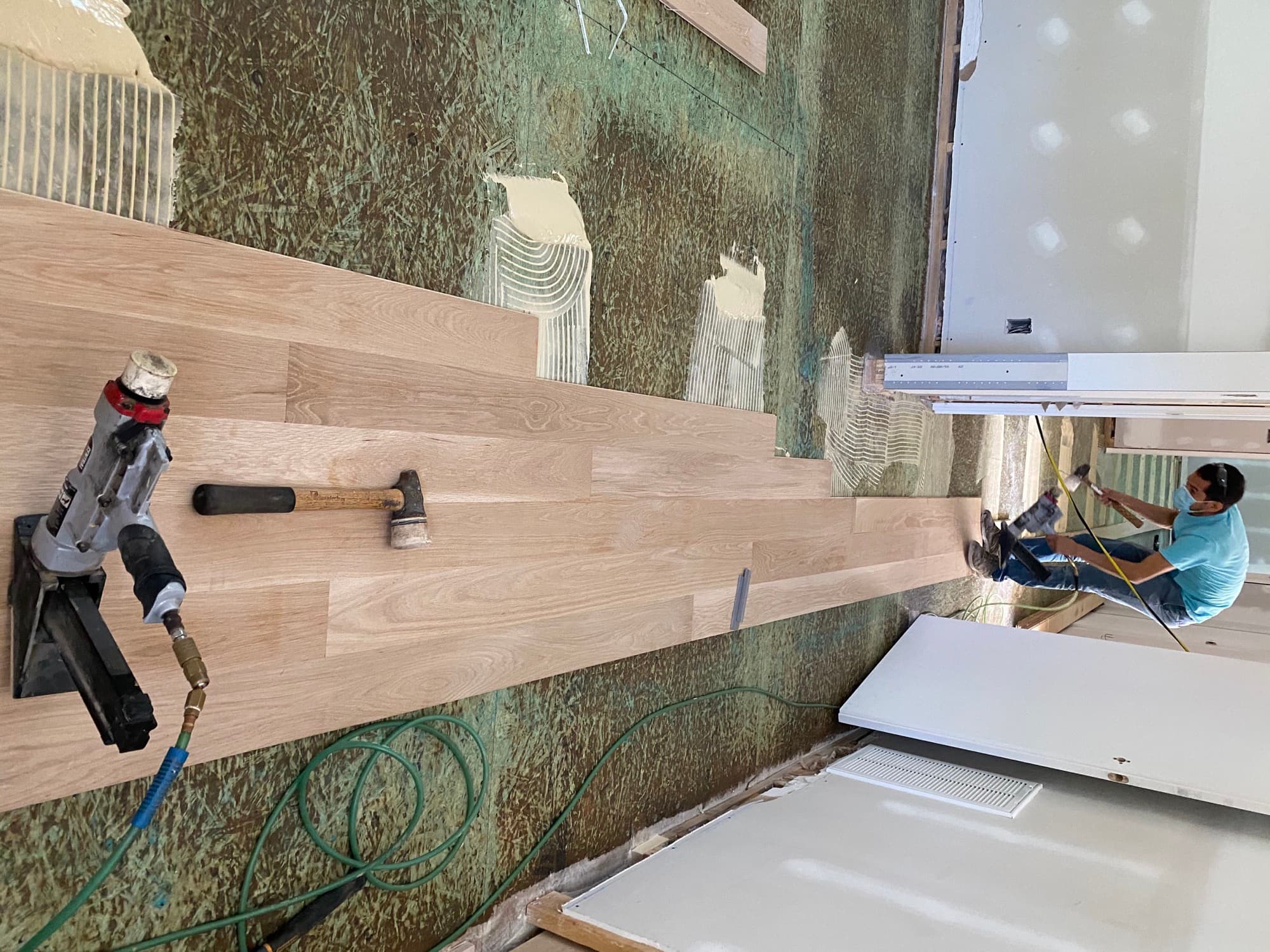
Our installation and sanding rates are per square foot regardless of board width. A 2-1/4 inch floor takes more rows to lay than a 4 inch floor, but the rate is the same, so nothing there moves the price. Genuine wide plank, 5 inches and up, is a different conversation: the boards move more with humidity, they often need a glue-assist installation, and the material itself does cost more per foot. Between 2-1/4 and 4 inches, none of that applies.
What to Ask For When You Want a Lower Price
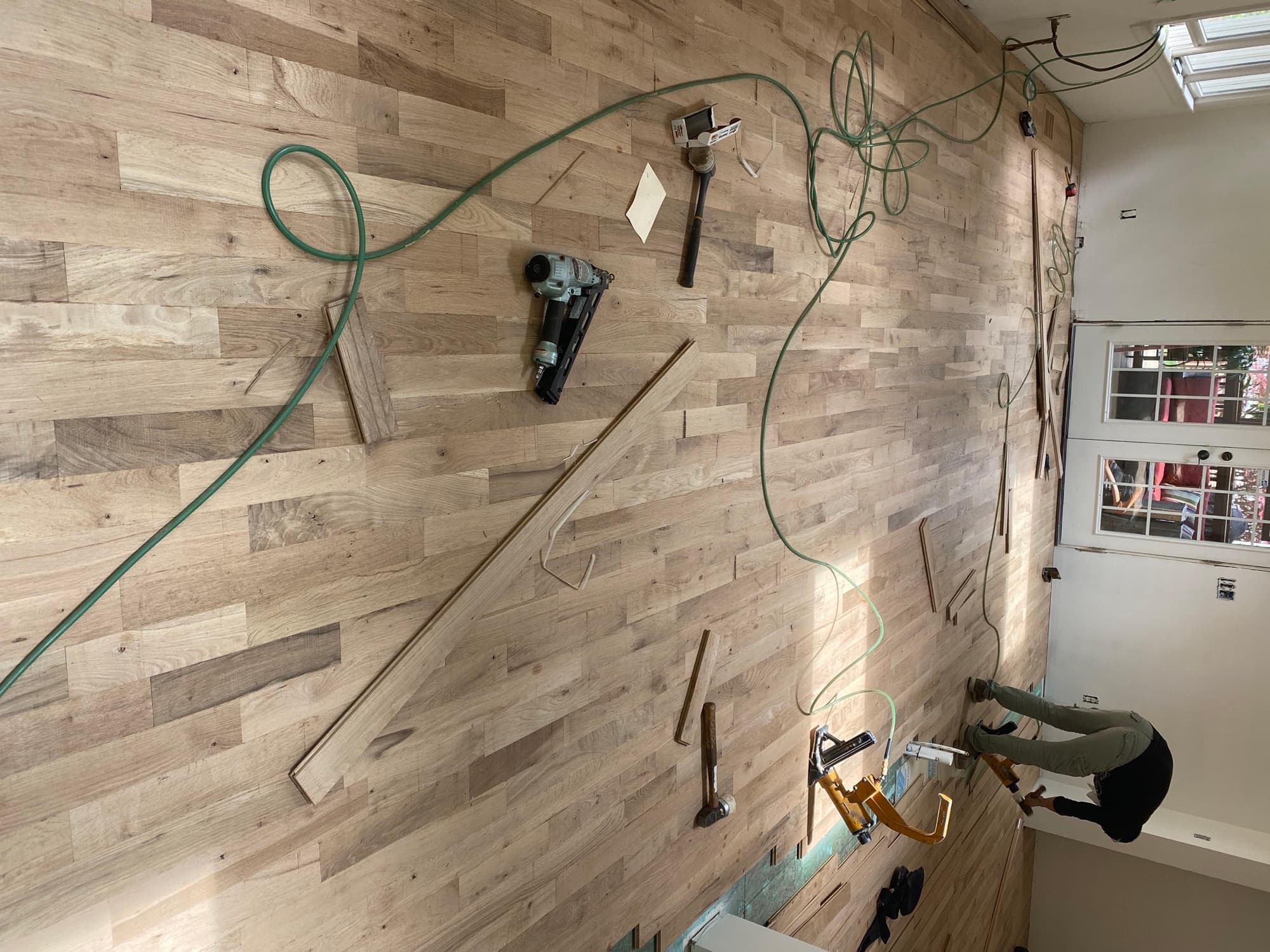
In order: ask about species first, then grade, then whether any existing hardwood can stay and be blended, then trim. Ask about width last, and ask about it for the look you want, because it will not rescue a budget. Every hardwood installation proposal we send prices the grades side by side so you can see each step. Ask for the options you are weighing on your written proposal, and the price of each is there side by side for your home.
Frequently Asked Questions
Is wide plank more expensive to install?
Not in our pricing. Installation is per square foot. Very wide planks, five inches and up, can require a glue-assist installation to control movement, and that adds adhesive, but that is a method cost, not a width cost.
Does a narrow plank make a room look bigger?
Narrow boards read as more lines and more texture, and they suit traditional homes. Wide boards read calmer and more modern. Neither changes how big a room feels as much as the finish color does.
Which width is easier to match to an older home?
2-1/4 inch strip. It is what most Triangle homes built before 2005 already have, which matters if you ever want to blend new wood into the existing floor.
How much more does a 4 inch board cost than a 2-1/4 inch board?
In Select-grade white oak, pennies per square foot. On a whole-house quote the 2-1/4 inch board came in only slightly under the 4 inch board on the total. Species and grade move the price far more than width does.
Trying to bring a hardwood quote into budget? Request a free estimate. We will show you what species, grade, and trim each do to your number before you settle on the board.
Most of the width questions we get come from homeowners comparing a quote to the strip flooring already in their house. We handle hardwood floor installation across the Triangle, including Fuquay-Varina, Apex, and Cary. Request a free estimate: send a few photos and project details for a free preliminary estimate, and if your floor needs an on-site assessment, we explain it and any assessment fee before scheduling.