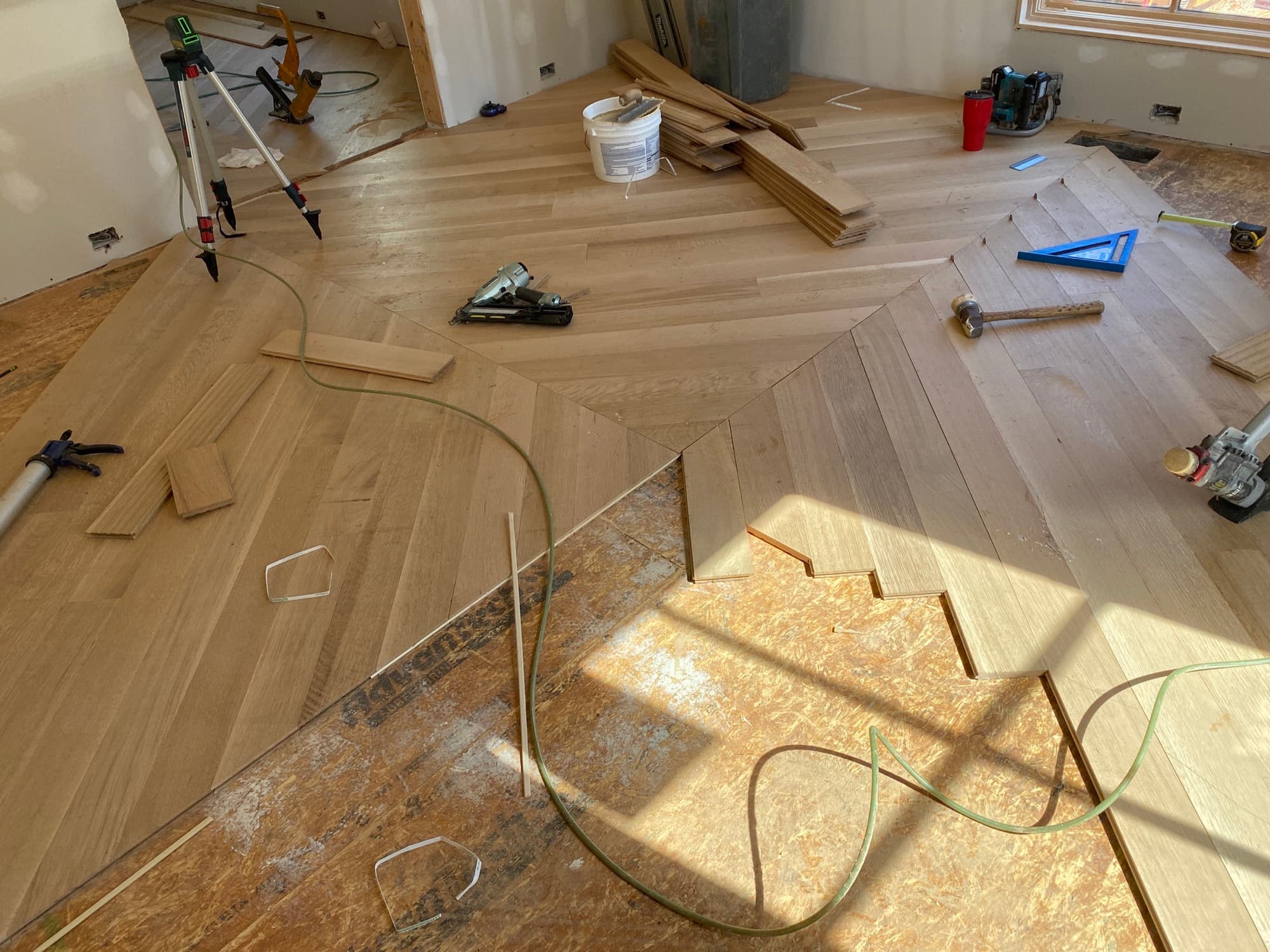

The Janka hardness test presses a steel ball measuring 0.444 inches in diameter into a wood sample until the ball is embedded to half its diameter. The force that takes, measured in pounds-force, is the species' Janka rating. Red oak, at 1,290, is the industry baseline that everything else gets compared against.
That is the whole test. It measures one thing: how hard it is to dent the wood. It says nothing about scratching, nothing about how a floor ages visually, and nothing about which species is right for your house. Those depend on the finish system and the grain as much as the wood itself, and that is where a hardness chart alone will steer you wrong.
Janka Hardness Ratings for Common Flooring Species
These are the species we actually install and refinish in Triangle homes, softest to hardest. Ratings are in pounds-force.
| Species | Janka (lbf) | What that means in a home |
|---|---|---|
| Southern yellow pine | 870 | Soft by hardwood standards. Dents easily, which many owners of older homes accept as character. |
| American cherry | 950 | Chosen for color, not durability. Expect it to show life. |
| Black walnut | 1,010 | Rich color, softer than oak. Best in lower-traffic rooms. |
| Antique heart pine | ~1,225 | Old-growth longleaf pine, much denser than modern pine. Common in older NC homes. |
| Red oak | 1,290 | The industry baseline. The most common floor in Triangle homes. |
| White oak | 1,360 | Slightly harder than red oak, and more water-resistant. |
| Hard maple | 1,450 | Hard, but its clean grain shows every mark. Gym floors are maple for a reason. |
| Hickory | 1,820 | The hardest common domestic species. Busy grain also hides wear well. |
| Tigerwood | ~2,170 | Brazilian import with dramatic striping. Very hard, very difficult to sand evenly. |
| Brazilian cherry (Jatoba) | 2,350 | Among the hardest floors installed in the US. Darkens noticeably with sunlight. |
How to Read These Numbers
The scale is relative, and small gaps do not matter. White oak at 1,360 versus red oak at 1,290 is about a five percent difference, and you will never feel it. Nobody walks into a house and identifies the species by its dents. If you are choosing between the two, choose on color, grain, and stain behavior, which is exactly how we walk homeowners through it in our white oak vs red oak guide.
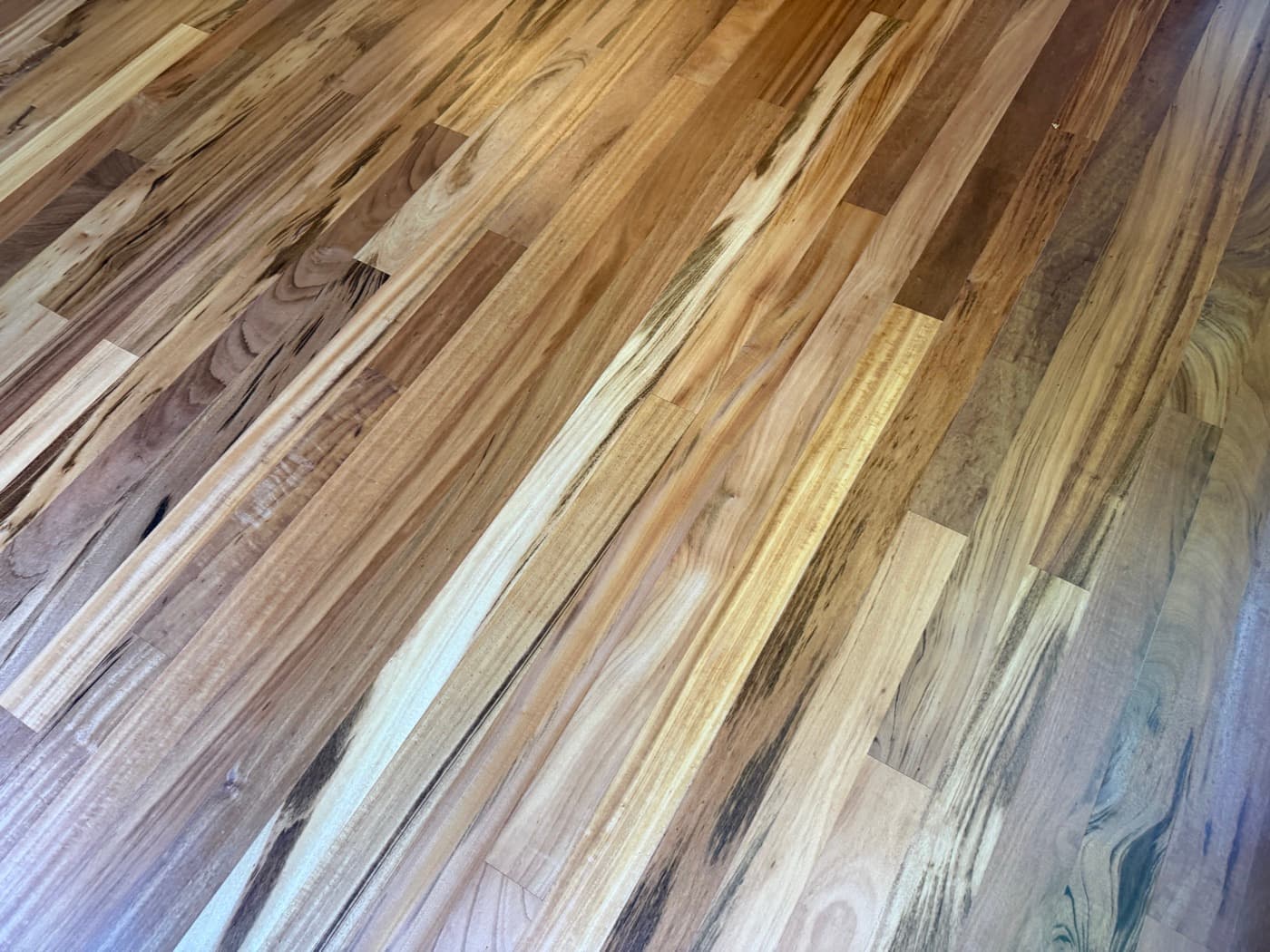
Big gaps do matter. Hickory at 1,820 is roughly forty percent harder than red oak, and that difference is real: a dog running to the door or a dropped cast-iron pan marks a pine floor visibly, marks an oak floor lightly, and often does not mark hickory at all. At the soft end, yellow pine at 870 dents in ordinary daily life. Owners of older homes with pine floors generally either embrace that as patina or should not have pine floors.
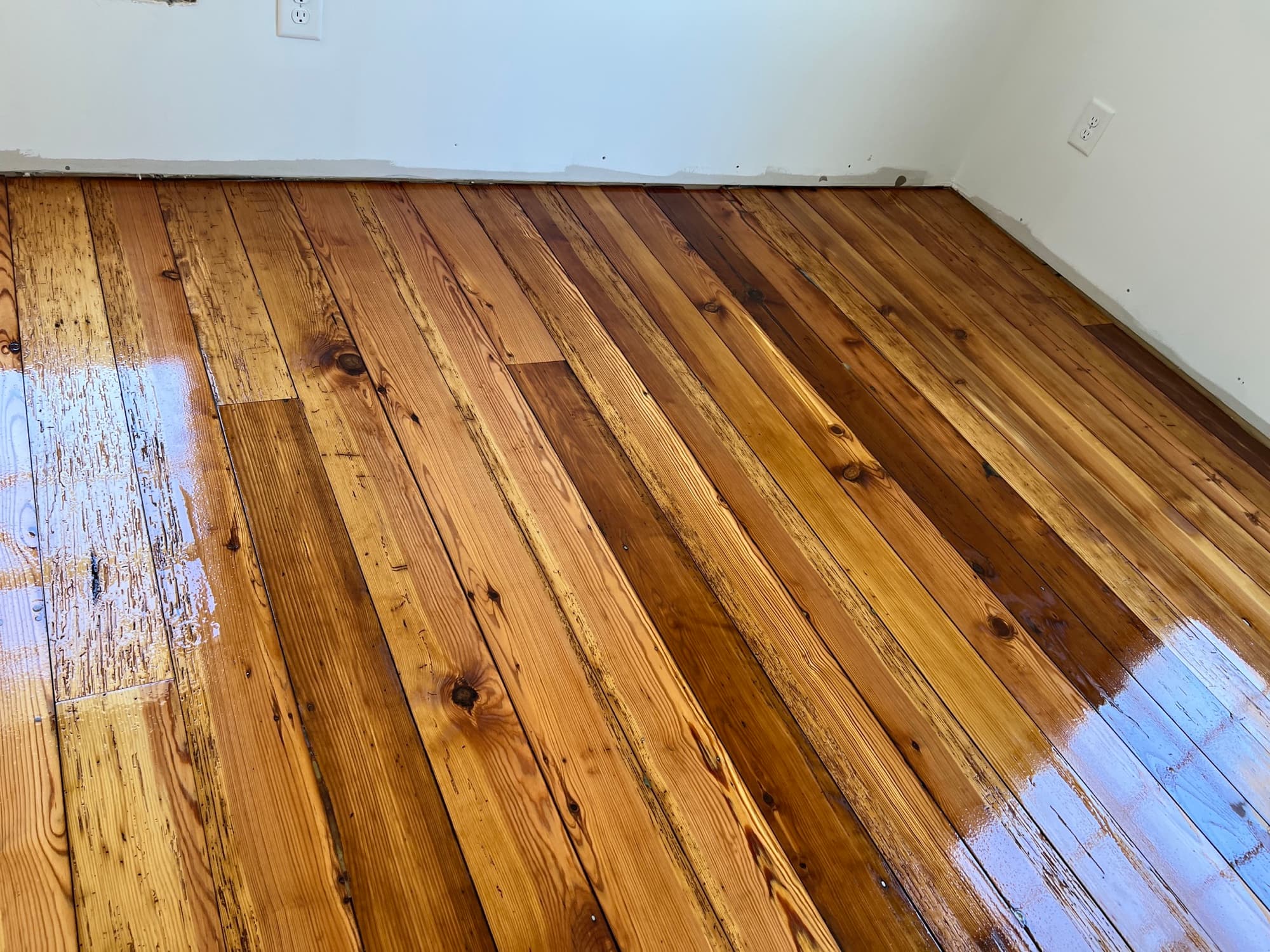
One caution on old houses: antique heart pine is not the same wood as modern pine. Old-growth longleaf pine grew slowly and dense, and reclaimed or original heart pine floors test dramatically harder than today's plantation-grown yellow pine. We refinish heart pine floors across older NC homes, and they behave closer to the middle of this chart than the bottom.
Dents Are the Wood. Scratches Are the Finish.
This is the distinction the showroom chart never explains. Janka predicts dents: concentrated force pressed into the board, like chair legs, heels, and dropped objects. Scratches live in the finish, the clear wear layer sitting on top of the wood. Grit tracked in on shoes, dog nails skittering on a hallway, a chair dragged without felt pads: all of that scuffs the finish long before it touches the wood underneath.
Which means scratch resistance is something you buy with the finish system, not the species. A two-component commercial-grade finish like Bona Traffic HD outlasts a standard single-component finish on any species under it. If your real worry is claws and traffic, the finish upgrade does more for you than moving from oak to hickory, and it costs far less. We compare the options in our Mega One vs Traffic HD guide.
Grain Hides Wear Better Than Hardness Prevents It
Hard maple is a cautionary example. At 1,450 it out-tests both oaks, yet maple floors often look more beat up sooner, because maple's clean, uniform face shows every mark it takes. Hickory and oak have busy grain and color variation that visually swallow small dents and scratches. A floor that hides wear reads as newer than a harder floor that displays it. That is a big part of why we often point busy households toward hickory, covered in our white oak vs hickory comparison.
Engineered Hardwood and LVP
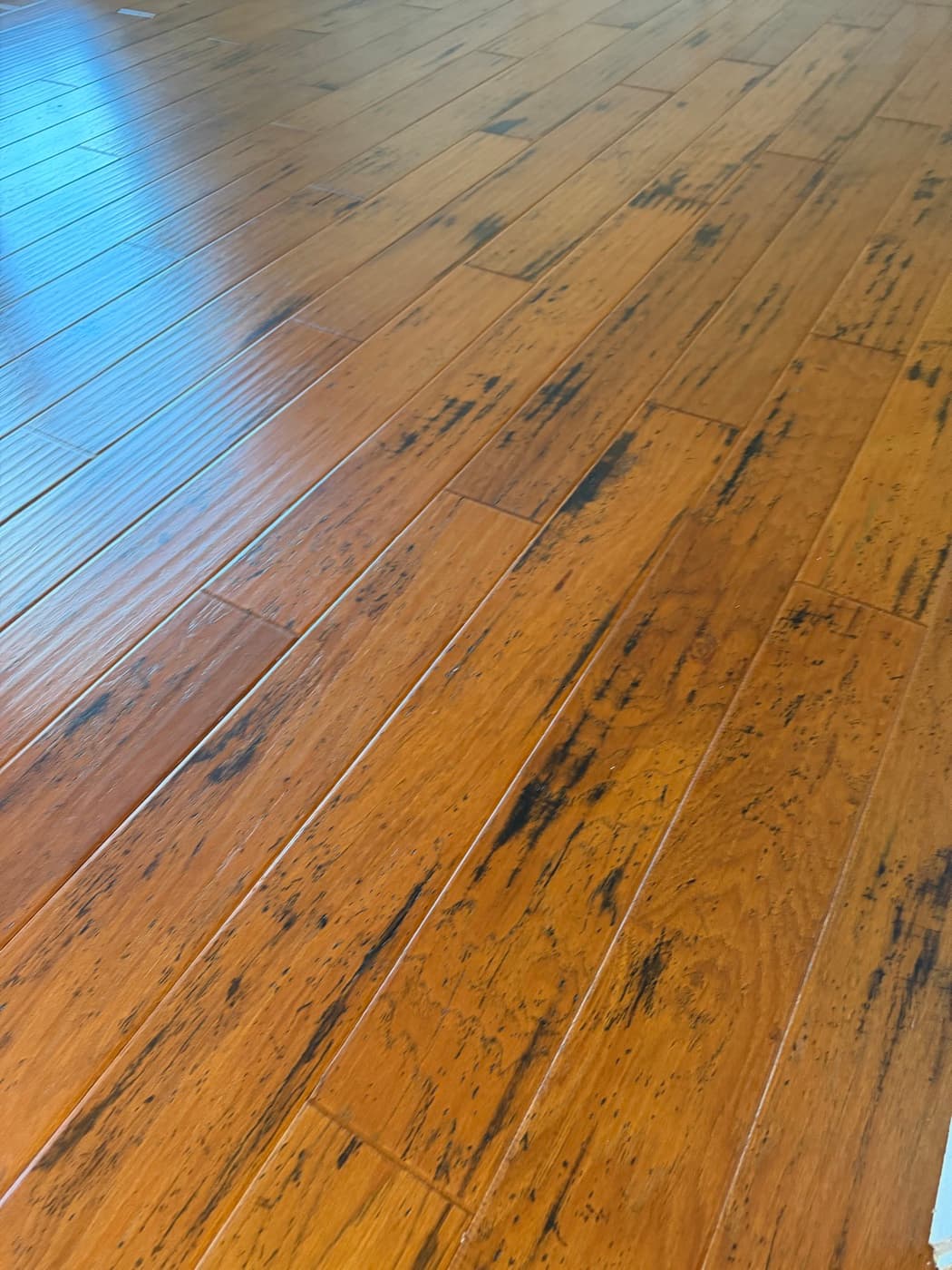
Engineered hardwood dents like its wear layer. An engineered white oak floor is white oak where it counts, so the 1,360 rating applies. The engineered trade-off is refinishing depth, not hardness; a thin wear layer limits how many sandings the floor has in it, which we cover in our engineered vs solid guide.
Luxury vinyl plank has no Janka rating because it is not wood; vinyl is measured on wear-layer thickness instead. LVP shrugs off water and surface scratches, but it can still dent and gouge, and it cannot be sanded back to new the way hardwood can. The two materials fail differently, and a hardness chart cannot compare them.
What We Tell Homeowners
After 24 years of sanding these species, the practical advice is short. Every wood from red oak up is hard enough for a normal busy household, so within that range, pick the look you love. Spend the durability money on the finish system, because that is what your daily wear actually lands on. If your household is genuinely hard on floors, hickory earns its reputation, for its grain as much as its hardness. And if you have old heart pine, it is tougher than its reputation and usually worth saving.
Deciding between species for an install, or wondering whether your existing floors are worth refinishing? We quote both, and we bring samples to your floor, in your light, before you commit.
Get Your Free QuoteFrequently Asked Questions
What is a good Janka hardness rating for dogs and kids?
Anything at or above red oak, which scores 1,290, holds up fine in a busy household. That covers red oak, white oak at 1,360, hard maple at 1,450, and hickory at 1,820. The truth is that the finish system and the grain pattern matter more day to day than the Janka number. A durable finish like Bona Traffic HD resists the surface scratches dogs actually cause, and a busy grain like hickory or oak visually hides marks that a clean-faced wood like maple would show. We would not steer a family with dogs away from red oak on hardness grounds.
Is white oak really harder than red oak?
Yes, but barely. White oak scores 1,360 on the Janka scale and red oak scores 1,290, a difference of about five percent. Underfoot and over years of real use, that difference is not something you will notice. Choose between them on color, grain, and stain behavior instead: white oak runs more neutral and takes modern stains more evenly, while red oak has pink undertones and a stronger grain figure. White oak is also more water-resistant, which matters in kitchens.
Does a higher Janka rating mean the floor will not scratch?
No, and this is the most common misunderstanding about the scale. Janka measures resistance to denting, which is force pressed into the wood. Scratches happen in the finish layer that sits on top of the wood, so scratch resistance comes from the finish system, not the species. A hickory floor with a worn finish scratches more visibly than a pine floor with a fresh coat of a durable finish. If scratching is your worry, put your budget toward the finish, not a harder species.
How is Janka hardness actually measured?
The Janka test presses a steel ball measuring 0.444 inches in diameter into a wood sample until the ball is embedded to half its diameter. The force required, measured in pounds-force, is the Janka rating. Red oak at 1,290 is the reference point the flooring industry compares everything against, which is why hardness charts often describe other species as a percentage harder or softer than red oak.
Does engineered hardwood have a Janka rating?
The wear layer does. An engineered floor with a white oak wear layer dents like white oak, because the Janka number belongs to the species you walk on, not the plywood core underneath. Where engineered differs from solid is the thickness of that wear layer, which determines how many times the floor can be refinished, not how hard it is. Our engineered vs solid guide covers that trade-off.
Where does luxury vinyl plank fall on the Janka scale?
It does not. Janka is a test for solid wood, and vinyl products are measured on entirely different standards like wear-layer thickness in mils. LVP resists water and surface scratching well, but it can still dent and gouge under heavy furniture and dropped objects, and unlike hardwood it cannot be sanded and refinished when it does. Comparing an LVP wear rating to a Janka number is comparing two different tests.
Choosing a species for a busy home? Request a free estimate. Bring the question to us. We match species, finish, and installation to how your rooms actually get used.
Hardness is one input into choosing a floor. Finish and installation matter at least as much, and those are the parts we control. We handle hardwood floor installation across the Triangle, including Fuquay-Varina, Cary, and Zebulon. Request a free estimate and we will look at your floor in person before we talk numbers.