
Owner · Bona Certified Craftsman · NWFA Member
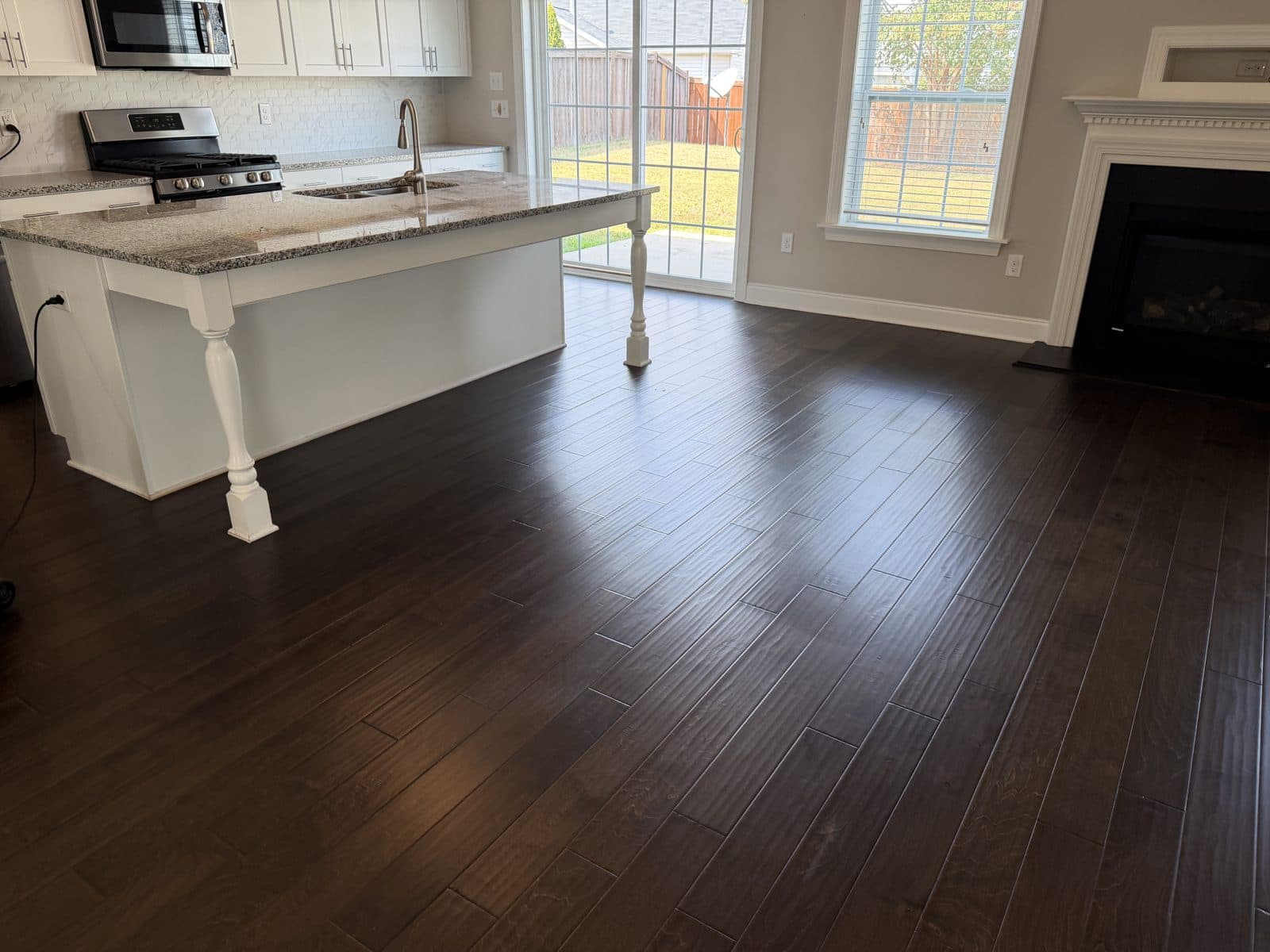
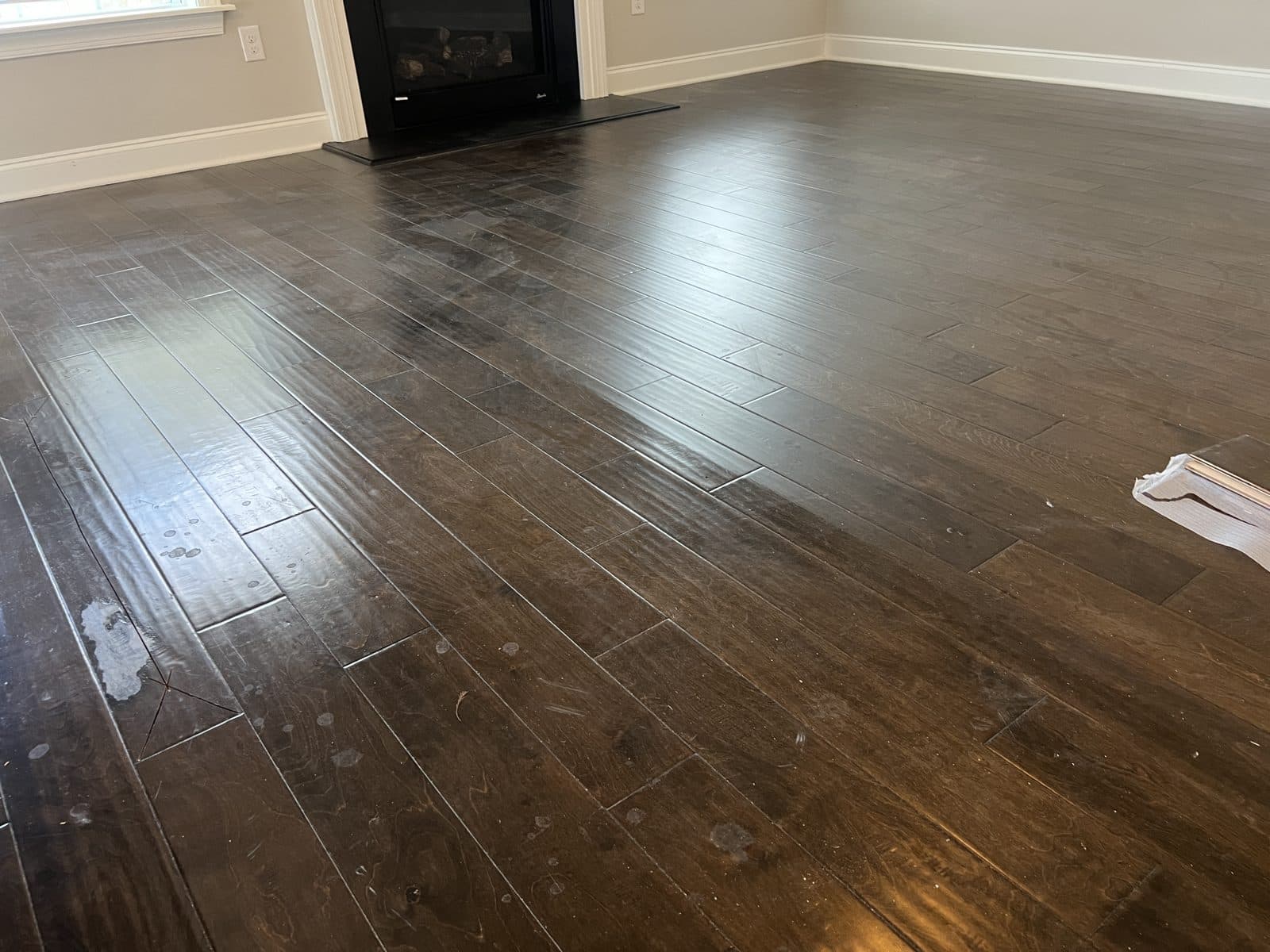
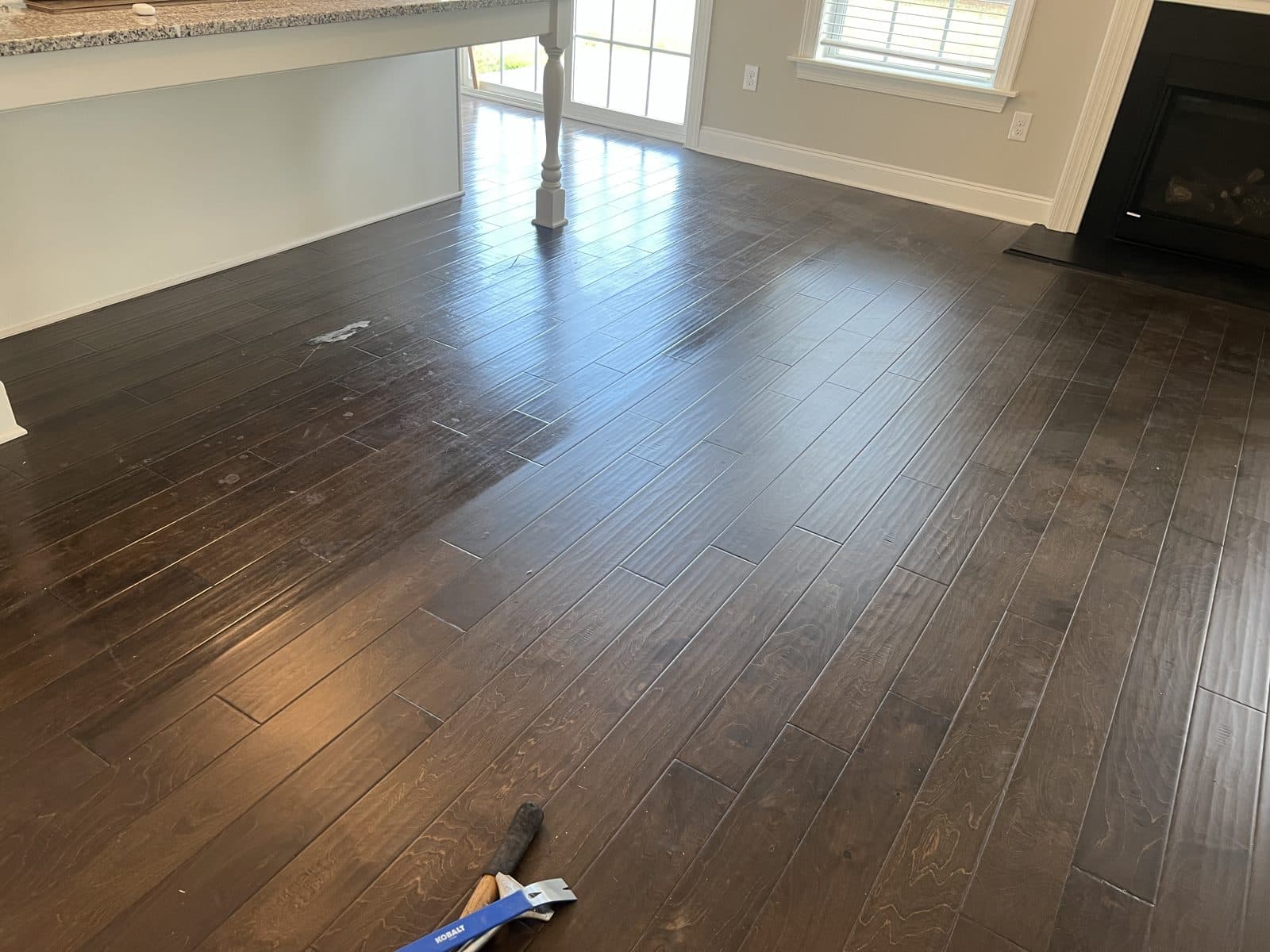
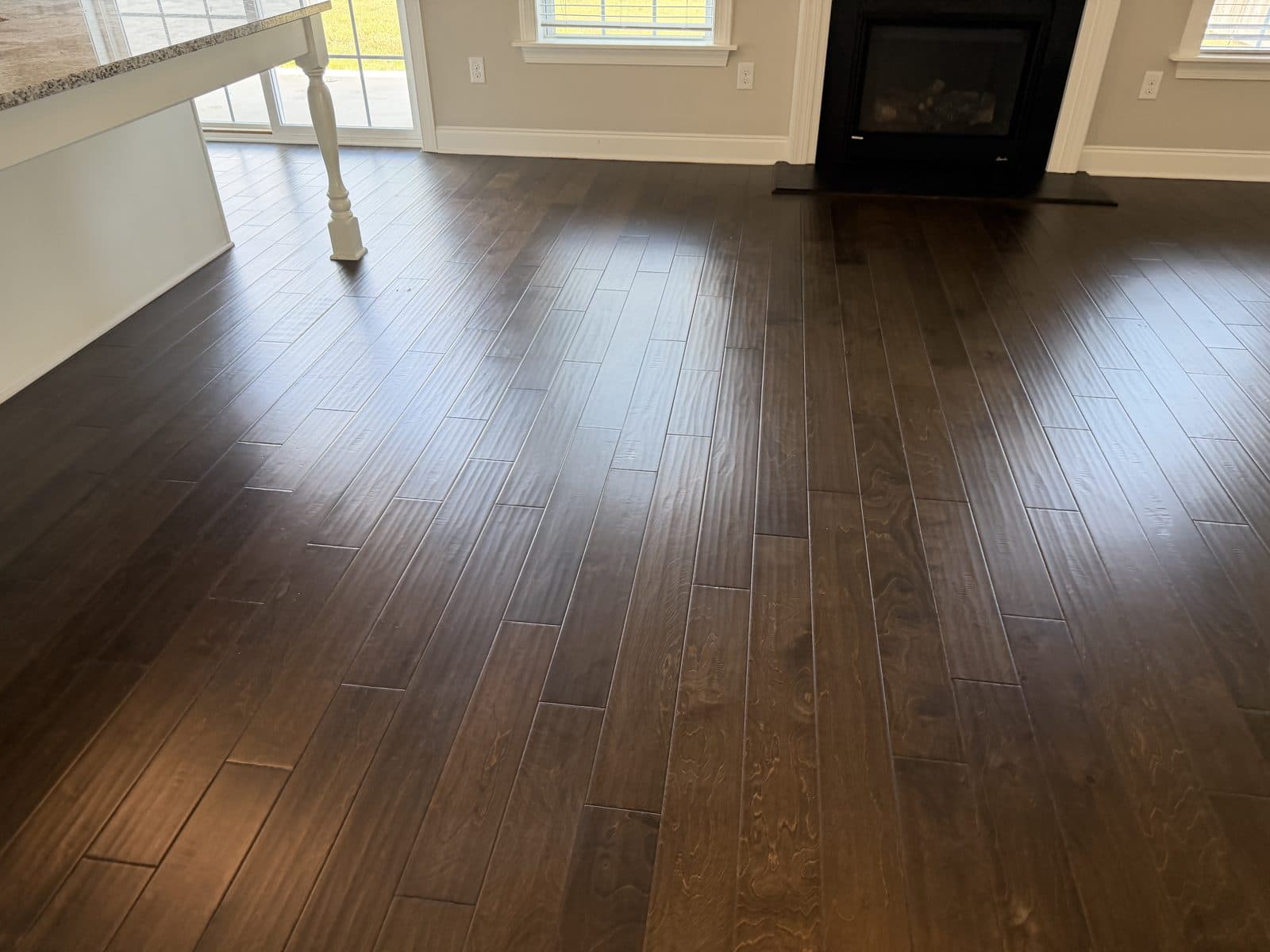
Last week we cleaned a floor in Southwyck, in Fuquay-Varina, that the owners had been told was worn out. It was a hand-scraped engineered floor with a dark stain, glued down to a concrete slab, and it looked the part: cloudy, streaked, drip marks where a mop had been wrung out over it, a gray cast in every room. Nothing about it was worn. It was buried under years of floor polish, and by the end of the day it was the floor in the photo above. That job is the whole point of this article, because it could just as easily have gone the other way, and the difference is one question.
The one question: is the finish still there?
A deep clean removes what is sitting on top of a floor's finish. That is all it does, and it is plenty when the problem is on top. It does nothing for a finish that is worn through, because there is nothing to clean back to. So before anything else we ask whether the finish under the dirt is intact, and the floor answers in three places: the walking lanes, the edges, and a closet.
Good candidates
The whole floor is dull, hazy, sticky, or gray, edges and lanes alike. Nothing catches a fingernail. No bare or lighter wood shows in the traffic paths. A wet rag darkens the floor evenly and it dries back to the same color everywhere. That finish is intact and contaminated, and a deep clean, with polish removal if there is polish, brings it back.
Recoat candidates
The floor is fine at the edges and under furniture but dull in the paths from the door to the kitchen, and that dullness stays after cleaning. The lanes feel rougher than the edges. Scratches are in the finish, not the wood. The finish is thinning. Cleaning will not add any back; a screen and recoat will.
Refinish candidates
Bare or gray wood in the lanes, black water rings, scratches or gouges that catch a fingernail, pet stains, or a floor that is the wrong color. The finish is gone where it matters. A deep clean here is money spent on the wrong step, and we say so.
Every kind of finish can be a candidate. Site-finished polyurethane and waterborne floors, factory-finished floors with their aluminum oxide coats, and oiled floors all deep clean well. The difference is what comes after: an oiled floor is cleaned and then fed with maintenance oil, never screened and recoated, and a factory finish needs an adhesion test before anyone coats over it. If you do not know what is on your floor, that is the first thing we work out at the house.
Why a deep clean will never fix polish
This is the part almost nobody is told, and it is why so many floors get cleaned twice. Consumer floor polishes and restorers, the bottles that promise to bring back the shine, are acrylic. They go on wet and dry to a plastic film on top of your finish. That film is softer than the finish under it, so it scratches instead of the finish. It is slightly porous, so it holds dirt. It yellows. Every coat goes on over the last one, dirt included, and after a few years the floor is a cloudy gray-brown with the grain barely visible through it, which reads to almost everyone as worn out.
Now think about what a deep clean does. A cleaning solution loosens dirt, a scrubber agitates it, an extractor pulls it off. All of that happens to the top surface. On a polished floor the top surface is the polish. The cleaner lifts the dirt off the acrylic and leaves the acrylic, which is the thing making the floor look bad. You end up with cleaner polish, still cloudy, still scratched, still yellow, and usually a homeowner who now believes the floor is beyond help. Water-based cleaners do not dissolve acrylic. Nothing you mop with will.
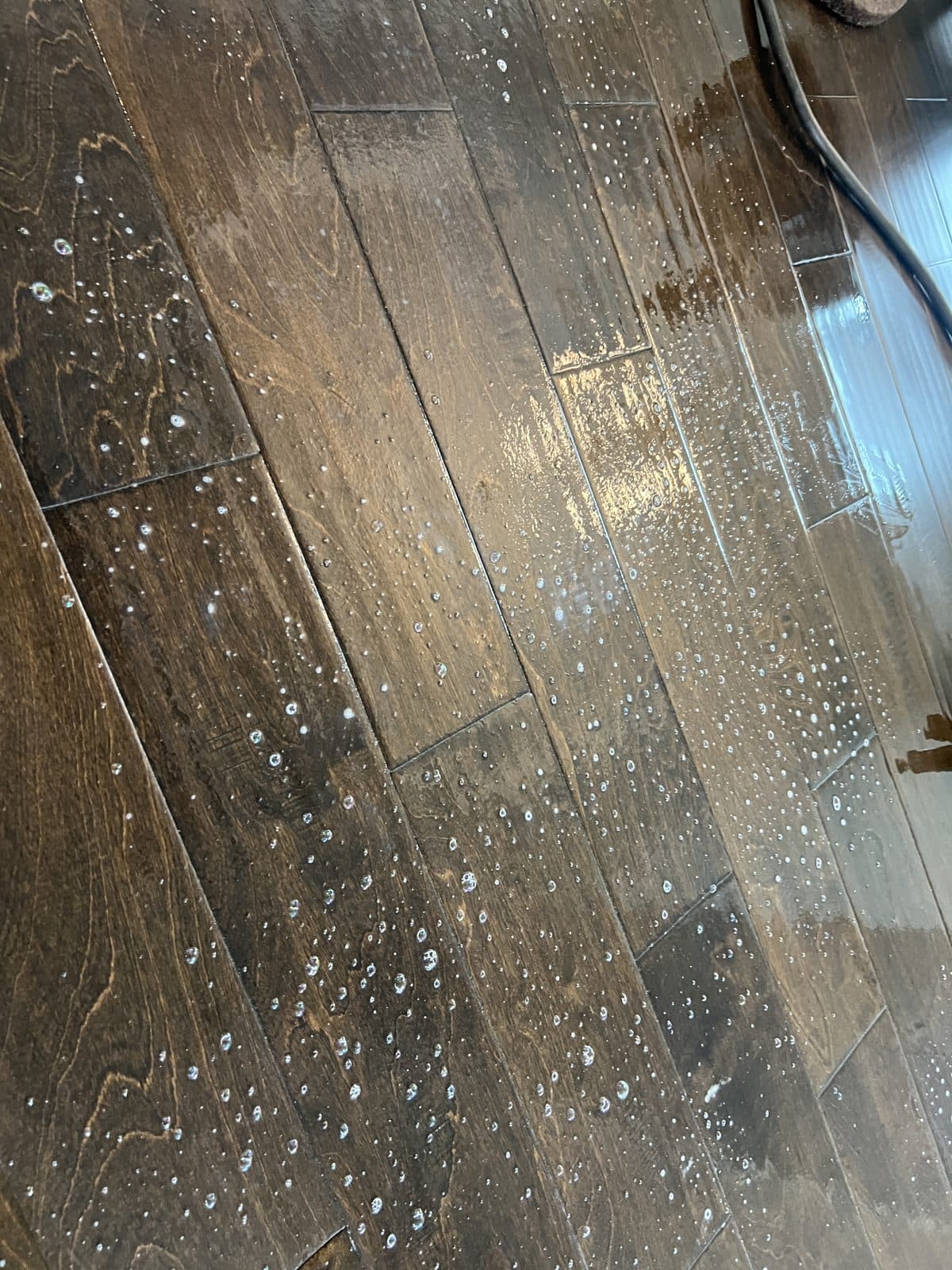
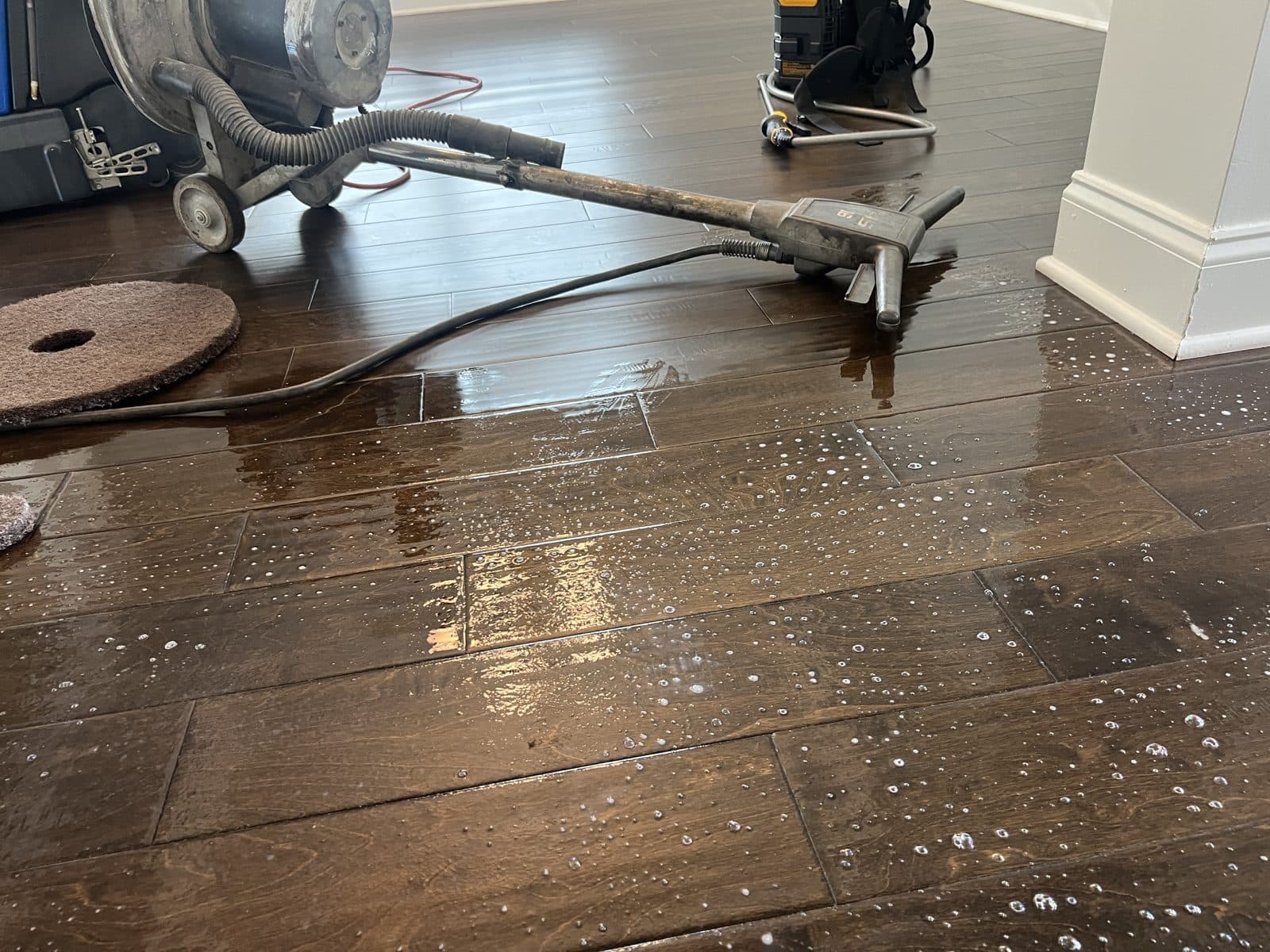
Getting it off is a chemistry job. We spray a professional polish remover made to soften acrylic, let it dwell while it does that, agitate the whole field with a rotary buffer and a pad, hand scrub the edges and the bevels where the film is thickest, then scrub and extract with a hardwood floor scrubber and rinse until nothing is left on the surface. On a heavily built-up floor it takes two passes. That is our polish removal service, and it is a different thing from a deep clean even though they happen on the same visit.
How to tell polish from wear at home
Where is it dull?
Polish dulls the whole floor, edges and closets included, because it was mopped everywhere. Wear dulls the lanes and leaves the edges alone.
Does cleaning make it worse?
A polished floor streaks and clouds more with every mopping, because you are moving softened film around. A worn floor cleans up fine and is still worn.
Do you see footprints and drips?
Socks, bare feet, and paw prints that show in the sheen, and white or milky drip marks where liquid sat, are polish. The film records everything that touches it.
Where does it collect?
Polish pools in bevels and in the texture of a hand-scraped floor, which is why the Fuquay-Varina floor looked gray in its low spots. Wear is the opposite: it takes the high spots first.
The coin test
In a closet corner, scrape the floor with the edge of a coin or a fingernail. A white or gray flake that curls up is acrylic. Nothing coming up, with lighter or drier looking wood in the dull area, is wear.
When the answer is a recoat, not a clean
Here is the failure we try hardest to prevent: a floor with thinning finish gets a deep clean, comes up cleaner, and looks exactly as tired as before, because the dullness was never dirt. It was the finish wearing through. On that floor the dull lanes stay dull after the clean, the rag test shows the lanes drinking water faster than the edges, and the surface feels rougher underfoot where people walk. There is not enough finish left to protect the wood, and no cleaner adds any back.
The fix for that floor is a screen and recoat: a light abrasion of the existing finish and one fresh coat of the same system over the whole floor. It restores protection and sheen in a day with no sanding to bare wood. A deep clean still happens first, because a new coat needs a clean, polish-free surface to bond to, but the clean is the preparation and the coat is the repair. Where polish has been used, it all has to come off before the recoat or the new finish peels; waterborne finishes will not bond to acrylic. Our deep clean, recoat, or refinish guide walks the whole ladder, and the care schedule shows how a floor that is recoated on time almost never reaches a refinish.
What the Fuquay-Varina floor needed
The owners were ready to talk about sanding. The rag test said otherwise: the floor darkened evenly and dried back to one color, nothing caught a fingernail, and the coin came up with a curl of gray acrylic. Polish removal and a deep clean, one day, and the finish that had been under the film all along came back with its low, even sheen and the hand-scraped texture readable again instead of filled with gray. No recoat was needed, because the finish was never worn. It was hidden.
That is the best outcome a floor can have, and it only happens when the diagnosis is right. The same floor with worn lanes would have been a clean plus a recoat. The same floor with gray wood in the lanes would have been a refinish, and we would have said so before anyone spent a dollar on cleaning. The full project, with every before, during, and after photo, is in our portfolio.
Keeping it that way
Stop the polish. Every bottle that promises shine or restoration is another layer of the same film. Dust weekly, damp clean monthly with a cleaner made for the finish that is actually on your floor, and let a professional deep clean handle what builds up beyond that, every year or two. When the finish finally does thin, recoat it. A floor that is cleaned and recoated on schedule can go decades without a sanding, which is the point of everything above.
Questions and Answers
What floors are good candidates for a professional deep clean?
Any hardwood or engineered floor whose finish is still intact under the dirt: no bare wood, no gray or black staining, no scratches that catch a fingernail. Site-finished floors with a polyurethane or waterborne finish, factory-finished floors, and oiled floors all qualify, though an oiled floor is cleaned and then re-oiled rather than recoated. If the floor is dull because of what is sitting on the finish, a deep clean fixes it. If it is dull because the finish itself is worn, a deep clean makes it a cleaner worn floor.
Why does a deep clean not remove floor polish?
Because a deep clean removes what is sitting on top of the surface, and on a polished floor the surface is the polish. Consumer polishes and restorers are acrylic films. They dry hard, they yellow, they hold every grain of grit that walks over them, and they scratch instead of the finish. A cleaning solution and a scrubber lift dirt off that film and leave the film, so the floor comes out a cleaner shade of hazy. Getting the polish off takes a stripper made to soften acrylic, dwell time, agitation, and extraction. That is polish removal, a different service with a different chemistry.
How can I tell if my floor has polish on it or is just worn?
Polish is cloudy or milky, it streaks, it looks worse the more you mop it, and it shows footprints and drip marks where liquid sat. It sits thickest in bevels and in the texture of a hand-scraped floor. Wear is different: the dull spots are only in the walking lanes, they stay dull no matter what you do, and the floor feels rougher there. The quickest test is a fingernail or a coin in a closet corner. If it scrapes up a white or gray flake, that is polish. If nothing comes up and the wood under the dull spot looks lighter or drier, that is wear.
When do I need a recoat instead of a deep clean?
When the finish is worn thin. If the sheen is gone in the traffic lanes and stays gone after the floor is clean, there is not enough finish left to protect the wood, and no amount of cleaning adds any back. A screen and recoat puts a new wear layer over the whole floor. A deep clean usually comes first, because a new coat has to go onto a clean, polish-free surface to bond, but the clean is the preparation, not the fix.
Can you recoat a floor that had polish on it?
Only after every trace of the polish is off. Waterborne finishes like Bona Traffic HD will not bond to acrylic polish, and a recoat over polish peels. Polish removal, a rinse, and an adhesion test come before the recoat. A floor that has been polished for years sometimes needs two passes of remover before it is ready.
What floors cannot be saved by a deep clean or a recoat?
Floors where the finish is gone: bare or gray wood in the lanes, black water staining, deep scratches into the wood, or pet damage. Those need a refinish, and a deep clean on them is money spent on the wrong step. We say so at the assessment rather than clean a floor that needs sanding.
The floor pictured is a real job in Fuquay-Varina, September 2026, photographed by us before, during, and after. Care and recoating practice follows the National Wood Flooring Associationguidelines and the finish manufacturers' instructions.
Not Sure Which One Your Floor Needs?
Send us a few photos of the dull spots, one in a closet and one in a walking lane, and tell us whether anyone has used a polish or restorer. Most of the time we can tell you from the pictures whether it is a clean, a recoat, or a sanding, and price the right one. Serving Raleigh, Clayton, Cary, Wake Forest, Garner, Apex, Knightdale, Fuquay-Varina, Holly Springs, Wendell, Zebulon, Selma, and Smithfield.
Send Us PhotosDeep cleaning and polish removal are same-day services in every town we work in. We handle hardwood floor deep cleaning and polish removal across the Triangle, including Fuquay-Varina, Clayton, and Raleigh. Request a free estimate and we will look at your floor in person before we talk numbers.