Weekly: Dust, Do Not Wet
A dry microfiber pad or a vacuum with the beater bar off, once a week or whenever you can see grit. Grit is sandpaper under your shoes. This one habit does more for a finish than everything else on this page combined.
Monthly: A Damp Clean With the Right Cleaner
Once a month, or when the floor looks dull under the lights, a barely damp microfiber pad with a cleaner made for your finish. For waterborne finishes like Bona Traffic HD or Mega One, that is a pH-neutral hardwood cleaner. For hardwax oil floors, the manufacturer's soap, because it feeds the oil instead of stripping it. Never a steam mop, never vinegar, never anything that promises shine. Shine products are the reason polish removal exists as a service.
Every Year or Two: A Professional Deep Clean
Even with good habits, a floor collects what a mop cannot lift: cleaner residue in the bevels, tracked-in oils, the film that builds in kitchens. A professional deep clean uses a machine scrub with a cleaner matched to the finish, a rinse, and hand work along edges and in bevels. It brings the floor back to the finish itself, without sanding anything. Once a year for a busy home with pets and kids, every two years for a quieter one, is a realistic rhythm.
When the Schedule Is Not Enough
Three signs mean a deep clean alone will not do it.
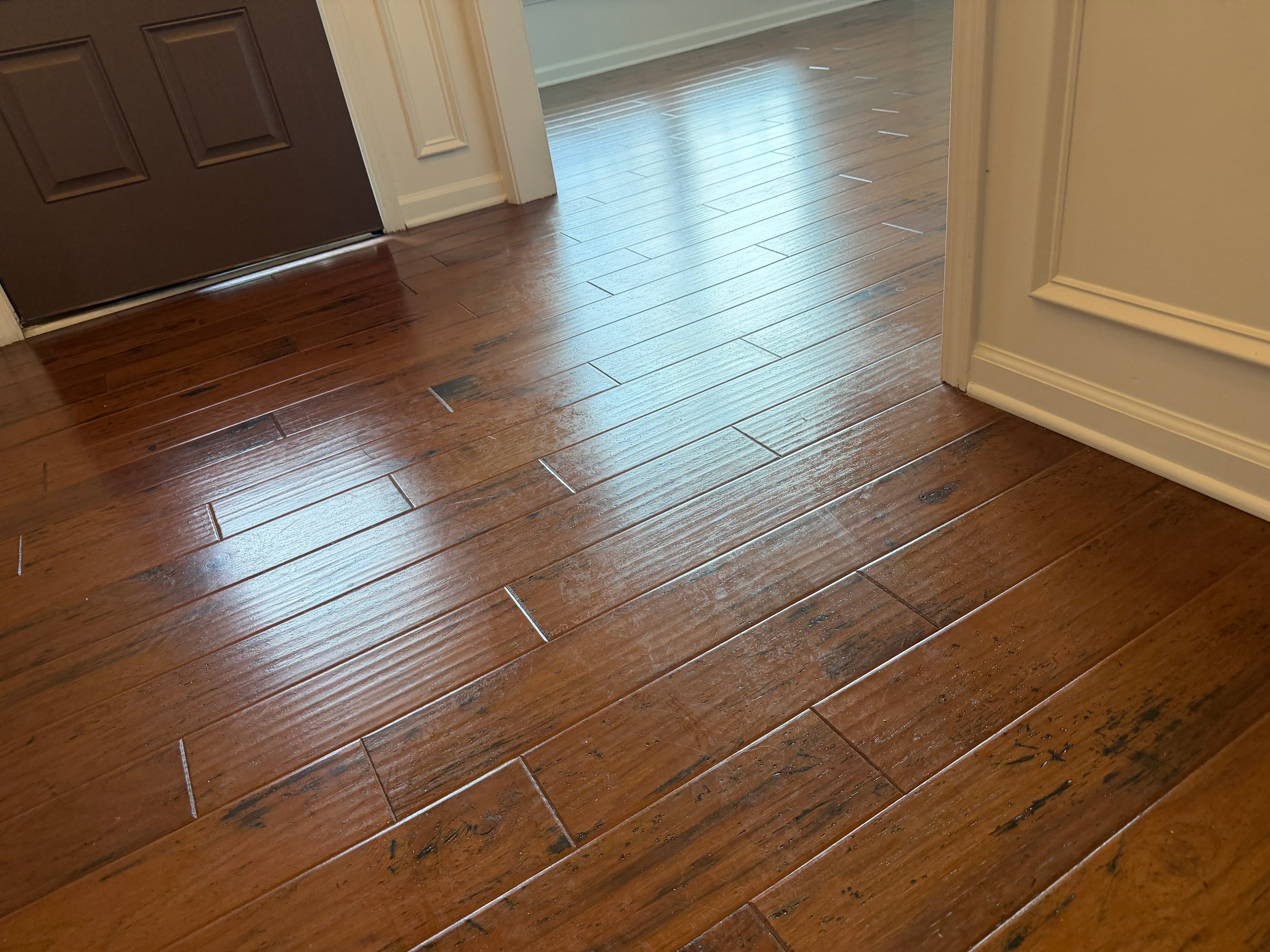
A cloudy or streaky film that gets worse when you clean it. That is consumer polish buildup. Products sold as floor polish or restorer sit on top of the finish, trap dirt, and turn hazy. They need to be chemically removed before anything else works. That is polish removal, and it is a different service from deep cleaning. If you are not sure which one your floor is, here is how to tell polish from wear at home.
Dull traffic lanes that stay dull after cleaning. The finish is worn thin in those lanes. A deep clean followed by a screen and recoat adds a fresh wear layer and resets the clock, as long as the wear has not reached bare wood.
Gray or dark wood showing through. The finish is gone and water is reaching the wood. That is a refinish conversation, not a cleaning one.
The Honest Order of Operations
Weekly dust. Monthly damp clean. Deep clean when it looks tired. Polish removal if anyone ever used a shine product. Recoat before the finish wears through. Refinish only when it has. Most floors we see in Clayton and Garner homes skip the middle steps and arrive at refinish years early. The schedule above is how you avoid that. If you are trying to tell which step your floor is at, our guide to deep clean, recoat, or refinish walks the decision.
Questions We Get
Can I deep clean my hardwood floors myself?
You can do the weekly and monthly steps yourself, and you should. The deep clean is a machine and product job. Rental buffers and the wrong cleaner do more harm than the film they are meant to remove.
How do I know if my floors have polish buildup?
Put a few drops of water on a hazy spot. If it turns white or milky after a few minutes, that is polish, not finish. Finish does not react to water.
Is deep cleaning the same as buff and recoat?
No. Deep cleaning removes what is on top of the finish. A recoat adds a new coat of finish. A deep clean is usually the first step before a recoat so the new coat bonds to clean finish.
How often should hardwood floors be recoated?
Every three to seven years depending on finish and traffic. A recoat is far less disruptive than a refinish and, done in time, means the floor may never need a full sanding again.
Not sure whether your floor needs a cleaning, a recoat, or more? Request a free estimate. We look at it in person and tell you which step it is at, with no charge and no pressure.
Deep cleaning and polish removal are same-day services, and they are the step most floors skip on the way to an early refinish. We handle hardwood floor deep cleaning and polish removal across the Triangle, including Clayton, Garner, and Cary. Request a free estimate: send a few photos and project details for a free preliminary estimate, and if your floor needs an on-site assessment, we explain it and any assessment fee before scheduling.