
The 60-Second Test
Before you call anyone, you can usually place your floor on the ladder yourself. Look closely at a high-traffic area, a hallway, the path from the garage door, the spot in front of the kitchen sink, and ask three questions in order.
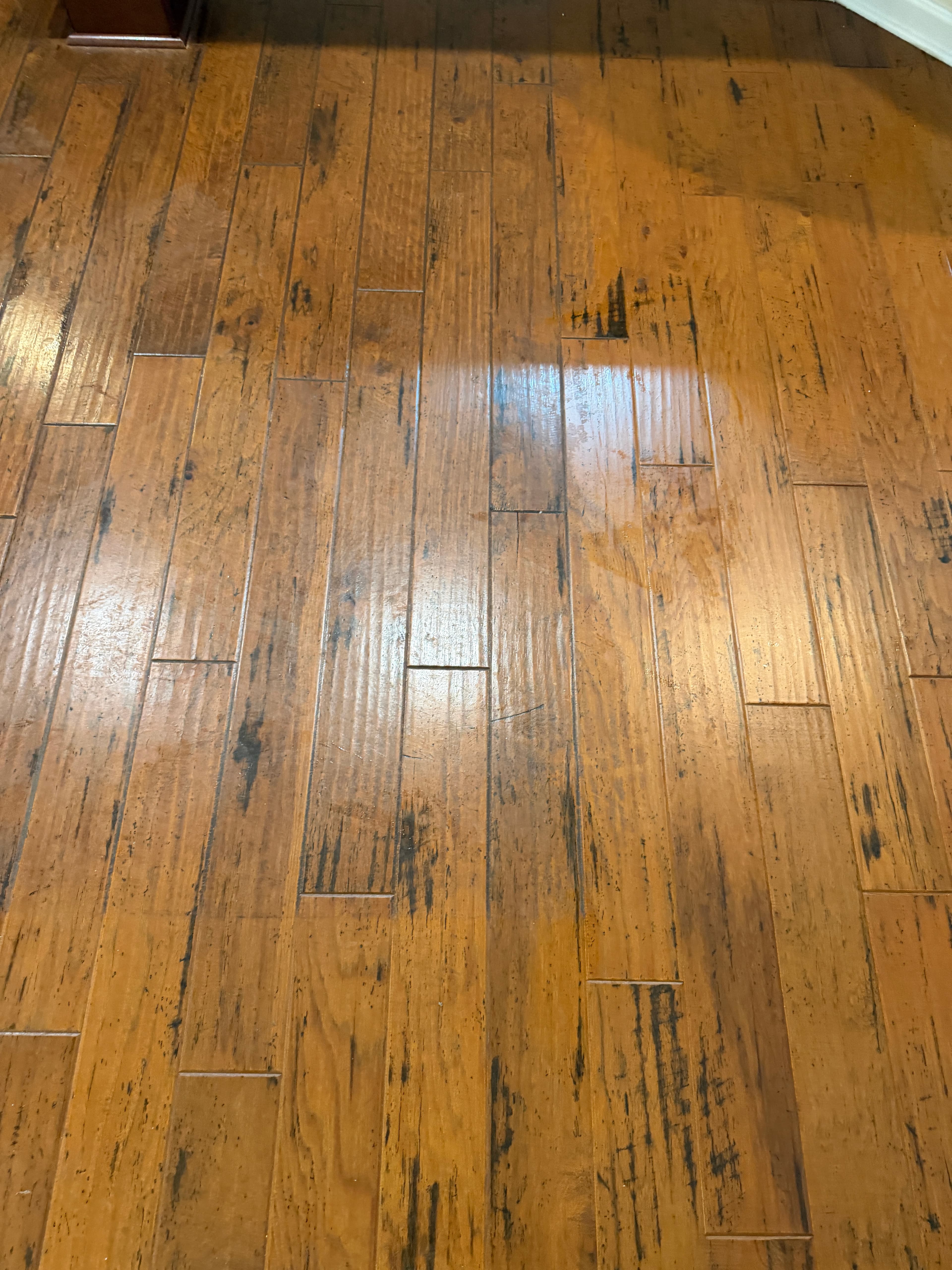
Is the finish dull, hazy, or sticky, but otherwise unbroken? If the wood is not exposed and there are no deep scratches, the finish is likely intact and just contaminated. That is a deep clean, the cheapest fix on the ladder. A lot of floors that homeowners assume are worn out are actually buried under layers of consumer floor polish.
Is the finish worn thin in the traffic patterns, but not down to bare wood? If the sheen is gone in the walkways and the surface feels rougher there, but you cannot see raw wood and your fingernail does not catch on anything, the finish is thinning. That is a recoat. Catching a floor at this stage is the single best way to avoid a refinish.
Can you see bare wood, gray or black staining, or scratches that catch your fingernail? Once wear breaks through to the wood, or the floor needs a color change, you are past the gentle options. That is a refinish. If the dark spots are from pets, our pet stain guide covers which ones sand out and which need board replacement.
The honest rule we work by: choose the least invasive service that actually solves the problem. A deep clean or a recoat at the right moment saves you thousands and years of floor life compared to a premature refinish.
Level 1: Deep Clean and Polish Removal
This is the gentlest service on the ladder and the most misunderstood. Many floors look tired not because the finish is worn, but because they are coated in build-up: store-bought floor polish, mop-and-shine products, grease, and embedded grime. Those products promise shine and deliver a hazy, sometimes sticky film that dulls the floor and traps dirt. No amount of regular mopping removes it, and neither does a plain deep clean; our guide to whether your floor is a deep clean candidate explains why polish needs its own step.
Our hardwood floor deep clean and polish removal service strips that contamination off without touching the finish underneath. We spray a professional remover, let it dwell to break down the buildup, agitate it with a rotary buffer, hand-scrub the edges and beveled grooves where grime concentrates, then scrub and extract with a hardwood floor scrubber. The floor that comes out the other side is the floor you forgot you had.
Deep cleaning starts at $0.85 per square foot, and polish removal with deep cleaning starts at $2.40 per square foot. It is a same-day service. The catch: it only works when the finish below the buildup is still sound. If the finish itself is worn through, cleaning will not bring it back, and we will tell you that honestly rather than sell you a service that will not hold.
Level 2: Recoat (Screen and Recoat)
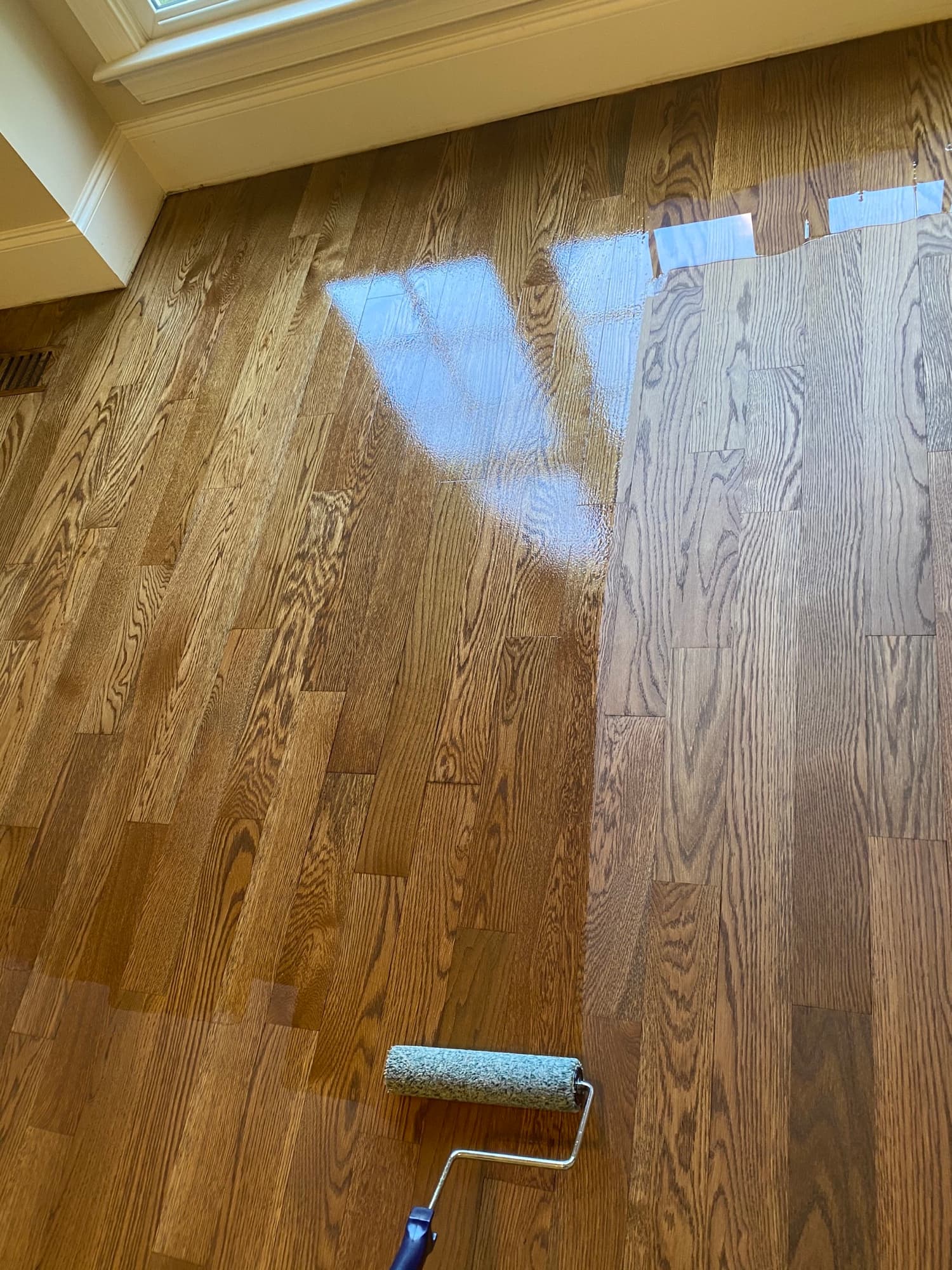
A recoat, also called a screen and recoat or a buff and coat, is the step most homeowners do not know exists, and it is the one that saves the most money. When the finish is worn thin but the wood is still protected, we lightly abrade the existing surface with a screen so a new coat can bond, then apply one fresh coat of finish over the entire floor.
The result is a floor with its protection and sheen restored, in about six hours, with no sanding to bare wood and no dust of a full refinish. Our hardwood floor recoating service starts at $2.25 per square foot. Done on the right schedule, a recoat every three to five years can extend the life of a finish almost indefinitely, because wear never gets the chance to cut through to the wood.
Two common questions. Does a recoat require sanding? Not in the way a refinish does. The screening step is a light abrasion of the existing finish so the new coat adheres. It does not remove the finish or reach bare wood. Can you recoat engineered floors? Yes, and it is especially valuable there, because engineered floors have a thinner wood layer with limited sanding capacity over their lifetime. A recoat adds protection without spending any of that capacity.
The limits of a recoat are firm. It cannot change your floor color, it cannot remove scratches that reach the wood, and it will not bond properly over floors coated in wax or consumer polish, which is why a deep clean sometimes has to come first. If there are bare spots, a recoat is the wrong tool.
Level 3: Refinish
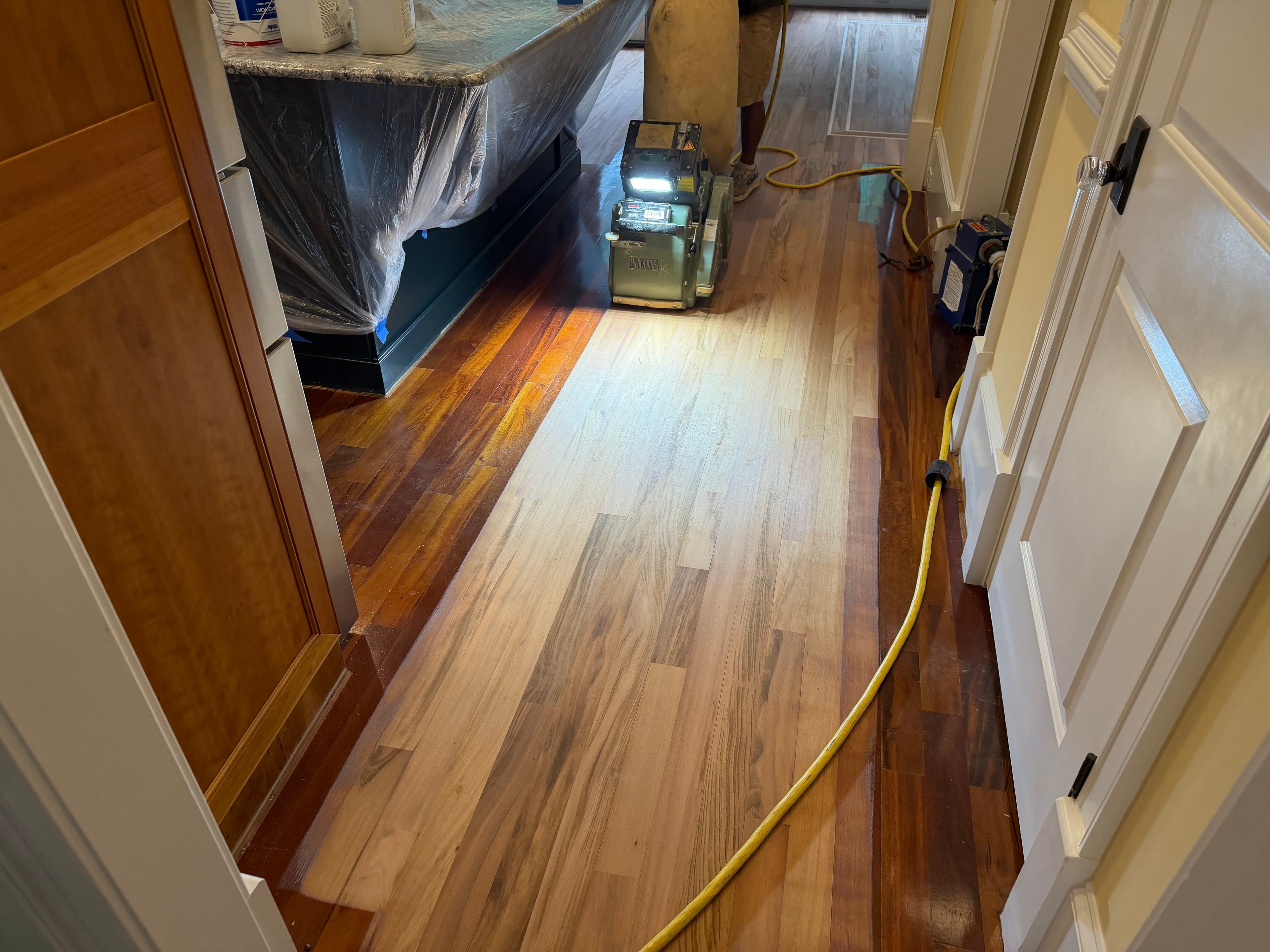
A refinish is the full rebuild. We sand the floor down to bare wood with our professional sanding equipment, which erases scratches, dents, gray water staining, and old finish alike. From bare wood we can take the floor anywhere: a new stain color, a natural look, or a match to existing floors, then we build it back up with a new finish system.
This is the only service that can change your floor color or repair real damage, and it is the most involved, spanning multiple days. Refinishing in the Triangle runs $5.50 to $8.00 per square foot, starting at $5.50 with a water-based finish and no stain, with color changes and specialty species priced at the in-home assessment. We carry a $1,500 project minimum on refinishing work. For the finish system that goes on after sanding, our Bona Traffic HD vs. Rubio Monocoat guide walks through the options. If you are weighing whether your floor has actually reached this stage, our signs your floors need refinishing article covers the water test and the visual cues in detail. And if the wood is past saving entirely, our refinishing vs. replacement guide walks through when starting over is the smarter spend.
Recoating vs. Refinishing: The Decision That Matters Most
Of the three, the choice that trips up the most homeowners, and where the most money is on the line, is recoating vs. refinishing. They sound similar and they are completely different jobs.
Refinishing sands to bare wood. It is the only option that changes color, removes deep damage, and resets the floor entirely. It costs the most and takes the longest.
Recoating never reaches bare wood. It refreshes a finish that is worn but intact, in a fraction of the time and cost. It cannot change color or fix damage that has broken through the surface.
The deciding factor is simple: has wear reached the wood?If the finish is thinning but the wood is still sealed, recoat. If the wood is exposed, scratched deep, stained, or you want a different color, refinish. Recoating a floor that genuinely needs refinishing is throwing money away, because the new coat has nothing sound to bond to over the bare spots. Refinishing a floor that only needed a recoat is spending refinish money, and a layer of the wood's sanding life, on a job a recoat would have solved.
How We Decide at Your Assessment
At every in-home assessment we walk the floor with you and place it on this ladder out loud. We test the finish in the worst-wear areas, check for buildup versus genuine wear, look for bare spots and water staining, and ask what you are hoping for, including whether a color change is on the table. Then we recommend the lowest rung that solves the problem, in writing.
Sometimes that is a $0.85 per square foot deep clean on a floor the homeowner assumed needed thousands of dollars of refinishing. Sometimes it is a recoat that buys five more years. And sometimes the wood really is exposed and a refinish is the right call. The point is that we tell you which, honestly, rather than defaulting to the most expensive service.
Frequently Asked Questions
What is the difference between recoating and refinishing hardwood floors?
Refinishing sands the floor all the way down to bare wood, which lets us change the color, remove deep scratches, and repair damage before applying a new finish system. Recoating, also called a screen and recoat, only lightly abrades the existing finish and adds one fresh coat on top. Recoating never reaches bare wood, cannot change color, and only works when the existing finish is worn but still intact with no bare spots.
Can you recoat hardwood floors without sanding?
A recoat does not sand to bare wood, but it does require a light screening of the surface so the new coat bonds. That screening is not full sanding and does not remove the existing finish. If a floor has bare spots, deep scratches, or pet damage that reaches the wood, screening alone will not fix it and the floor needs a full refinish instead.
Can I just deep clean my floors instead of refinishing them?
Often, yes. Many floors that look dull or cloudy are not worn out. They are coated in consumer polish, grime, or product buildup that a professional deep clean and polish removal can take off, restoring clarity without touching the finish. Deep cleaning only works when the finish underneath is still sound. If the finish itself is worn through, you need a recoat or refinish.
Can you recoat engineered hardwood floors?
Yes, as long as the factory or site-applied finish is intact and the floor has not been worn through to the wear layer. A recoat adds a fresh protective coat without sanding, which is ideal for engineered floors that have a thinner wood layer and limited sanding capacity over their lifetime.
How do I know if my floor is too far gone to recoat?
If you can see bare wood in traffic patterns, gray or black water staining, deep gouges, or scratches that catch your fingernail, the floor is past the point of recoating and needs a refinish. A recoat refreshes a worn surface. It cannot rebuild a damaged one.
Not sure which your floors need? Request an in-home assessment. We walk the floor with you, place it on the ladder, and give you a written recommendation for the right service, not the most expensive one.
The right call between a clean, a recoat, and a full refinish is made on your floor, not over the phone. We handle buff and recoat service across the Triangle, including Holly Springs, Knightdale, and Cary. Request a free estimate: send a few photos and project details for a free preliminary estimate, and if your floor needs an on-site assessment, we explain it and any assessment fee before scheduling.