
Hand-Scraped Engineered Floor Polish Removal and Deep Clean in Southwyck, Fuquay-Varina NC
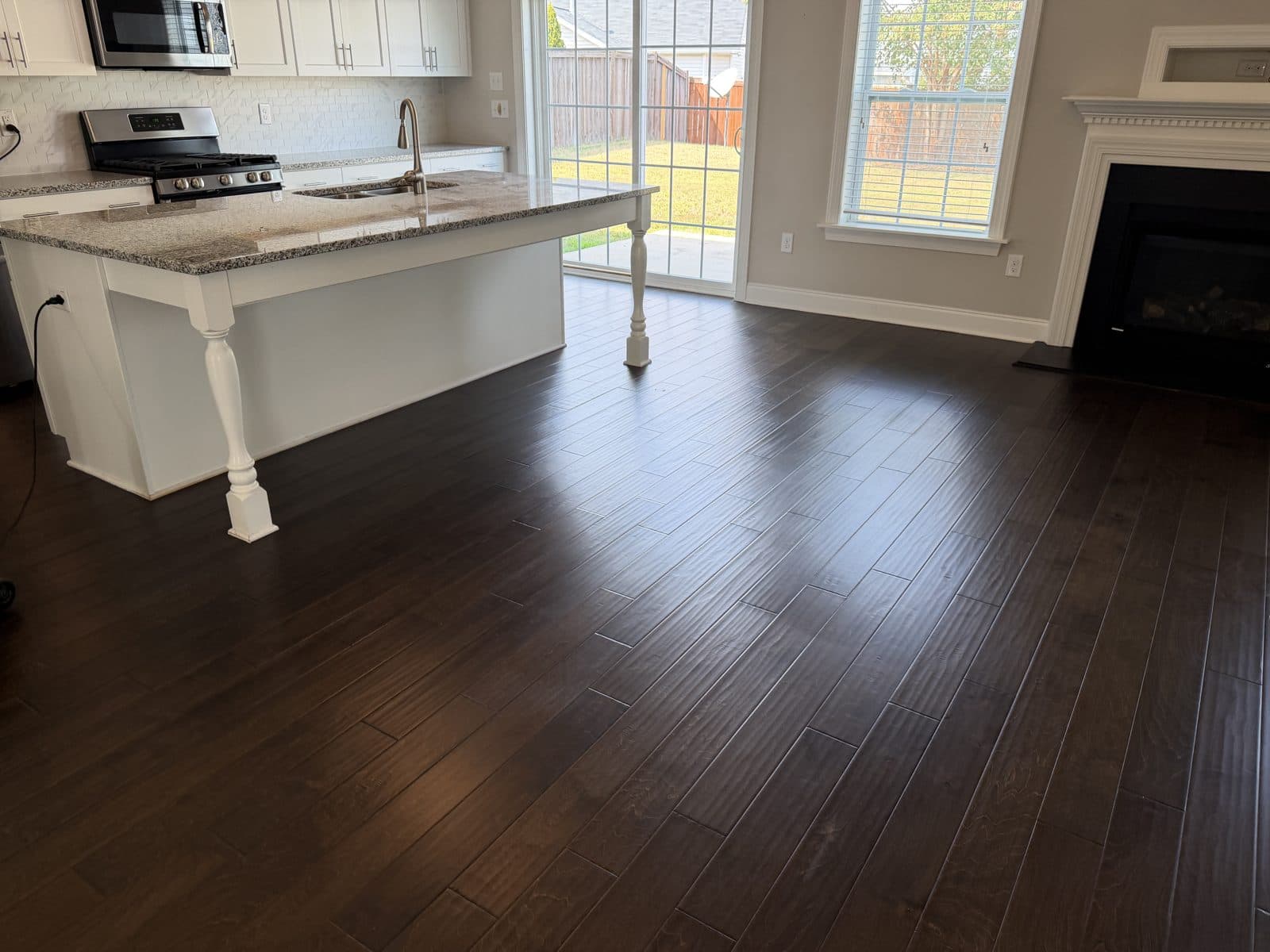
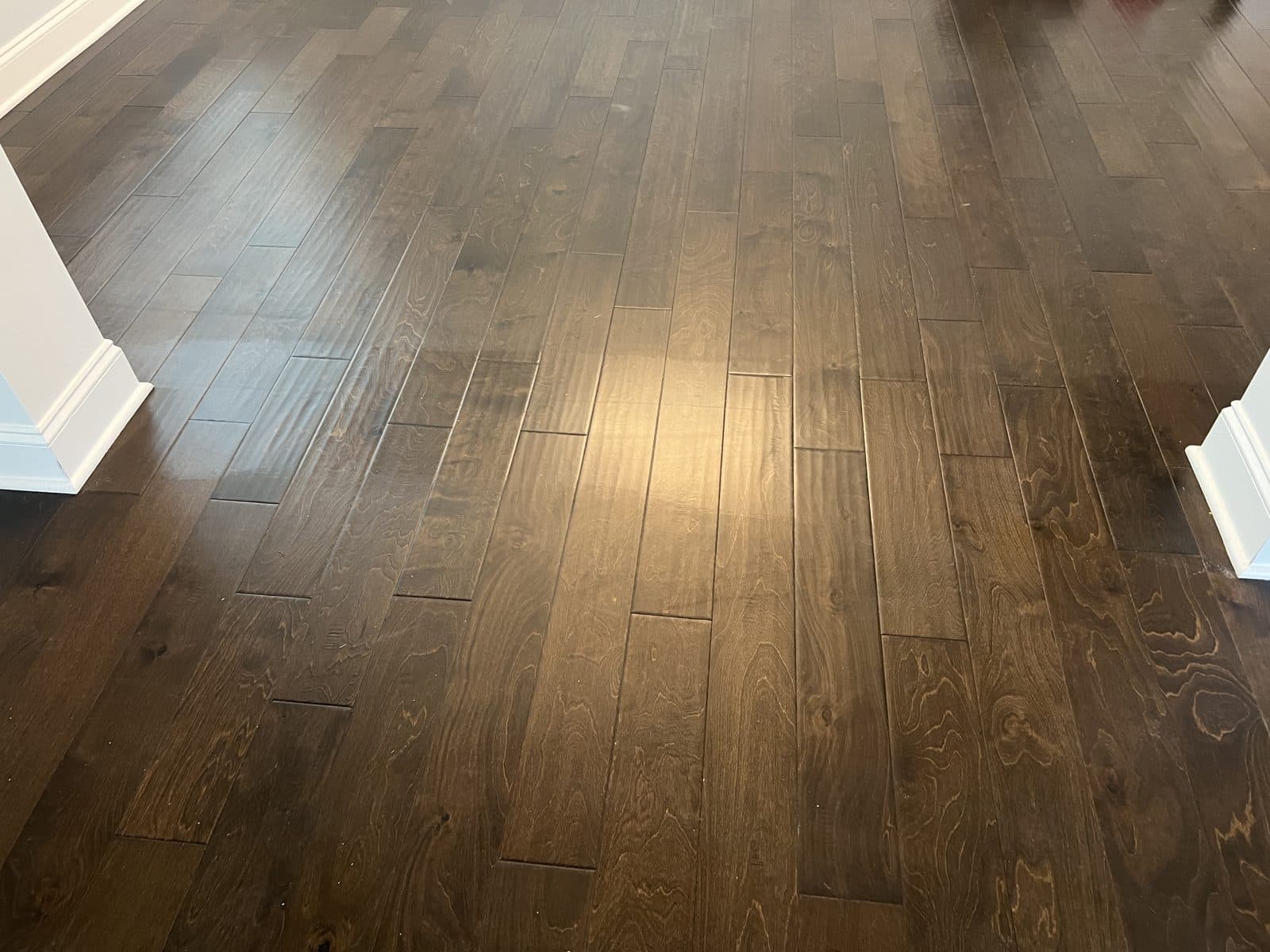
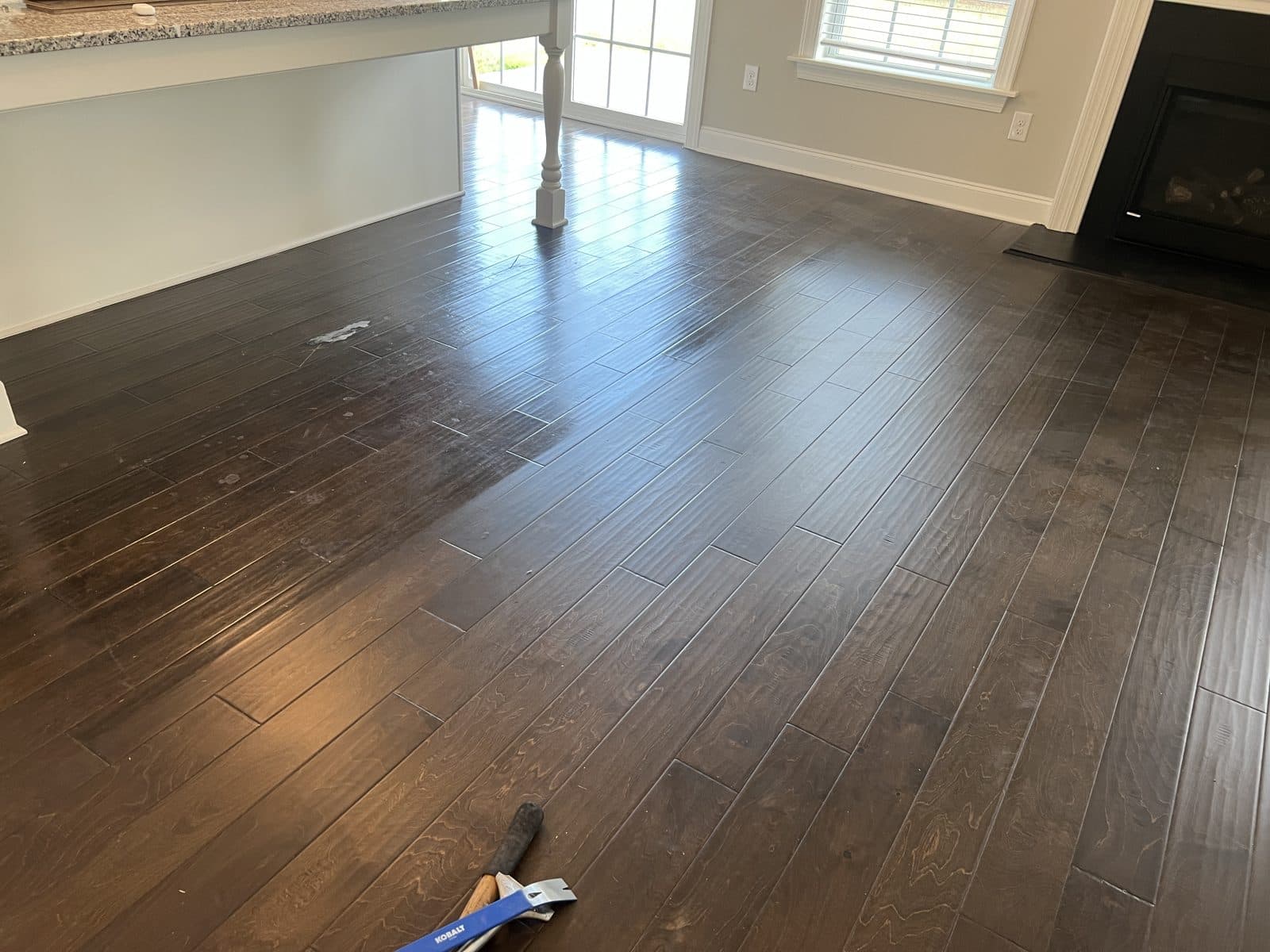
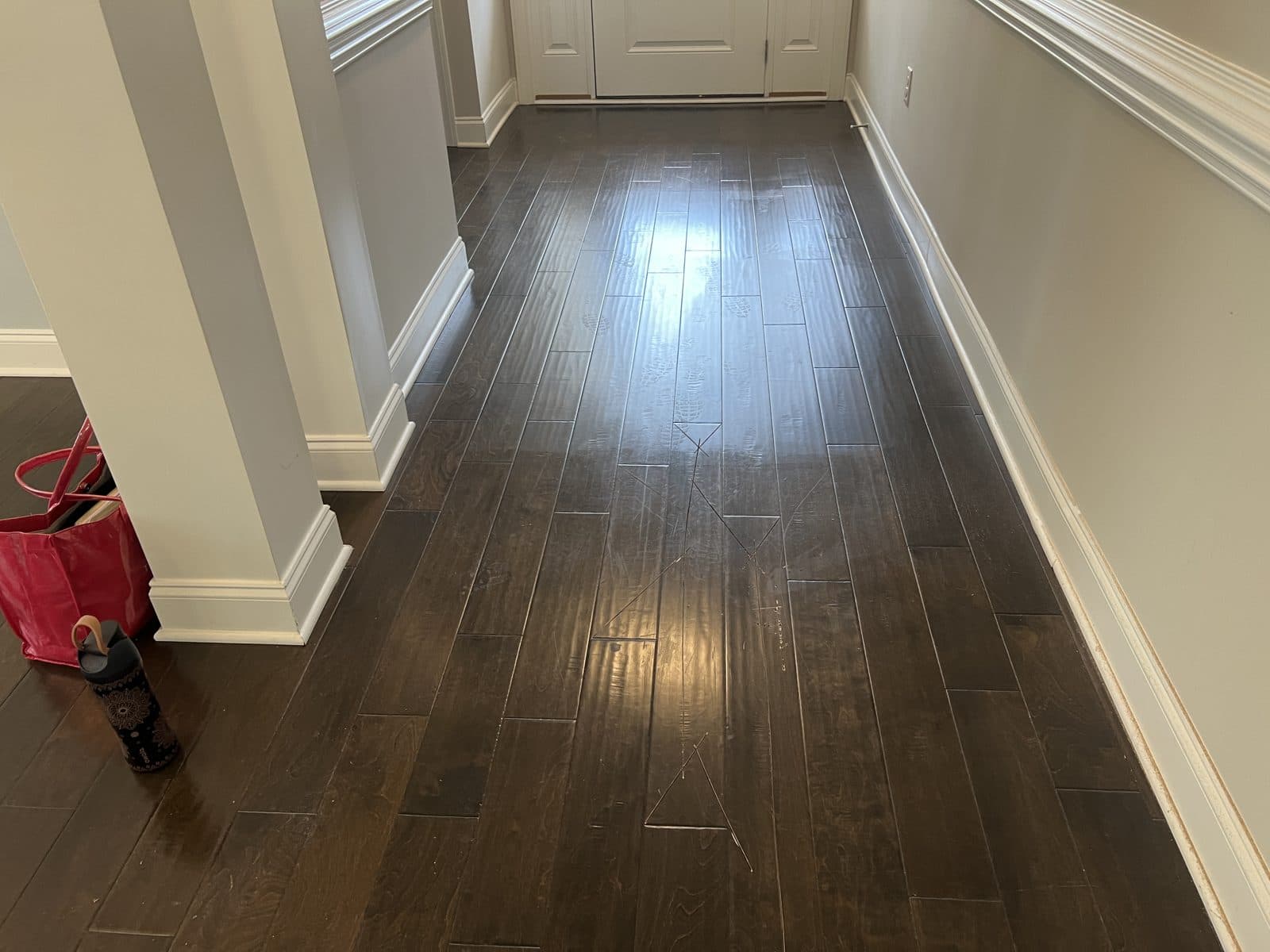
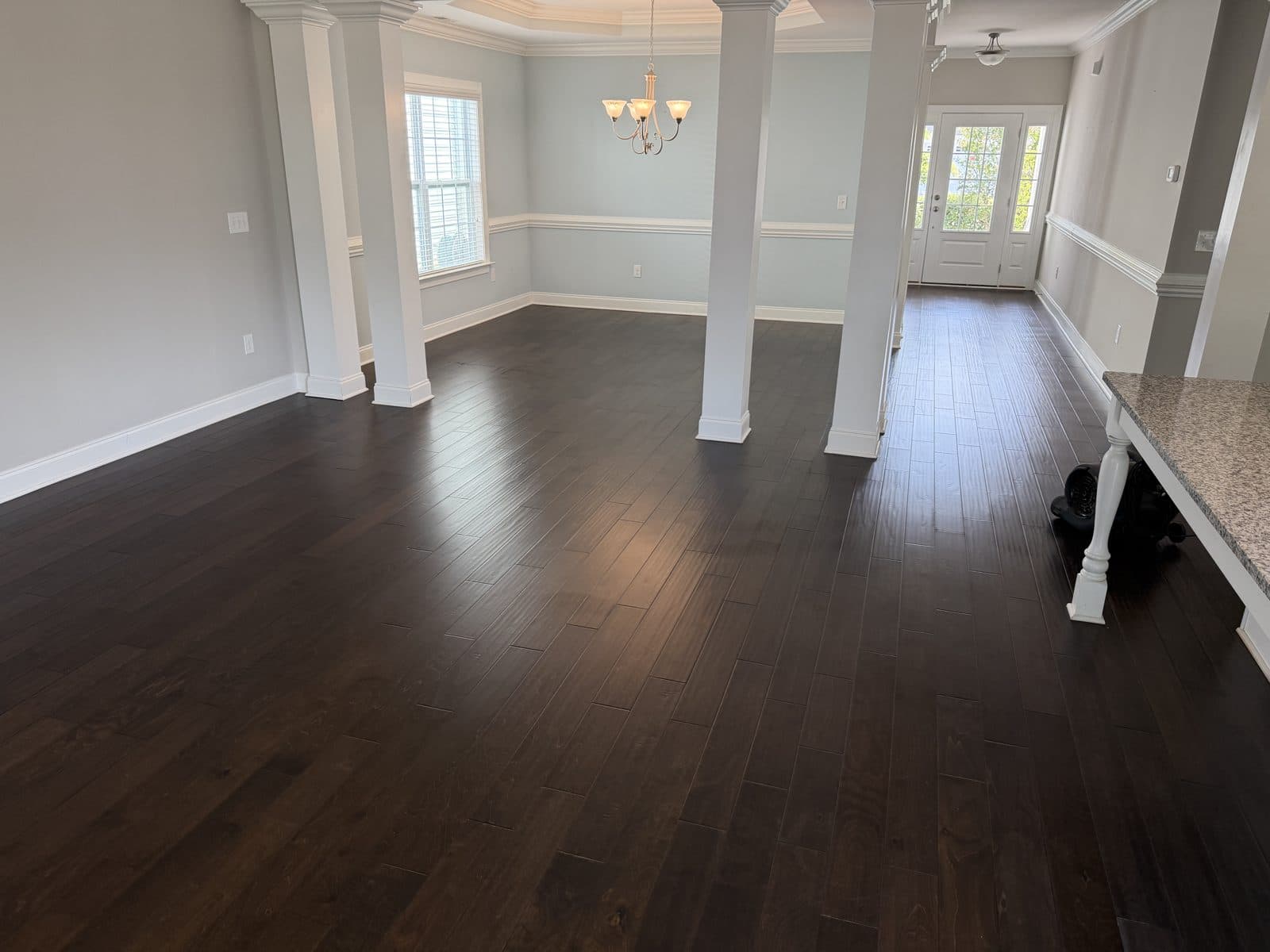
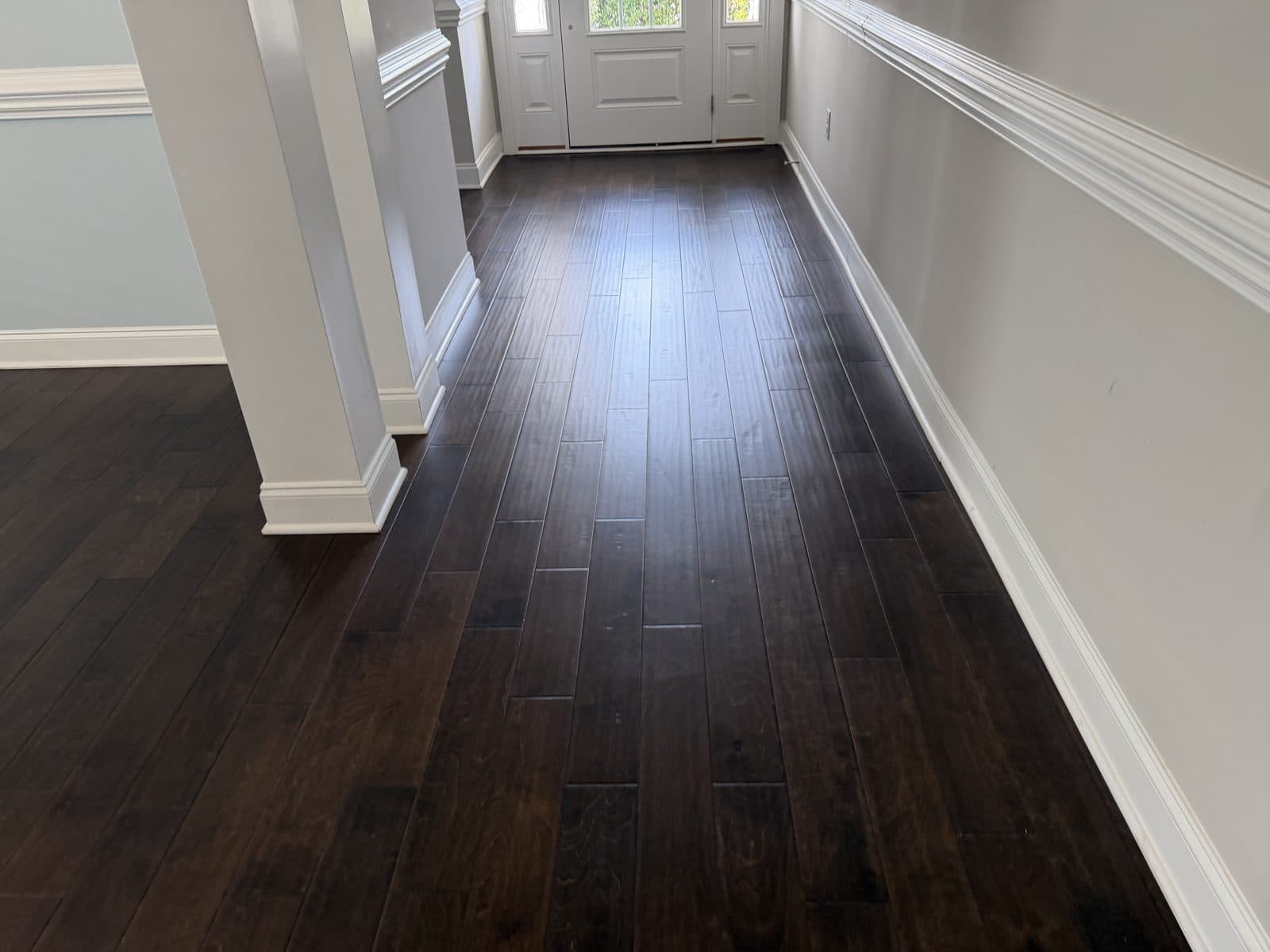
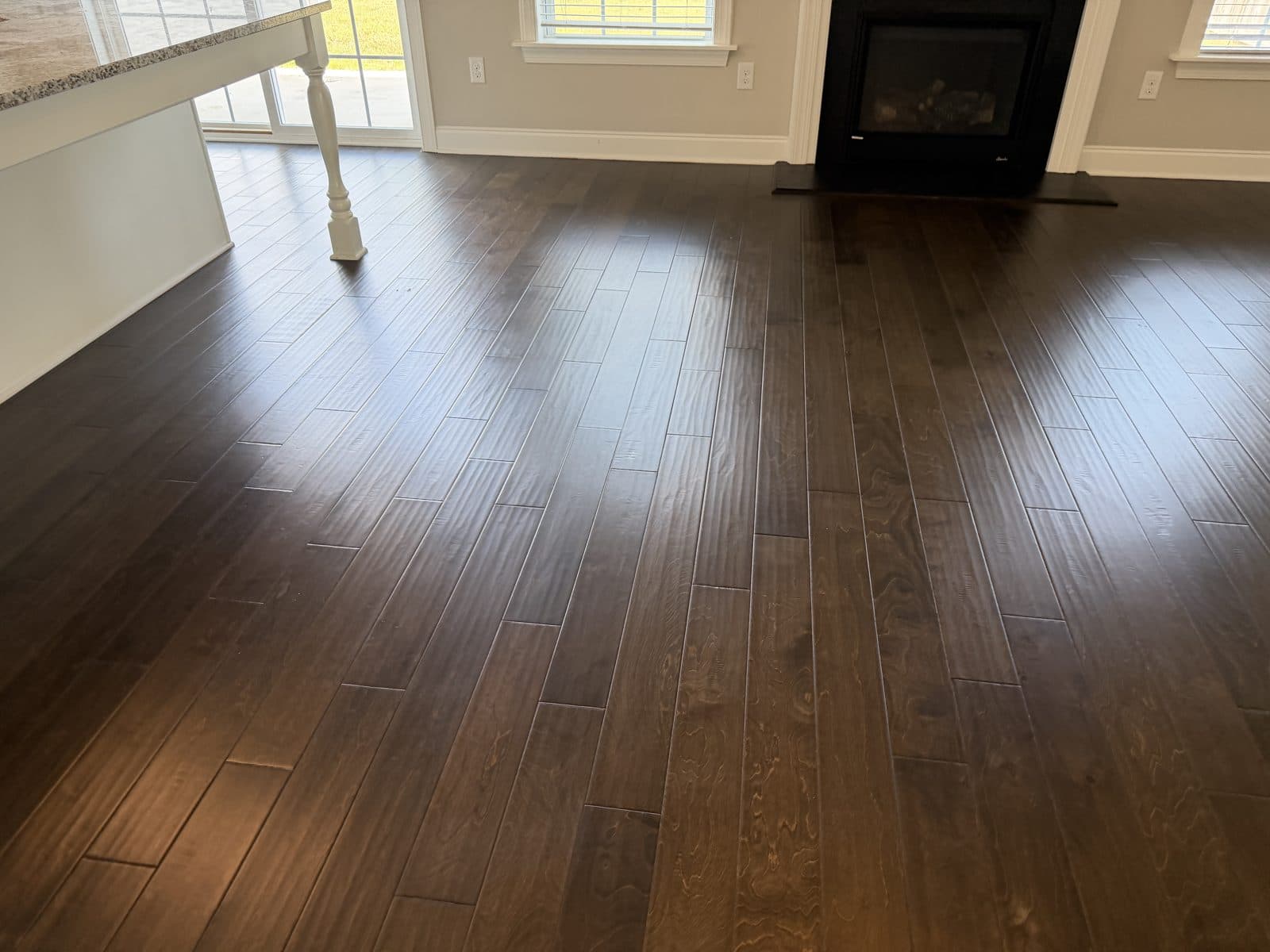
A dark, hand-scraped engineered floor in Fuquay-Varina that looked worn out and was not. Years of consumer polish came off in one day, eight damaged boards were replaced with matching material from the house, and the factory finish underneath came back with nothing sanded and nothing recoated.
Location
Southwyck, Fuquay-Varina, NCSpecies
Engineered Hardwood, Hand-Scraped, Dark Stain, Glued Down to a Concrete Slab
Finish
Original factory finish preserved. No sanding, no recoating.
Square Feet
800 sq ft
Timeline
1 day
Completed
2026
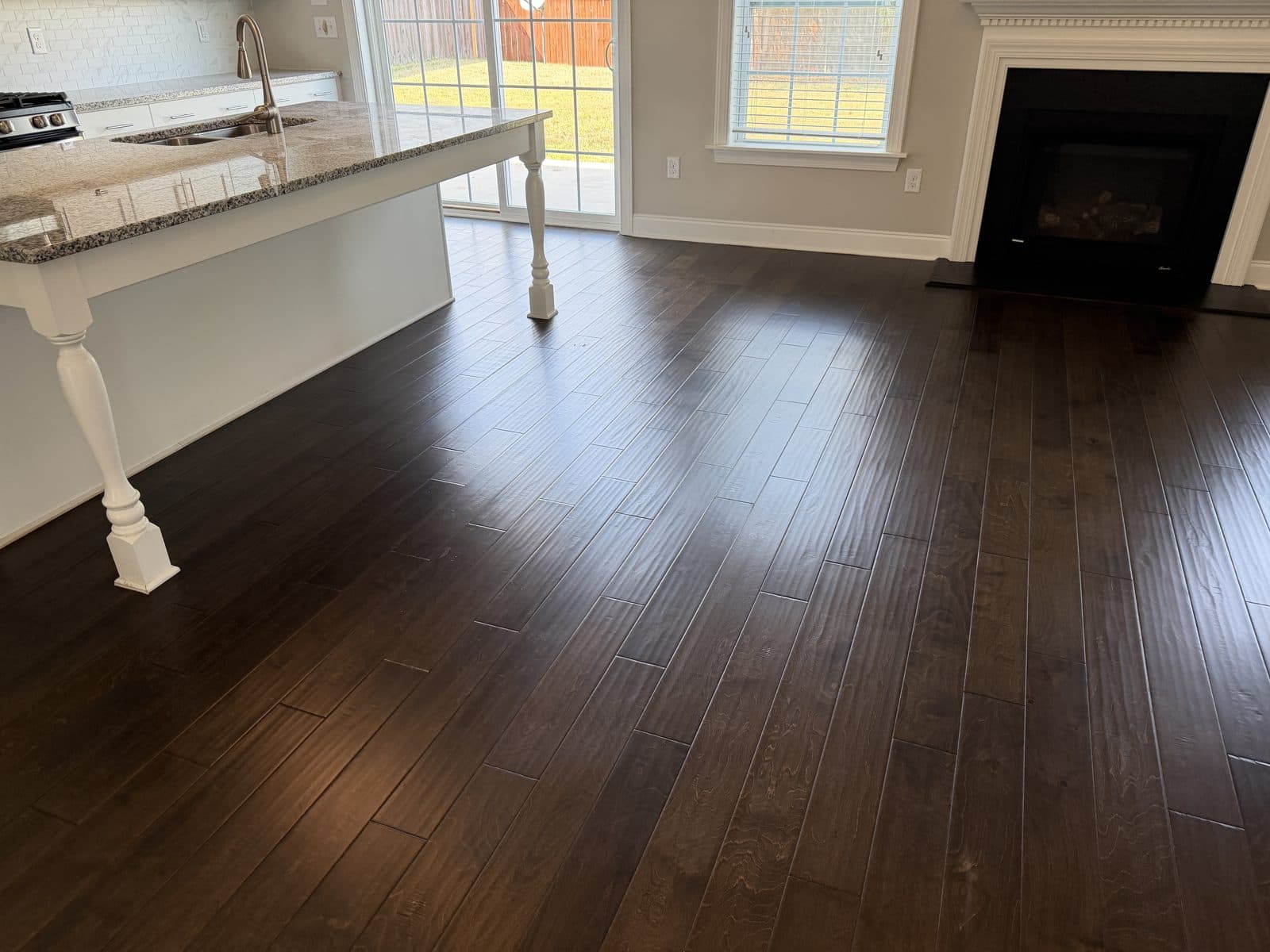
This Southwyck project is a polish removal and deep clean on a hand-scraped engineered hardwood floor glued down to a concrete slab, about 800 square feet across the kitchen, dining room, hall, and a closet in Fuquay-Varina, NC, with eight damaged boards replaced along the way. 12th And Oak stripped the acrylic polish off the finish and out of the scraped texture, cleaned the floor to its pre-polish condition, and touched up the repairs, all in a single day. The finish that had been under the film all along came back with its even, low sheen.
The Challenge
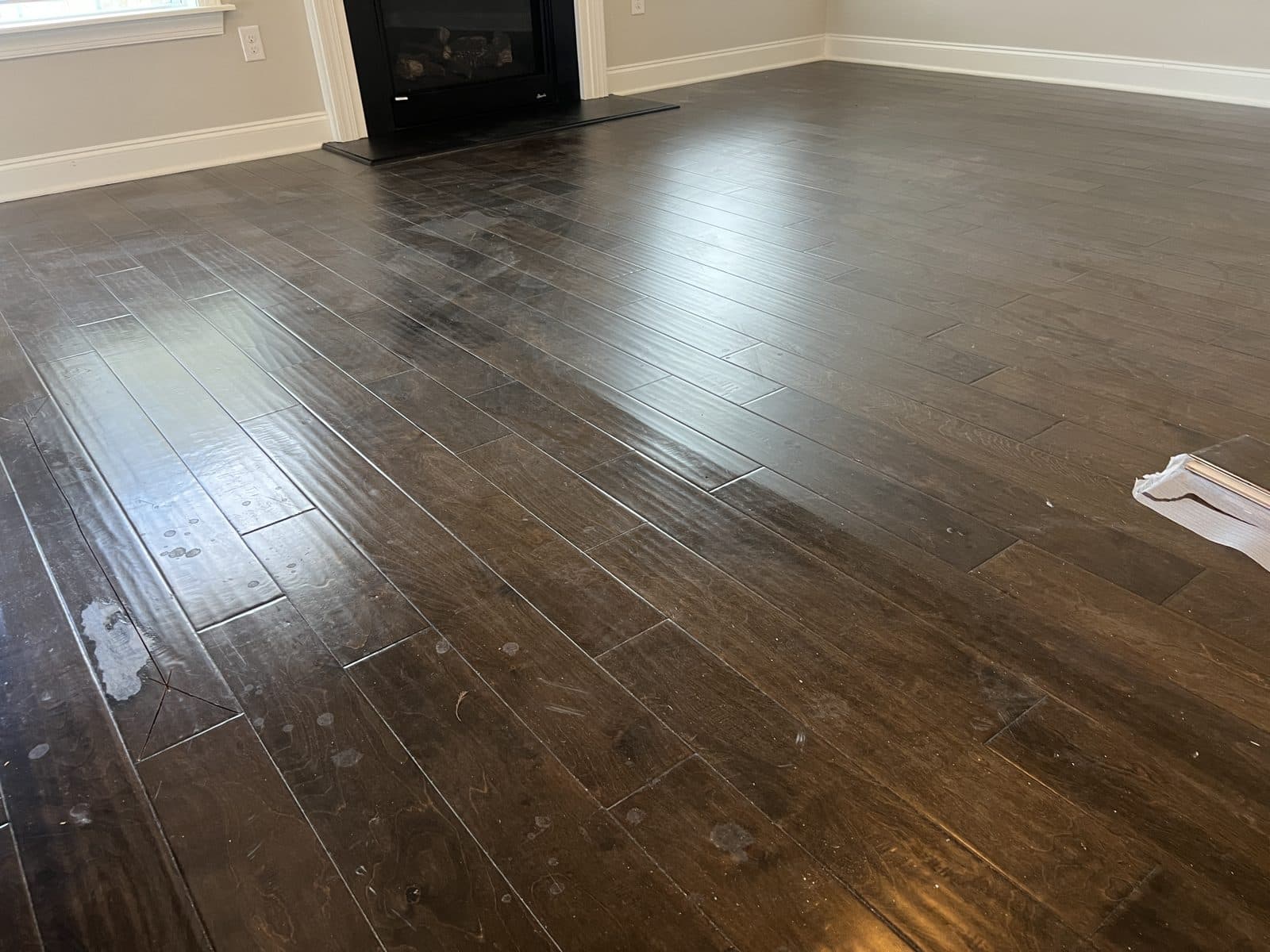
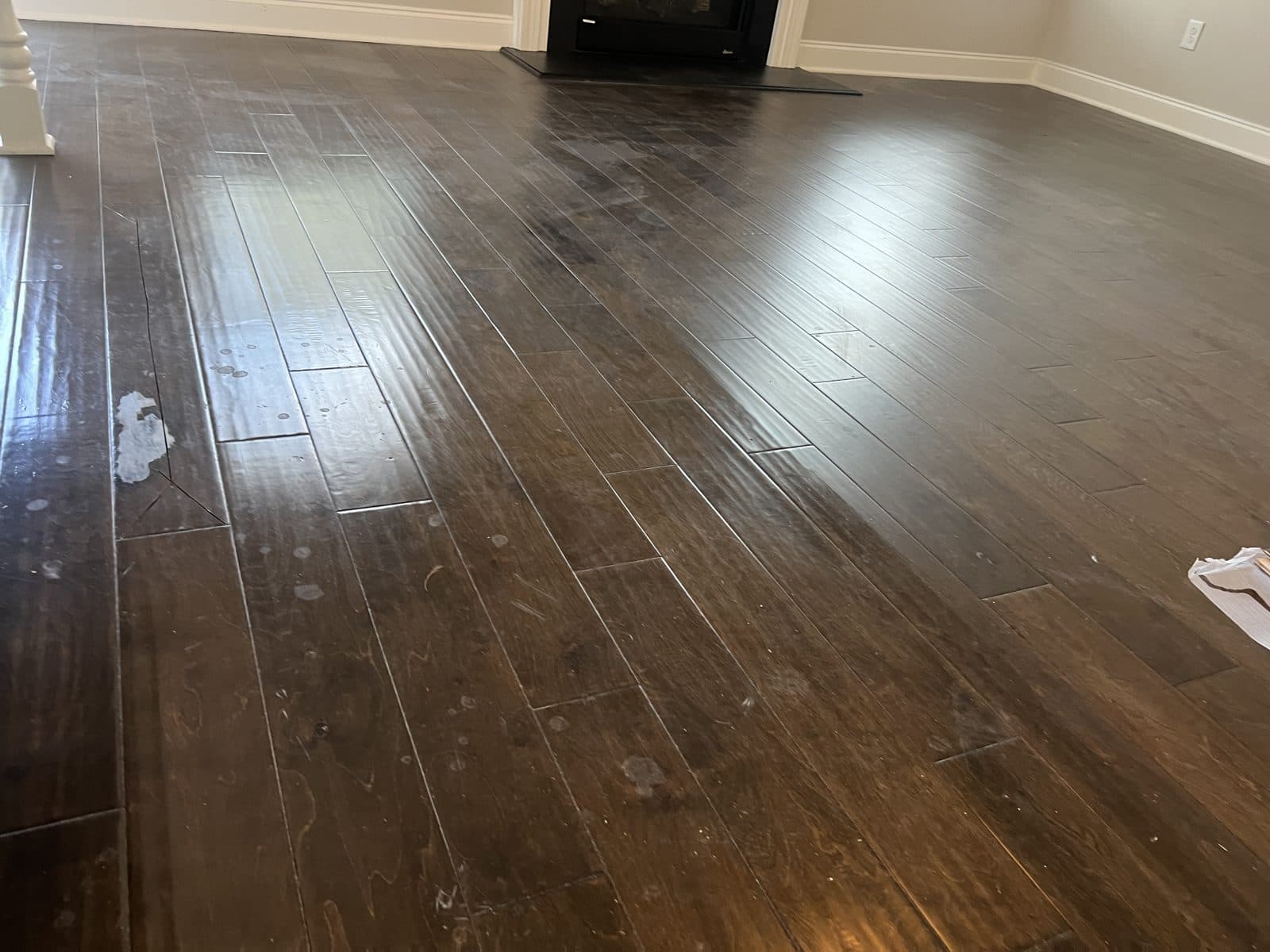
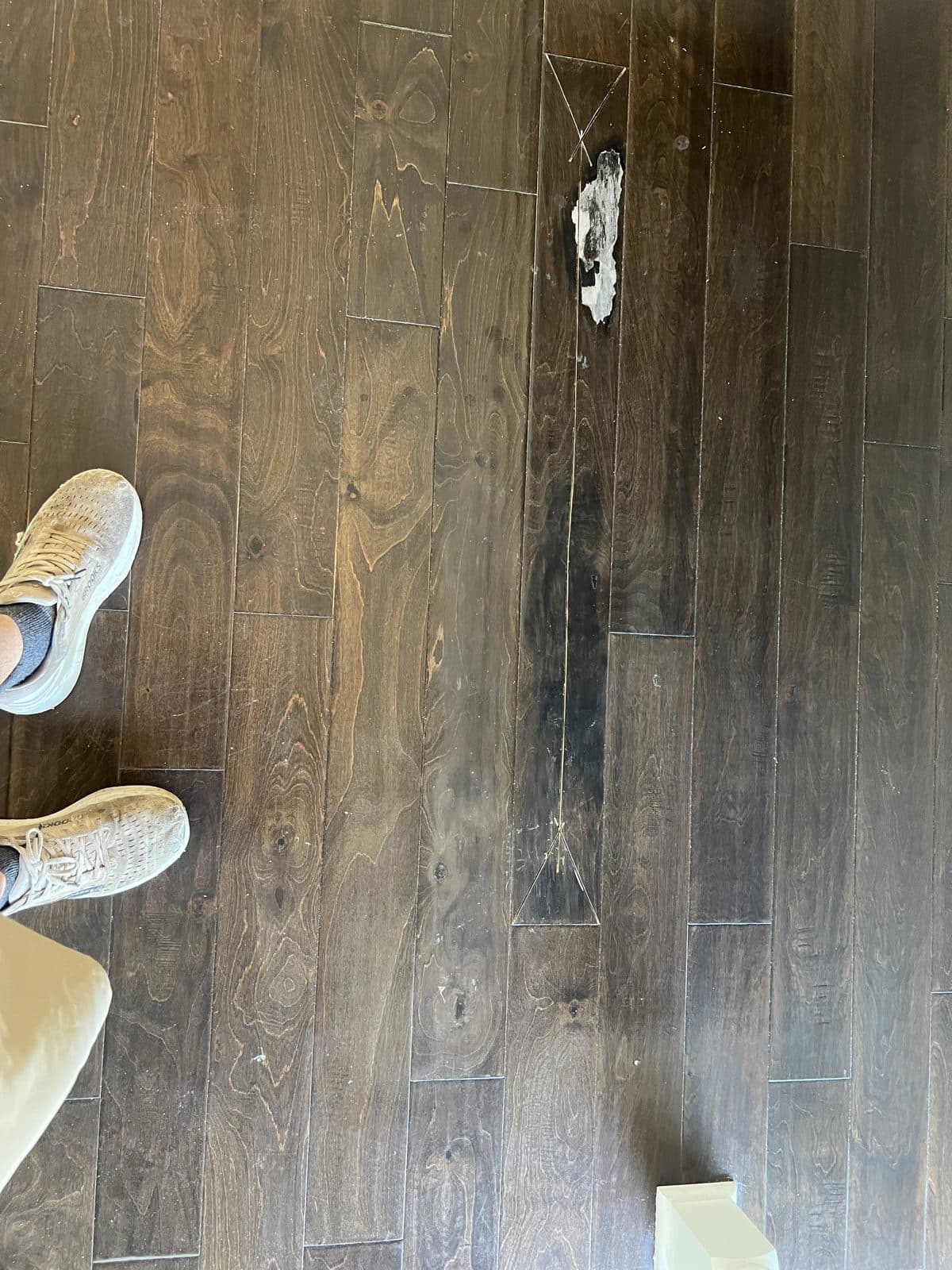
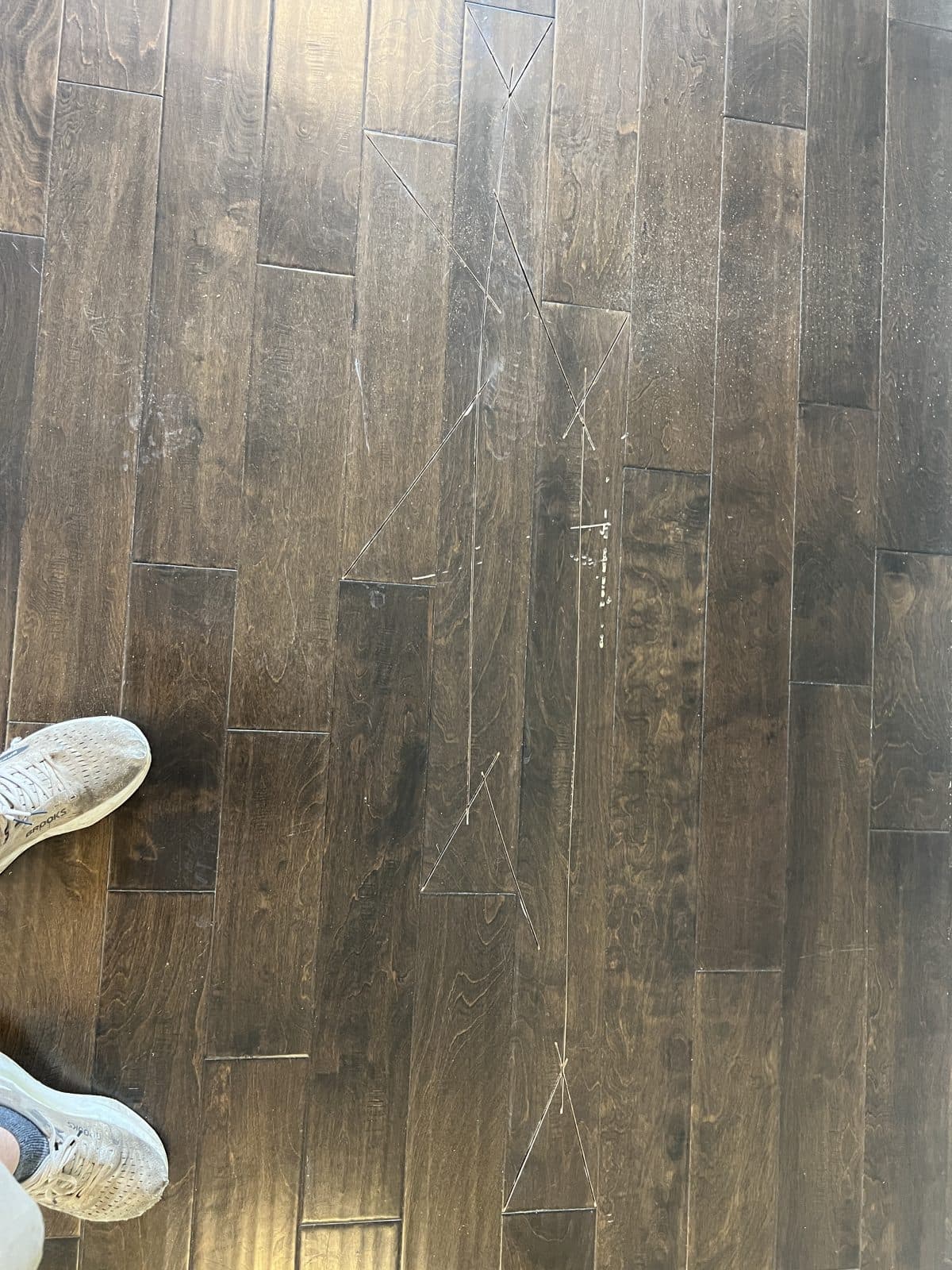
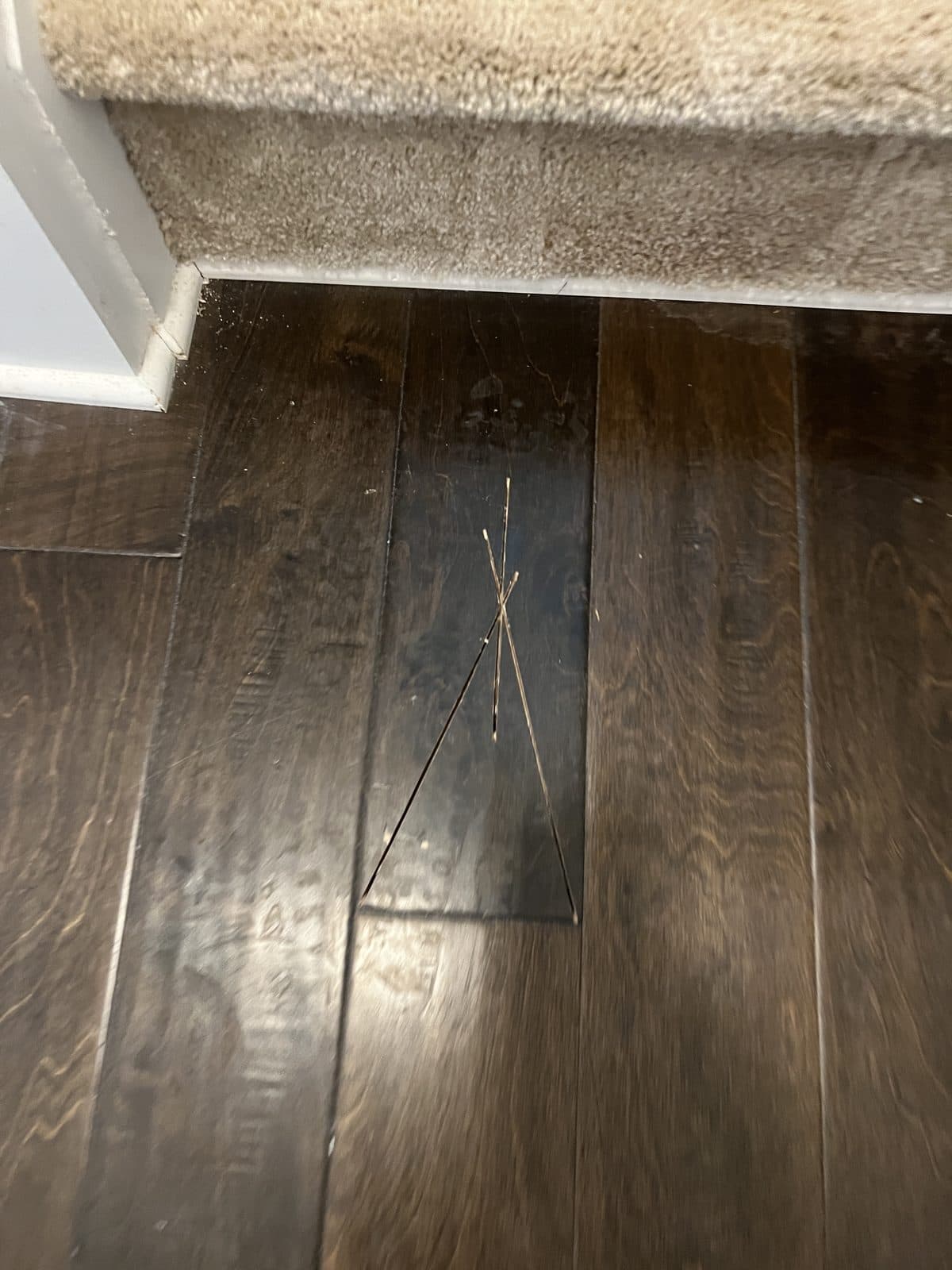
The house was being prepared for sale, and the floor was the thing dragging the rooms down. It read gray and flat, streaked, with white marks where mop water and polish had dried in drops, and footprints that showed in the sheen. In one room a rug had sat for years, and the patch under it was a different floor: clear, dark, with the grain and the hand scraping visible. That line was the diagnosis. Everything around it was the same finish, buried under layer on layer of consumer floor polish, an acrylic film that scratches instead of the finish, holds dirt, and yellows. Eight boards had real damage, chipped finish and split edges that no cleaning fixes, and needed to come out. Sanding was never the answer here. This is a hand-scraped engineered floor, and a refinish would have erased the texture and spent most of a thin wear layer to do it. And a plain deep clean would have failed too, because cleaning lifts dirt off the top surface, and on this floor the top surface was the polish. The job was to get the film off without touching the finish under it, and to get the bad boards out of a floor glued to a concrete slab without disturbing their neighbors.
What We Did
We started with the repairs. Eight damaged boards were cut out of the field, the old adhesive was cleaned off the slab, and matching material the homeowner already had on site was glued back in, so the repairs disappear into the floor rather than reading as patches. Then the polish came off: professional polish remover went down section by section and was given time to dwell and soften the acrylic, a rotary buffer worked it into the field, and the edges and the low spots of the hand scraping were scrubbed by hand where a pad cannot reach. The Dirt Dragon scrubber lifted the dissolved polish and grime off the floor, and the whole surface was rinsed until nothing was left behind. The repairs were touched up to match once the floor was clean. One day, no dust, no sanding, no new finish. The floor in the after photos is the floor that was there the whole time, with its factory finish intact and the hand-scraped character it was bought for readable again. The homeowner was told to stop the polish, dust weekly, and damp clean monthly with a cleaner made for the finish, and to think about a screen and recoat only if the finish ever wears thin in the lanes.
Before
During
 2
2 3
3 4
4 5
5After
Products Used on This Project
Project Investment
What Does a Project Like This Cost?
Projects like this one, roughly 800 square feet of polish removal and deep cleaning with a handful of board replacements, typically range from $1,800 to $2,600 depending on how many layers of polish are on the floor and how much texture holds it. Deep cleaning starts at $0.75 per square foot and polish removal at $1.50 per square foot; damaged boards in a glue-down floor are priced per board.
No two floors price the same. Square footage, wood species, repairs, stair configuration, subfloor preparation, and finish selection all move the number, which is why we quote from an in-home assessment instead of over the phone. Our cost guide publishes our current starting rates and typical ranges for every service, and the written proposal you receive covers every line item with no surprises.
Common Questions
How did you know this floor did not need refinishing?
The rug told us. Where a rug had sat for years the floor was clear and dark, with the grain and scraping visible, while everything around it was gray and hazy. Same boards, same finish. The difference was the polish. A wet rag darkened the floor evenly and dried back to one color, nothing caught a fingernail, and a coin in a closet corner scraped up a curl of gray acrylic. That is a polish problem, not a worn finish, and it is fixed by removal, not sanding.
Can you replace damaged boards in an engineered floor glued to a concrete slab?
Yes. Each damaged board is cut out along its edges, the old adhesive is scraped off the slab, and a matching board is fitted and glued back down. It takes patience to get the neighbors out of harm's way, and it works best when matching material is on hand, as it was here. The eight boards on this project were replaced before the polish came off so the touch-up could happen on a clean floor.
Why does a regular deep clean not remove floor polish?
Because a deep clean removes what sits on the surface, and on a polished floor the surface is the polish. The film is what looks bad, so cleaning it gives you cleaner polish, still hazy and still scratched. Polish removal uses a stripper that softens the acrylic, dwell time, machine agitation, and extraction. It is a different service, done on the same visit when a floor needs both.
How long does polish removal and deep cleaning take?
This 800 square foot floor with eight board replacements was one day. A larger floor, more layers of polish, or deep bevels and heavy scraping texture can push a project to two days, because the texture has to be scrubbed by hand after every machine pass.
How do I keep the floor looking like this?
Never use a polish, restorer, or shine product again; every bottle is another layer of the same film. Dust weekly, damp clean monthly with a pH-neutral cleaner made for the finish, and have the floor professionally deep cleaned every year or two. If the finish eventually wears thin in the walking lanes, the right next step is a screen and recoat, not polish.
Explore Further
Ready to Start Your Project?
Every project starts with an in-home consultation. We come to you, assess the floor, and give you a written estimate before any work begins.
Back to all projects