The short version: for dog households we recommend a two-component finish, and we recommend the two roads equally. Either Bona Traffic HD in matte or satin, or a catalyzed hardwax oil, Rubio Monocoat or Natura OneCoat. Put that on hickory or oak, trim the nails, and lay a rug on the main runway. The choice between the two roads is film durability versus localized spot repair, and everything below is the reasoning, so you can adjust the recipe to your own dog and your own house.
Where Dog Damage Actually Comes From
Dogs damage floors three different ways, and each one has a different defense. Getting this straight is most of the decision.
Nails scratch the finish. The everyday scuffing from nails on a hallway lives in the clear protective layer on top of the boards, not in the wood. That means scratch resistance is something you buy with the finish system, and it is why the finish is the first lever to pull, not the species.
Big dogs dent the wood. A seventy-pound dog hitting the brakes at the front door delivers concentrated force into the boards themselves. Dent resistance is what the Janka hardness scale measures, and it is where species choice earns its keep.
Water bowls and accidents attack the wood with moisture. A bowl that sloshes onto the same spot every day for a year can cup the boards around it. A mat under the bowl solves most of this for a few dollars. If accidents have already left dark spots, our guide on whether pet stains can be sanded out shows how to read them by color. Our cupping guide covers what happens when moisture wins.
The Finish: Where Your Durability Money Goes
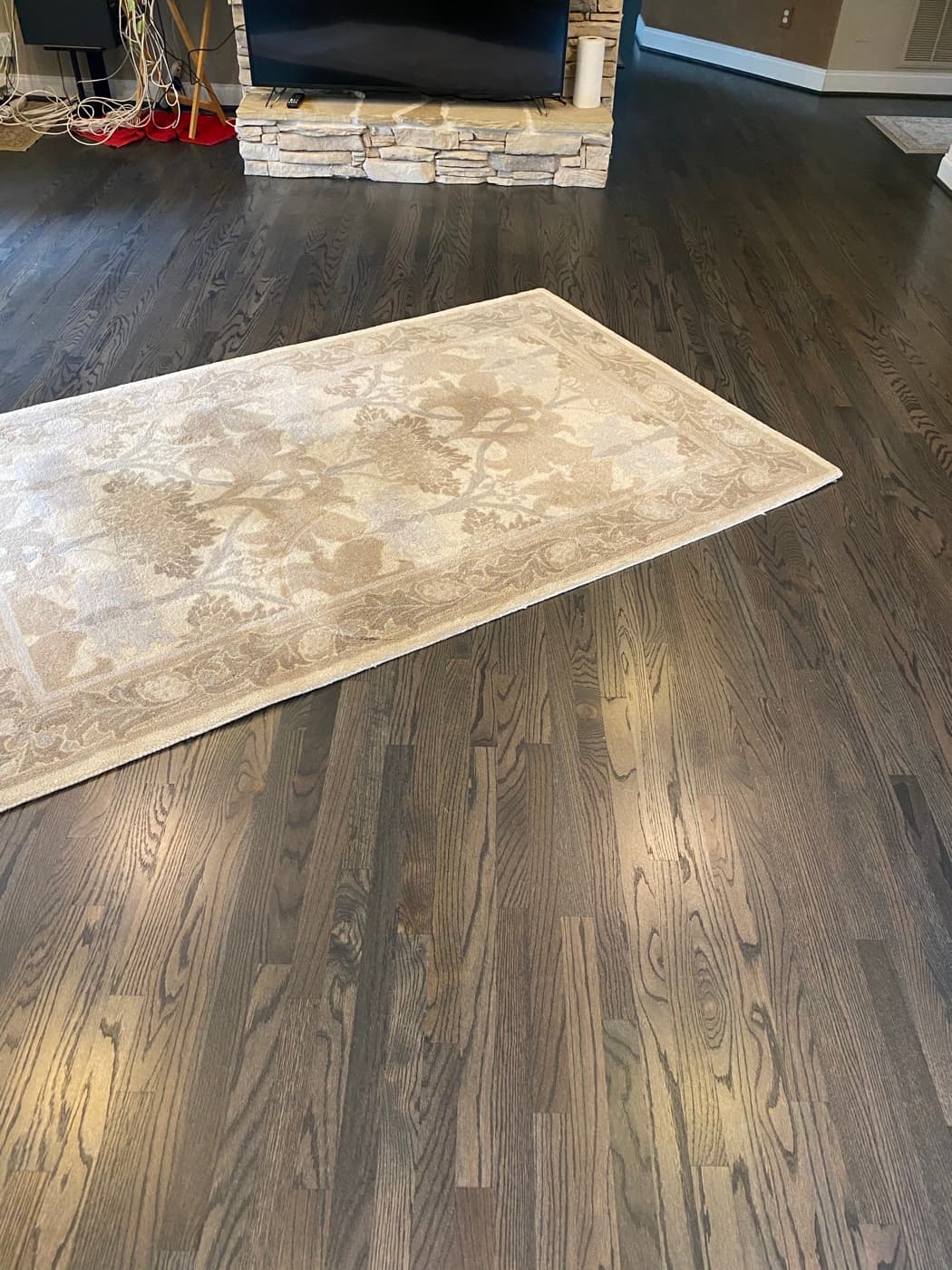
What we recommend for dog households is a two-component finish, meaning a finish that cures chemically with a hardener rather than just drying. That tier includes one film finish and two hardwax oils, and we recommend them equally. Which one is right depends on whether you would rather maximize the years between maintenance or be able to erase a scratch the day it happens.
Bona Traffic HD is the film-finish road. It is a two-component commercial-grade waterborne finish, the most durable water-based finish we apply. In the same household, a floor in a standard one-component finish tends to want its first recoat around year five, while Traffic HD stretches that to around year seven, and the upgrade costs far less than the recoat it postpones.
Bona Mega One is the budget-conscious step below that tier, and it is not a consolation prize; it is the best one-component finish we have used and it holds up well with dogs. The difference is not whether it survives, it is how soon the first recoat arrives. And it can be upgraded: at its first maintenance cycle, a Mega One floor can be screened and recoated with Traffic HD. The full comparison is in our Mega One vs Traffic HD guide.
Rubio Monocoat and Natura OneCoat, both catalyzed hardwax oils, are the other road, and for a dog household they are every bit the equal of Traffic HD. Choosing between the two oils themselves? Our honest head-to-head settles that in two minutes. Instead of a film over the wood, the finish penetrates it. A film finish cannot be spot repaired, but a hardwax oil can be repaired locally, which means the one deep scratch in front of the couch gets fixed locally instead of living there until the next recoat. The trade is more owner maintenance. Our Traffic HD vs Rubio Monocoat guide walks through the film-versus-oil decision in detail.
The Sheen: Matte and Satin Hide What Dogs Do
Sheen matters almost as much as the finish itself. Fine scratches on a matte or satin floor are nearly invisible because the surface does not throw light back at you. The identical scratch on a semi-gloss or gloss floor catches light and announces itself. Most dog households we work for land on matte or satin, and we think that is the right call. Gloss on a dog floor is a maintenance commitment we would talk you out of.
The Species: Hickory If You Are Choosing, Oak Is Fine If You Have It
If you are installing new floors and dogs are a given, hickory is the strongest answer. At 1,820 on the Janka scale it is the hardest common domestic species, and just as important, its busy grain and color variation visually swallow the small marks a big dog leaves. That combination is why we point busy households toward it in our white oak vs hickory comparison.
If your house already has red or white oak, as most Triangle homes do, you do not have a problem. Both oaks are hard enough for a normal dog household, and their grain hides wear well. We would not steer a dog owner away from oak on hardness grounds. The species to be cautious with are pine, which dents in ordinary daily life, and hard maple, which out-tests oak on hardness but shows every mark on its clean, uniform face.
What to Avoid
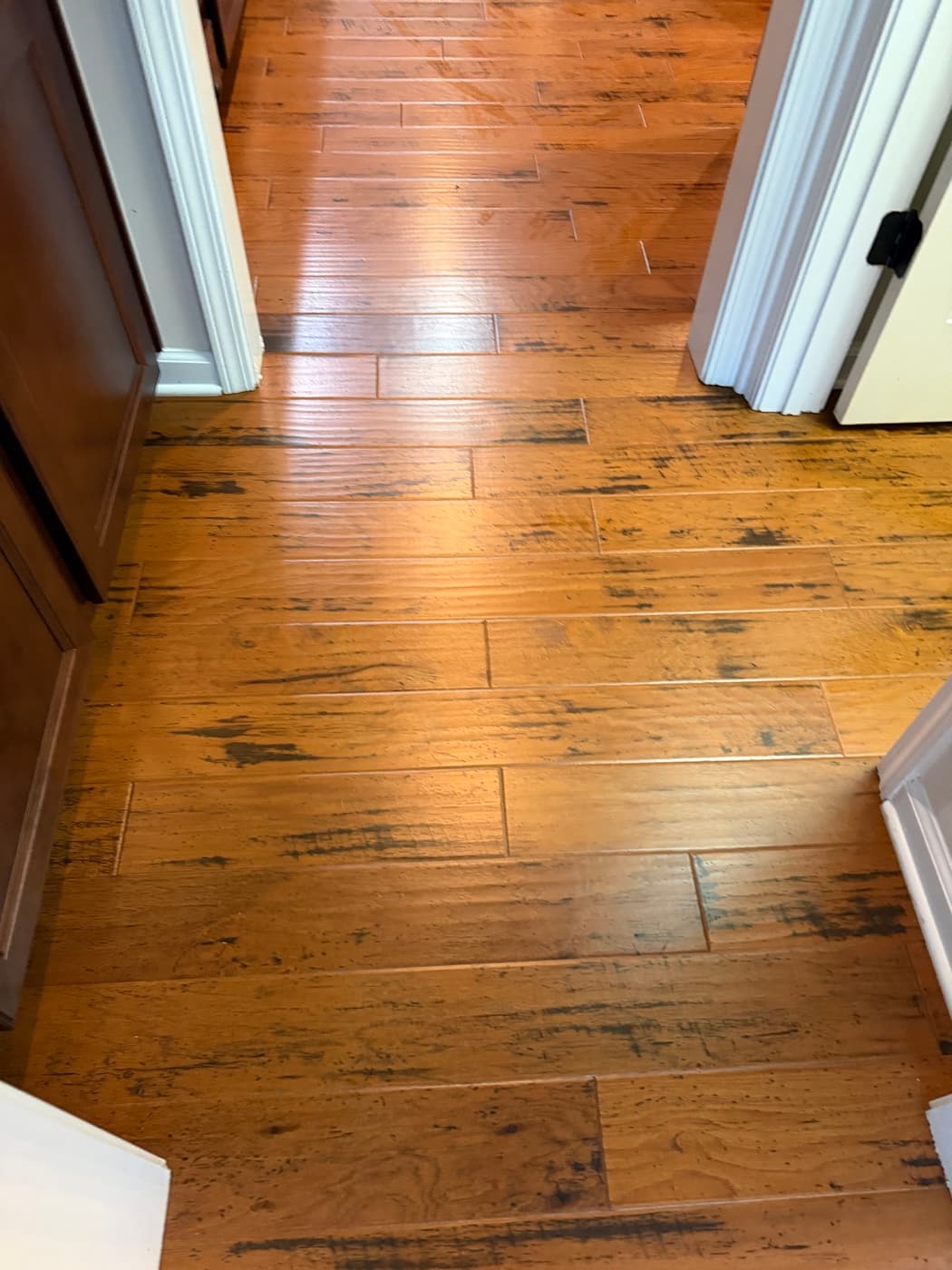
Acrylic polish products.Rejuvenate, Orange Glo, Mop & Glo and similar products promise to hide scratches, and they do, briefly. They also build up into a soft layer that nothing bonds to, which breaks the easy screen-and-recoat path. Removing that buildup is a service we literally have a price for. Clean with a wood-safe cleaner and nothing else.
Long nails and bare runways. The cheapest floor protection available is a nail trim and a runner on the hallway your dog patrols. Neither costs what a year of extra wear costs.
Waiting too long on a worn finish. A floor that has worn through its finish in the traffic patterns is taking damage in the wood itself. Caught early, the fix is a screen and recoat starting at $2.00 per square foot. Caught late, it is a full refinish.
The LVP Question, Answered Honestly
Some dog owners should choose LVP, and we install plenty of it. If your dogs are young, large, numerous, or incontinent, LVP's waterproof construction turns the worst-case scenarios into a paper towel moment. What you give up is repairability: LVP that dents or gouges stays that way until the plank is replaced, while hardwood can be screened, recoated, and eventually refinished back to new. Our LVP vs hardwood guide lays out the whole decision.
What We Tell Dog Owners
After 24 years of refinishing floors that dogs live on: put the money in the finish, not in exotic species. A two-component finish, whether that is Traffic HD in matte or satin or a hardwax oil like Rubio or Natura, on the floor you already have beats a harder species under a lesser finish. Trim the nails, put a mat under the water bowl and a runner in the hallway, keep acrylic polishes out of the house, and plan on a screen and recoat when the traffic patterns eventually tell you to. Full decision path for existing damage: how to fix scratched hardwood floors. Do that and dogs and hardwood coexist just fine, in our experience and in most of the houses we work in.
Not sure whether your floors need a recoat, a refinish, or just a better finish next time? We will give you the honest answer at an in-home assessment, dogs welcome.
Get Your Free QuoteFrequently Asked Questions
What is the best hardwood floor finish for dogs?
A two-component finish. We recommend Bona Traffic HD and the catalyzed hardwax oils, Rubio Monocoat and Natura OneCoat, equally for dog households; the right one depends on which failure mode you care about more. Traffic HD is a commercial-grade two-component waterborne finish, the most durable water-based finish we apply, and in the same household it typically goes about two years longer between recoats than a standard one-component finish; choose it in matte or satin. The hardwax oils penetrate the wood instead of filming over it, so a scratched spot can often be repaired locally without redoing the room. Film durability versus spot repairability is the real choice, not a ranking.
Do dog nails scratch hardwood floors?
Yes, but almost always in the finish layer rather than the wood itself. Dog nails skittering on a hallway scuff the clear protective coat on top of the boards, which is why scratch resistance is something you buy with the finish system, not the species. The practical defenses are a durable finish, a matte or satin sheen that hides fine scratches, trimmed nails, and rugs on the main runways. When the finish eventually shows traffic patterns, a screen and recoat refreshes the surface without sanding to bare wood.
What is the best wood species for dogs?
Hickory is the strongest answer: at 1,820 on the Janka hardness scale it is the hardest common domestic species, and its busy grain and color variation visually hide the marks dogs leave. Red oak at 1,290 and white oak at 1,360 are both hard enough for a normal dog household and are what most Triangle homes already have. The species we would caution dog owners about are the soft and the clean-faced ones: pine dents easily, and hard maple, despite testing harder than oak, shows every mark on its uniform surface.
What sheen hides dog scratches best?
Matte or satin. Fine scratches on a low-sheen floor are nearly invisible because the surface does not reflect light in a way that highlights them. The same scratch on a semi-gloss or gloss floor catches light and shows clearly. Most of the dog households we work for choose matte or satin for this reason alone, and it is the default we recommend.
Is LVP better than hardwood for dogs?
It depends on which problem worries you more. LVP is waterproof, so accidents and tipped water bowls are a non-event, and its wear layer shrugs off surface scratching. But LVP can still dent and gouge, and unlike hardwood it cannot be sanded and refinished; damage is permanent until the plank is replaced. A hardwood floor with a durable finish can be screened and recoated when it wears and fully refinished decades down the road. Plenty of dog owners are happy with either; the honest difference is repairability versus waterproofing.
Can dog scratches in hardwood floors be repaired?
Scratches in the finish are handled with a screen and recoat, which refreshes the whole surface at once; film finishes like Bona Traffic HD and Mega One cannot be spot repaired, so worn traffic patterns are treated as a surface, not a spot. Hardwax oil finishes like Rubio Monocoat and Natura OneCoat are the exception: they can be spot repaired locally, and the repair often blends extremely well. Deep gouges that cut into the wood itself are a repair or board-replacement conversation regardless of finish. One warning: do not reach for acrylic polish products to hide scratches, because they have to be fully stripped before any real maintenance coat will bond.
Dogs, kids, and a floor you want to keep? Request a free estimate. We will tell you which finish holds up in your house, not in a brochure, and what it costs on your square footage.
Every finish in this article is one we apply on site, in Triangle homes with dogs underfoot. We handle hardwood floor refinishing across the Triangle, including Holly Springs, Fuquay-Varina, and Cary. Request a free estimate and we will look at your floor in person before we talk numbers.