Owner · Bona Certified Craftsman · NWFA Member
Fixing a scratched hardwood floor comes down to depth. Scratches in the finish layer get a screen and recoat, a light abrasion and fresh coat, no bare-wood sanding. Scratches into the wood itself need spot repair (possible on hardwax oil floors), sanding, or board replacement. And the quick fixes sold in store aisles mostly make the real fix more expensive.
We see every version of this on repair and refinishing assessments across the Triangle. Here is the decision path we walk on every assessment.
First, Read the Scratch: The Fingernail Test
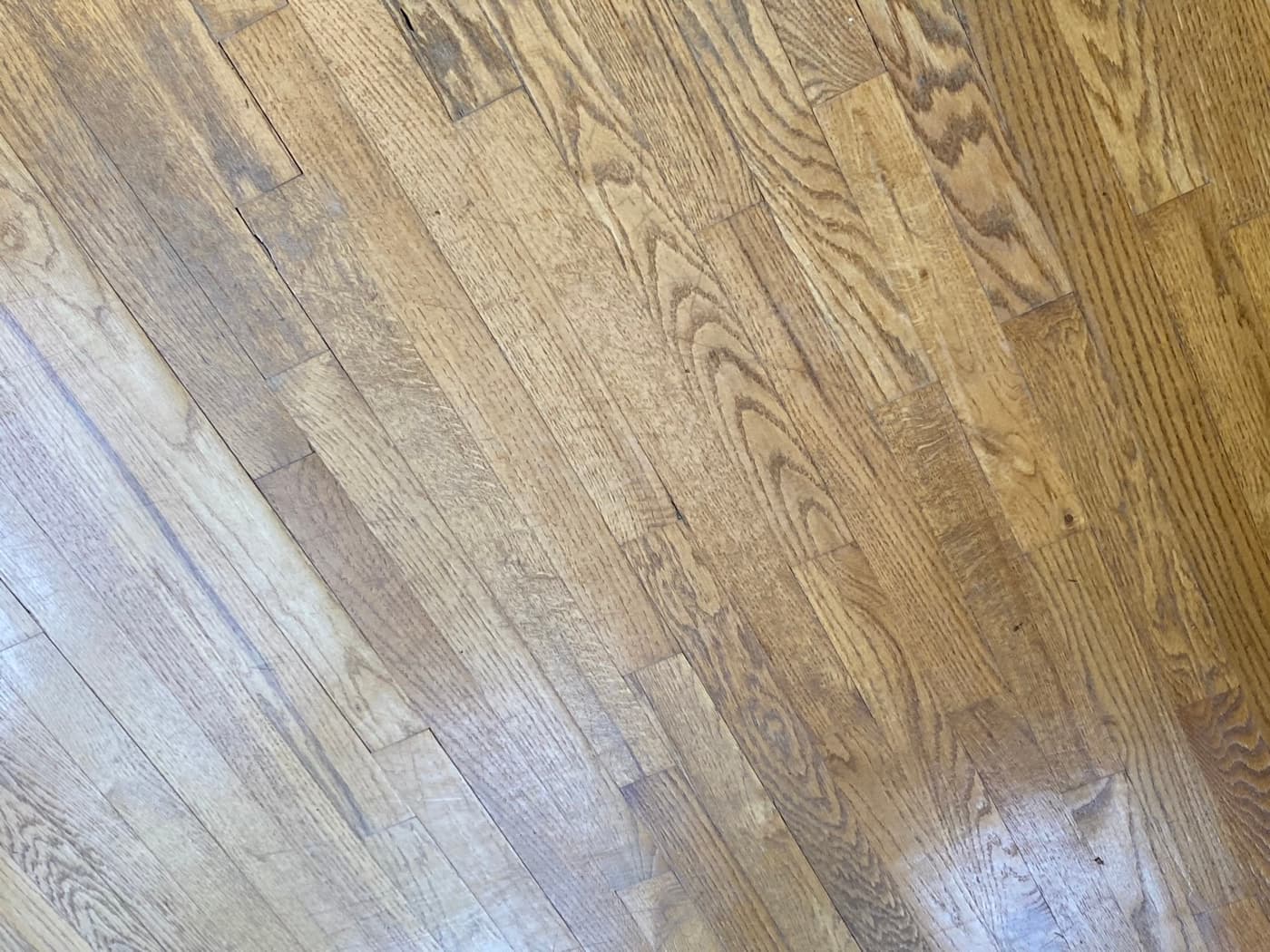
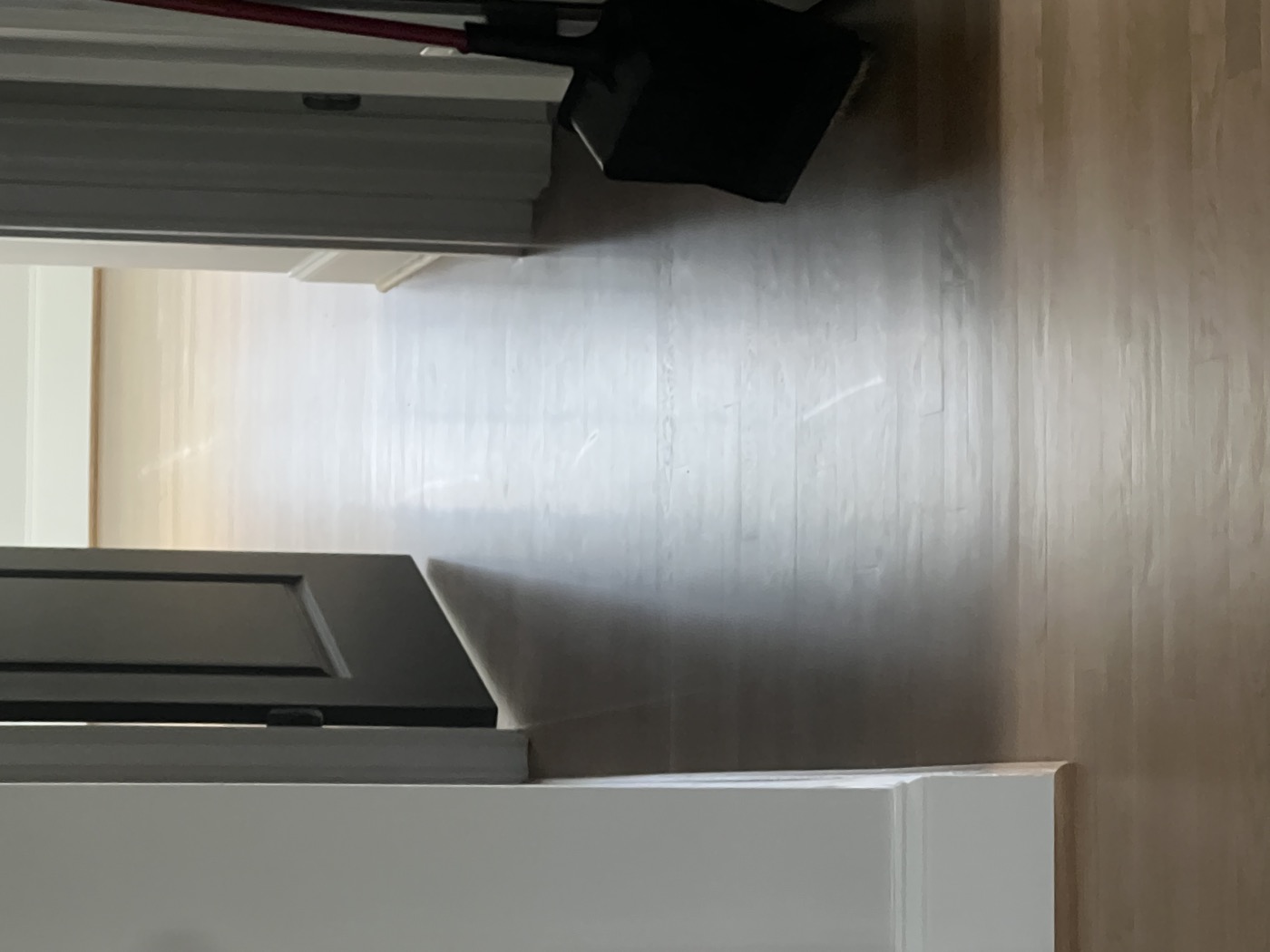
Run a fingernail across the scratch. If it glides over a dull or whitish line, the damage is likely limited to the finish. If your nail catches, look more closely: a catch means the scratch is deeper, but the real question is whether you can see exposed or discolored wood beneath the finish. That distinction drives everything that follows.
The Fix, by Scratch Type
| What you have | The fix | Cost basis |
|---|---|---|
| Fine finish-level scratches, dull traffic wear | Screen and recoat: refreshes the surface, reduces superficial scratching | From $2.25/SF |
| Scratches on a hardwax oil floor (Rubio / Natura) | Localized spot repair with oil, often blends extremely well | Often routine maintenance |
| Acrylic polish haze hiding the scratches | Polish removal, then recoat | From $2.40/SF + recoat |
| Deep gouges into the wood, isolated boards | Board repair or lace-in | $1,000 minimum standalone |
| Widespread wear through to bare wood | Full sand and refinish | $5.50 to $8.00/SF |
The Fast Fix That Backfires
Many store-bought restorer, shine, and scratch-hiding products leave an acrylic or polymer film on the floor; products in lines such as Rejuvenate, Orange Glo, and Mop & Glo can create this buildup depending on the specific formulation. The film looks better for a few weeks, then dulls, hazes, and shows every footprint. Worse: that film has to be completely stripped before any real finish coat will bond, which is why polish removal exists as a service. The fastest route to a fixed floor is skipping the shortcut that adds a step.
Why the Finish You Chose Decides Your Options
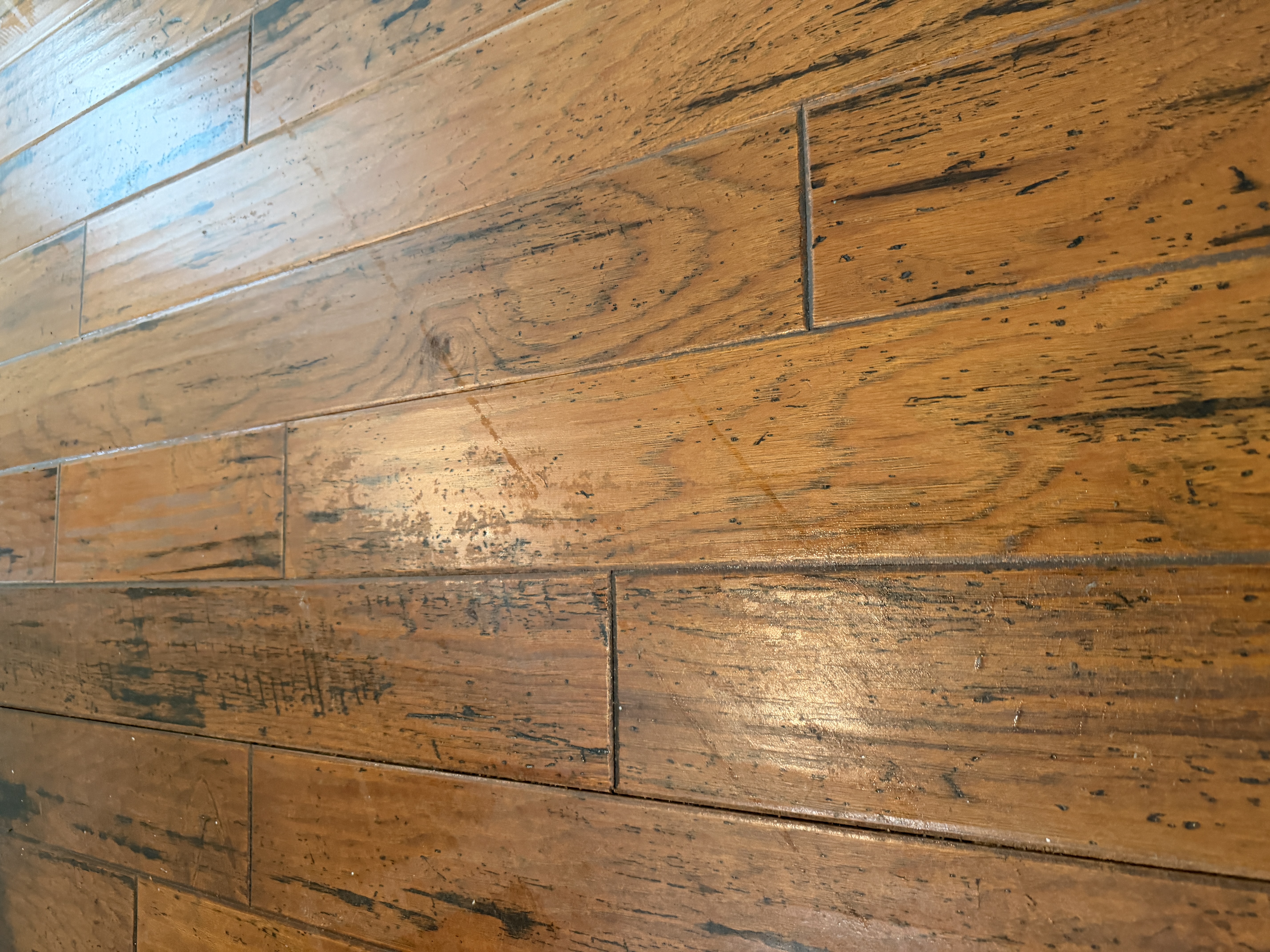
Film finishes, the polyurethanes, including excellent ones like Bona Traffic HD, cannot be spot repaired: damage means living with it, recoating the surface, or sanding. Penetrating hardwax oils, Rubio Monocoat and Natura OneCoat, are the exception: a scratch gets a small amount of oil worked into the spot, a localized repair that can blend into the surrounding floor without touching the rest of the room. If scratches are a fact of life in your house, that difference should drive your next finish choice; our best finish for dogs guide and the Natura vs Rubio head-to-head go deep on it.
What About Prefinished Hardwood?
Factory-finished hardwood needs a little more investigation. Many prefinished floors use aluminum-oxide or other highly durable factory coatings, and depending on the product, its age, the cleaners that have been used on it, and the condition of the finish, recoating may be possible, but the existing surface has to be properly evaluated and prepared for adhesion. We do not assume every scratched prefinished floor can simply be recoated; that is exactly what the assessment is for.
When It Is Time to Stop Patching
If traffic patterns have worn dull across whole rooms, scratches are everywhere rather than in one spot, or the existing finish is failing, contaminated, or too worn to take another maintenance coat, a screen and recoat or full refinish resets the clock properly. We tell you which one your floor actually needs at the assessment, the gentlest fix that genuinely works is always the recommendation.
Not Sure What You Are Looking At?
Send Us a Photo or Book an Assessment
We diagnose scratched hardwood floors every week. An in-home assessment tells you exactly which fix your floor needs, and which ones it does not. Serving Clayton, Raleigh, Garner, and the Triangle.
Request Free EstimateScratch Repair Questions
Can you fix scratched hardwood floors without refinishing the whole floor?
Often, yes. Scratches that live in the finish layer, the dull or whitish lines that you cannot feel with a fingernail, are handled with a screen and recoat: a light abrasion and a fresh coat of finish that refreshes the whole surface without sanding to bare wood. On floors finished with a catalyzed hardwax oil like Rubio Monocoat or Natura OneCoat, individual scratches can be spot repaired with a small amount of oil and often blend extremely well into the surrounding floor. Scratches that reach the wood itself usually point toward spot repair, sanding, or board-level work, depending on severity, species, color, and your expectations.
Do scratch repair kits and polish products work on hardwood floors?
Be careful here. Many store-bought restorer and shine products leave an acrylic or polymer film on the floor; products in lines such as Rejuvenate, Orange Glo, and Mop & Glo can create this buildup depending on the specific product. That film dulls, hazes, and has to be completely stripped before any real maintenance coat will bond. Polish removal is a real service we get called for. Wax sticks and touch-up markers can make a small gouge less visible, but nothing from a big-box aisle actually repairs a finish.
How do I tell if a scratch is in the finish or in the wood?
Run a fingernail across it. If the nail glides over a dull or white line, the damage is likely limited to the finish, and a screen and recoat reduces its appearance. If the nail catches, look closer: the deciding question is whether you can see exposed or discolored wood beneath the finish. Wood-level damage points toward spot repair on a hardwax oil floor, or sanding or board-level work on a film-finished floor, depending on severity.
What does it cost to fix scratched hardwood floors?
In the Raleigh and Clayton area: a screen and recoat starts around $2.25 per square foot. Removing acrylic polish buildup before recoating, with the deep clean included, starts at $2.40 per square foot. Standalone board repair work carries a $1,000 minimum, and a full sand and refinish runs $5.50 to $8.00 per square foot depending on the finish system, stain work, and floor condition, with a $1,500 project minimum. Spot repair on a hardwax oil floor is often part of routine maintenance rather than a separate project.
How do I prevent scratches on hardwood floors?
Felt pads on every furniture leg, rugs or runners in the main traffic patterns, keeping pet nails trimmed, and choosing matte or satin sheens, which hide fine scratches far better than gloss. If scratches are a recurring problem in your household, the finish choice matters more than any cleaning habit: hardwax oil floors can be spot repaired, film finishes cannot.
Past what a touch-up kit can fix? Request a free estimate. We will look at the damage in person and tell you whether a board replacement, a screen and recoat, or a full refinish is the right call.
When a scratch is past what a homeowner can fix, a board replacement or a screen and recoat usually handles it. We handle hardwood floor repair across the Triangle, including Holly Springs, Knightdale, and Apex. Request a free estimate and we will look at your floor in person before we talk numbers.