
Owner · Bona Certified Craftsman · NWFA Member
This is one of the most common questions we get on assessments, usually asked while standing over a spot near the back door. The answer is genuinely yes or no depending on one thing: how deep the stain went. The good news is you can usually tell from the color before anyone brings a sander into your house. Here is how we read pet stains on every assessment, and what each answer means for the fix and the cost.
Two Kinds of Pet Stains
Every pet stain on a hardwood floor is one of two things, and they behave completely differently under a sander.
Surface stains live in the finish and the very top of the wood. They show up as dull spots, light gray shadows, or a faint brown haze. The accident was cleaned up reasonably fast, the finish took most of the damage, and only a whisper of it reached the wood. These sand out completely. After a full refinish you will not be able to find where they were.
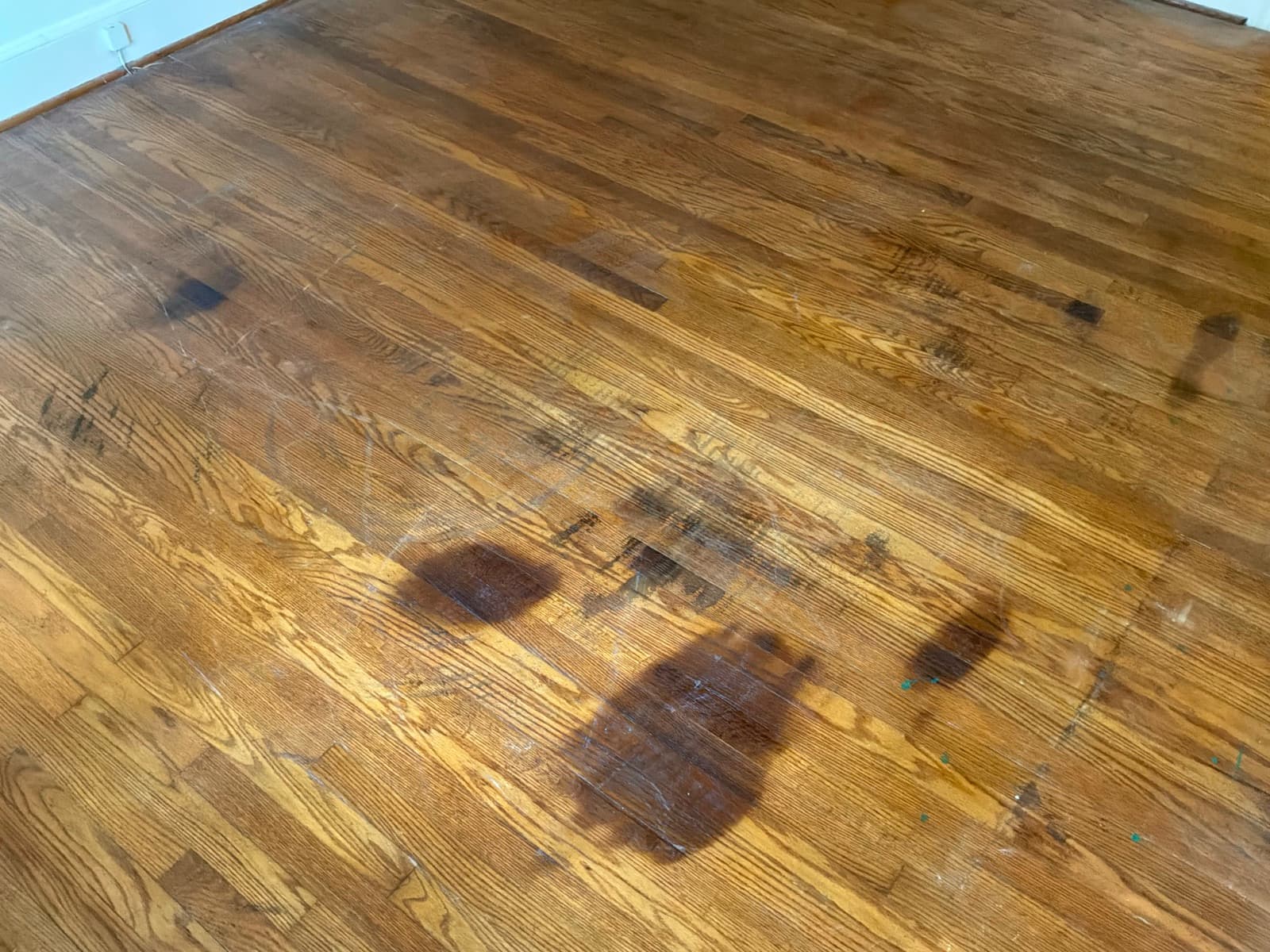
Penetrated stains went through the finish and into the wood fiber. Urine is alkaline, and as it breaks down it releases ammonia that reacts with the tannins in the wood, the same compounds that make oak turn dark when it contacts water and metal. That chemical reaction dyes the wood from the inside, often a quarter inch deep or more. These show up as black or very dark brown patches, usually with sharply defined edges, often following the seams between boards where the liquid pooled.
The Color Test
Look at the stain in good light and be honest about what color it is.
Light gray, light brown, or a dull haze
Surface-level. A full sand and refinish removes it. This is the outcome for most stains that were wiped up within hours.
Medium brown, edges soft and blended
Borderline. Some of these sand out fully, some leave a faint ghost. We evaluate these in person, and on refinishing projects we sand the area first and look before making the replace-or-keep call with you.
Black, or dark brown with hard defined edges
Into the wood fiber. Sanding will lighten it slightly and then stop improving, because the stain runs deeper than any floor can safely be sanded. The fix is board replacement.
Why sanding cannot chase a black stain: a refinishing pass removes roughly a thirty-second to a sixteenth of an inch of wood. A penetrated urine stain can run a quarter inch deep or more. Sanding harder just thins the floor, shortens how many refinishes it has left in its life, and the black is still there at the bottom of the cut. Any contractor who promises to sand out black stains is either planning to take too much wood off your floor or planning to have an awkward conversation with you on day two.
How We Actually Fix Pet-Stained Floors
On the assessment we walk the floor and put every stained area into one of three buckets: sands out, needs board replacement, or open it up and see. That last bucket exists because some stains cannot be judged until the old finish is off, and we would rather price that honestly as a decision point than guess. Every quote we write lists which bucket each area landed in, so there are no surprises mid-project.
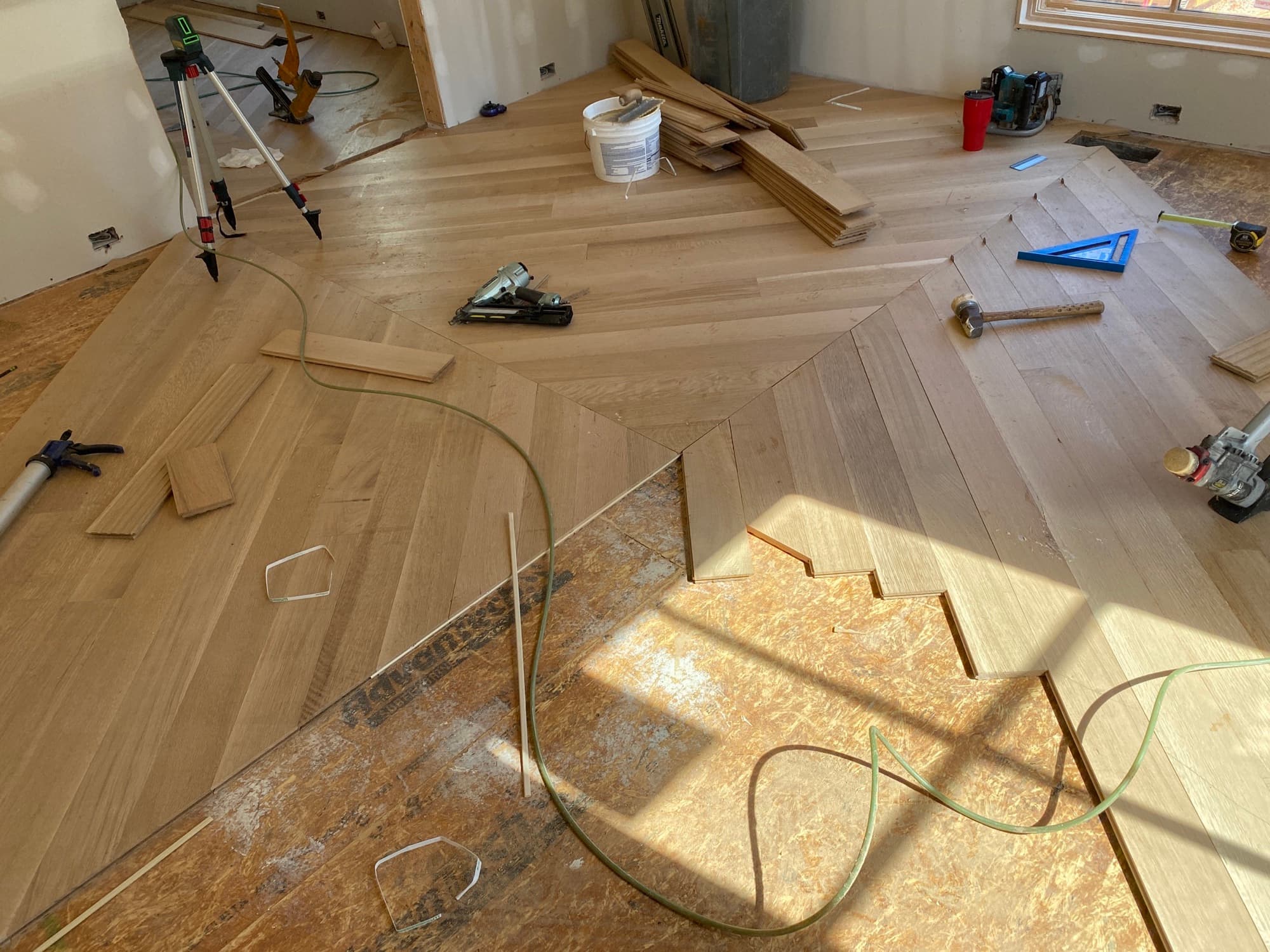
For boards that need replacing, we lace in new wood of the same species and cut, weaving replacement boards into the surrounding floor rather than leaving a visible patch. Because the whole floor gets sanded and finished together afterward, the new boards take the same stain and finish as everything around them and disappear into the field. On a typical pet stain project this is a handful of boards near a door or under where a crate sat, not whole rooms.
When urine has soaked through the seams into the subfloor, replacing the flooring boards alone will not end the odor. With the boards out we treat and seal the subfloor beneath with a shellac-based sealer that locks the odor in permanently, then install the new boards over it. This is the difference between actually fixing the problem and perfuming it until the first humid week of summer.
Can Stain Color Hide What Is Left?
Sometimes a client has a borderline stain and a budget, and the question becomes whether a darker floor color can carry what sanding leaves behind. The honest answer:
| Floor color | How much it forgives |
|---|---|
| Natural / clear finish | Nothing. Every remaining shadow shows. |
| Light stains (white, gray, blonde) | Very little, and some can highlight residue. |
| Medium browns | Faint ghosting blends away in most rooms. |
| Dark browns and ebony | Hides most residual shadow, at the cost of showing dust and wear more. |
We treat color as a supporting move, not the plan. Black stains under a dark floor still telegraph in raking light, and choosing a color you do not love to hide three boards is a bad trade when replacing those boards costs less than living with a floor you settled for.
Protecting the New Floor From the Same Dog
The floor gets refinished. The dog stays. Two things determine whether you are reading this article again in five years. First, the finish: we put Bona Traffic HD, a two-component commercial waterborne finish, on nearly every pet household we work in, because its chemical and scratch resistance buys the floor real time against accidents and claws. We wrote a full guide on the best hardwood finishes for dogs. Second, speed: no finish is a permanent dam. Urine wiped up promptly never becomes a stain. Urine that sits for days gets through anything. Between refinishes, a periodic recoat keeps the protective layer thick where the traffic and the paws are.
Questions and Answers
Can pet urine stains be sanded out of hardwood floors?
It depends on how deep the stain went. Light gray or light brown discoloration usually lives in the finish and the top surface of the wood, and a full sand and refinish removes it completely. Black stains or dark brown stains with defined edges mean the urine soaked into the wood fiber and reacted with the tannins in the wood. Those almost never sand out, because the stain runs deeper than a floor can safely be sanded. The fix for black stains is replacing the affected boards, then refinishing the floor so the new boards blend in.
Why do black pet stains not sand out?
Pet urine is alkaline, and as it breaks down it releases ammonia that reacts chemically with the tannins in the wood. That reaction changes the color of the wood fiber itself, often a quarter inch deep or more. A refinishing sand removes roughly a thirty-second to a sixteenth of an inch of material. Chasing a deep stain with a sander thins the floor without ever reaching the bottom of the stain, which is why board replacement is the honest fix.
What does it cost to fix pet stains in hardwood floors?
If the stains are surface-level, the cost is the cost of refinishing, which runs $5.50 to $8.00 per square foot in the Raleigh and Clayton area. If boards need replacing, that work is priced per board at the assessment and added to the refinishing project. Most pet stain projects we see involve a handful of boards in one or two spots, not whole rooms, so board replacement is usually a modest addition rather than a second project.
Will the smell come back after refinishing?
If the odor is in the finish and the surface of the wood, sanding removes it with the material. If urine soaked through seams into the subfloor, sanding the hardwood alone will not fix it. In those cases we replace the affected boards, treat or seal the subfloor beneath them with a shellac-based sealer that locks odor in, and then refinish. That combination is what actually ends the smell rather than covering it for a season.
Can I remove pet stains with hydrogen peroxide or wood bleach?
Peroxide and oxalic acid can lighten some stains, and you will find plenty of videos showing it. The results are mixed: lightened spots often come out blotchy and a different tone than the surrounding wood, and the floor still needs a full refinish afterward to look uniform. On a floor that is being refinished anyway, spot bleaching rarely beats simply replacing the few worst boards.
What finish should I use if I have dogs?
A two-component commercial waterborne finish. We use Bona Traffic HD on nearly every pet household we work in, because it has the highest scratch and chemical resistance of anything we install and it buys the floor years before accidents can reach the wood. Speed matters more than product, though: urine that sits for days will get through any finish. Wipe accidents up promptly and the finish does its job.
For technical guidance on hardwood floor maintenance, finishing standards, and contractor certification programs, the National Wood Flooring Association publishes comprehensive resources used by professional contractors across the country.
Wondering About Your Stains?
Text Us a Photo
Send a couple of photos of your worst spots and Izral will tell you straight which bucket they fall in: sands out, needs boards, or needs a look in person. No pressure, no guessing.
Request Free EstimateHave a stain you are not sure about? Request a free estimate. We check how deep it goes with a moisture meter and a test spot, then tell you honestly whether sanding, a board swap, or a stain color solves it.
Pet stains are the most common repair question we get, and the honest answer depends on the board in front of us. We handle hardwood floor repair across the Triangle, including Knightdale, Garner, and Holly Springs. Request a free estimate and we will look at your floor in person before we talk numbers.