Owner · Bona Certified Craftsman · NWFA Member
Homeowners across the Triangle send us two refinishing quotes and ask why the numbers are so far apart. One common answer is a single line on each page: one contractor is applying oil-based polyurethane and the other is applying a water-based finish. Those are different products with different results, and a quote for one cannot be compared to a quote for the other until you know what is in the can.
We will say where we stand up front. We do not apply oil-based polyurethane. We also think it deserves a fair description, so this page covers what it does well, what it does not, and how to line two quotes up against each other.
The Short Answer
Oil-based polyurethane, which the trade calls oil-modified polyurethane, goes on amber and keeps deepening in color for years. Water-based polyurethane, also called waterborne, dries clear and stays clear. Oil-based typically has a stronger odor and a slower job. Durability depends less on oil or water than on which product is used.
Both are film finishes: they cure into a protective layer that sits on top of the wood. The National Wood Flooring Association describes both families as very durable, with water-based finishes normally clear and quick to dry and oil-based finishes amber in color.
The part most comparisons skip is that "water-based" is not one thing. A one-component waterborne finish cures on its own. A two-component waterborne finish is mixed with a hardener on site and cures by chemical reaction. They share a category and wear very differently.
| Oil-based polyurethane | Water-based polyurethane | |
|---|---|---|
| Color | Amber from day one, deepens with age | Clear, stays clear |
| Odor during the job | Stronger solvent odor | Low odor |
| Dry time between coats | 8 to 24 hours | 2 to 3 hours |
| Coats in a day | One | Two |
| Full cure | 14 to 30 days | Our Bona systems: 3 days for Traffic HD, 5 days for Mega ONE. Other brands vary. |
| Material cost | Lower | Higher, most of all for a two-component finish |
| Do we apply it | No | Yes, Bona systems only |
Dry time, coats per day, and the oil-based cure range are from Bona's waterborne finish guide, published by a manufacturer that makes both kinds of finish. Waterborne cure times are from the Bona data sheets linked below. Other brands will vary.
Color Over Time
Oil-based polyurethane adds an amber tone the day it is applied, and that tone deepens as the finish ages. A waterborne finish dries clear and stays clear. On a light or cool colored floor, that difference alone can make the decision.
This matters most on white oak, on natural floors with no stain, and on gray, white, and other light stain colors. An ambering finish over a gray stain pulls the gray toward yellow. Over natural white oak it turns a pale, neutral floor warm and then golden. If you chose the color because it was light and clean, an oil-based topcoat will slowly change it into something you did not choose.
It is also the reason so many older floors in the Triangle look orange. Red oak finished with oil-based polyurethane twenty years ago has had twenty years to amber. That color is in the finish itself, which is why it takes a full sand and refinish to change it.
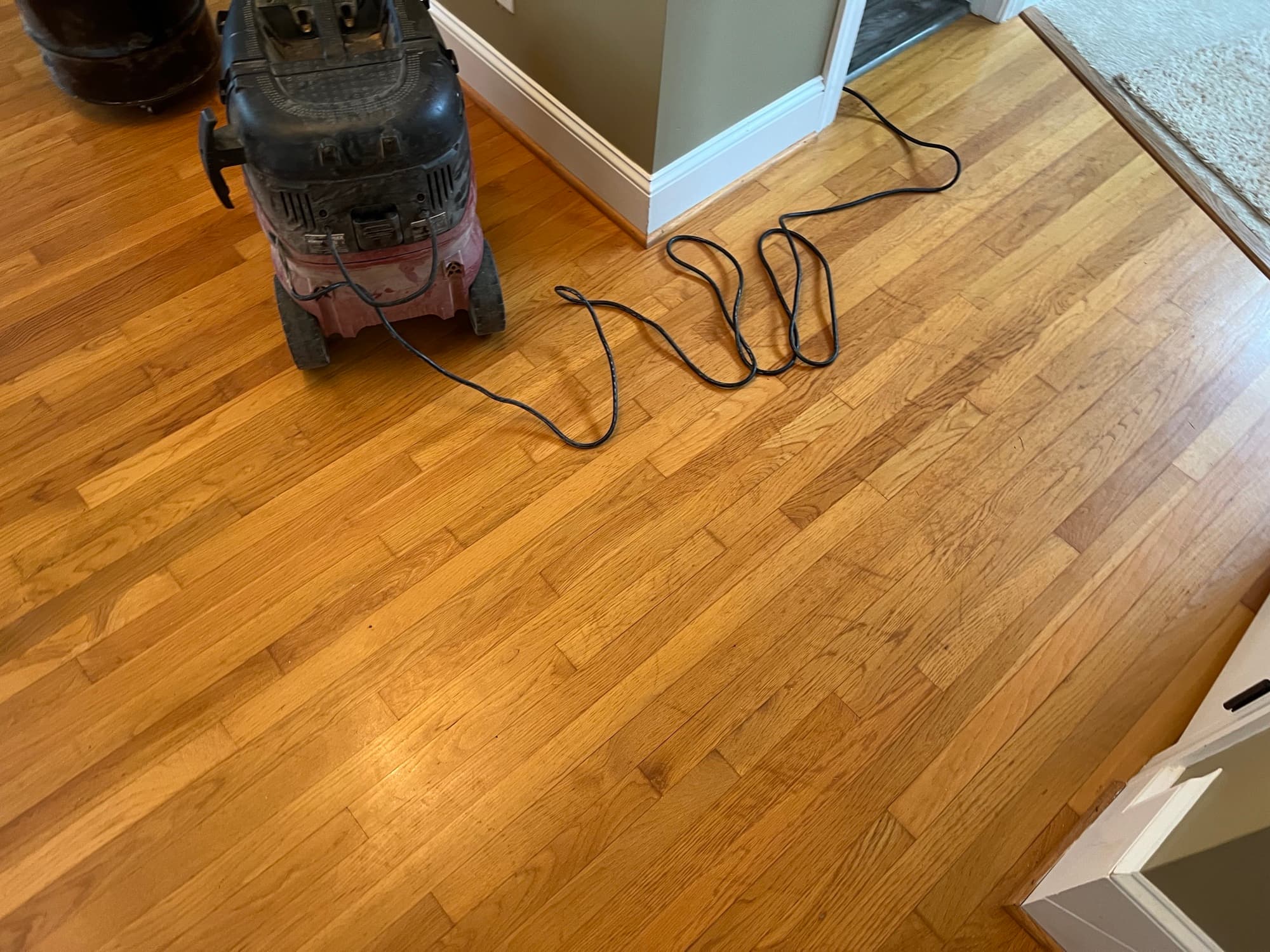
In fairness, some people love that look. On red oak, the amber warmth of an oil-based finish is the classic honey-toned floor a lot of us grew up on, and wanting it is a legitimate preference, not a mistake. If warmth is what you are after, it can also come from a stain color under a clear finish. A clear waterborne finish preserves the chosen tone without adding the amber cast of oil-modified polyurethane. Our white oak vs red oak guide covers how each species takes color.
Living Through the Job
A waterborne job is lower in odor and moves faster. Oil-based polyurethane typically carries a stronger solvent odor, needs longer between coats, and takes weeks rather than days to reach full cure.
Bona's published comparison puts oil-modified finish at 8 to 24 hours of dry time and one coat a day, against 2 to 3 hours and two coats a day for its waterborne finishes. The same guide gives oil-modified finishes 14 to 30 days to cure. The data sheets for the two finishes we apply most list a full cure of 3 days for Bona Traffic HD and 5 days for Bona Mega ONE.
Here is what that looks like in your house. After one of our waterborne refinishes you can walk on the floor in socks after 4 hours. Furniture goes back on felt pads after 24 hours. Rugs go back after 3 to 5 days. A full refinish takes 4 to 6 days from the first sanding pass to the final coat, and our refinishing timeline walks through it day by day.
On odor we will stay with what is documented. Both Bona data sheets describe the odor as non-offending, and the Traffic HD sheet lists a UL 2818 Gold certificate for chemical emissions. If someone in your home is sensitive to finish odor, ask any contractor for the data sheet of the exact product before the job starts.
Durability: Which One Lasts Longer?
It depends on which water-based finish. A two-component waterborne finish is a different class of product from a one-component waterborne finish, and oil-based polyurethane is a durable finish in its own right. Not every water-based finish outwears every oil-based one.
Oil-based polyurethane earned its reputation honestly. It builds a thick film and it has decades of floors behind it. Anyone who tells you it is a weak finish is overselling.
Waterborne finishes cover a wide range. At one end are basic one-component products. At the other is a two-component commercial finish like Bona Traffic HD, where the hardener mixed in on site is what produces the wear resistance. Bona's own abrasion testing, shown in the guide linked above, ranks its waterborne finishes above its oil-modified finish, with the Traffic HD family at the top. That is one manufacturer testing its own products, so read it as evidence about those products, not about every can with "water-based" on the label.
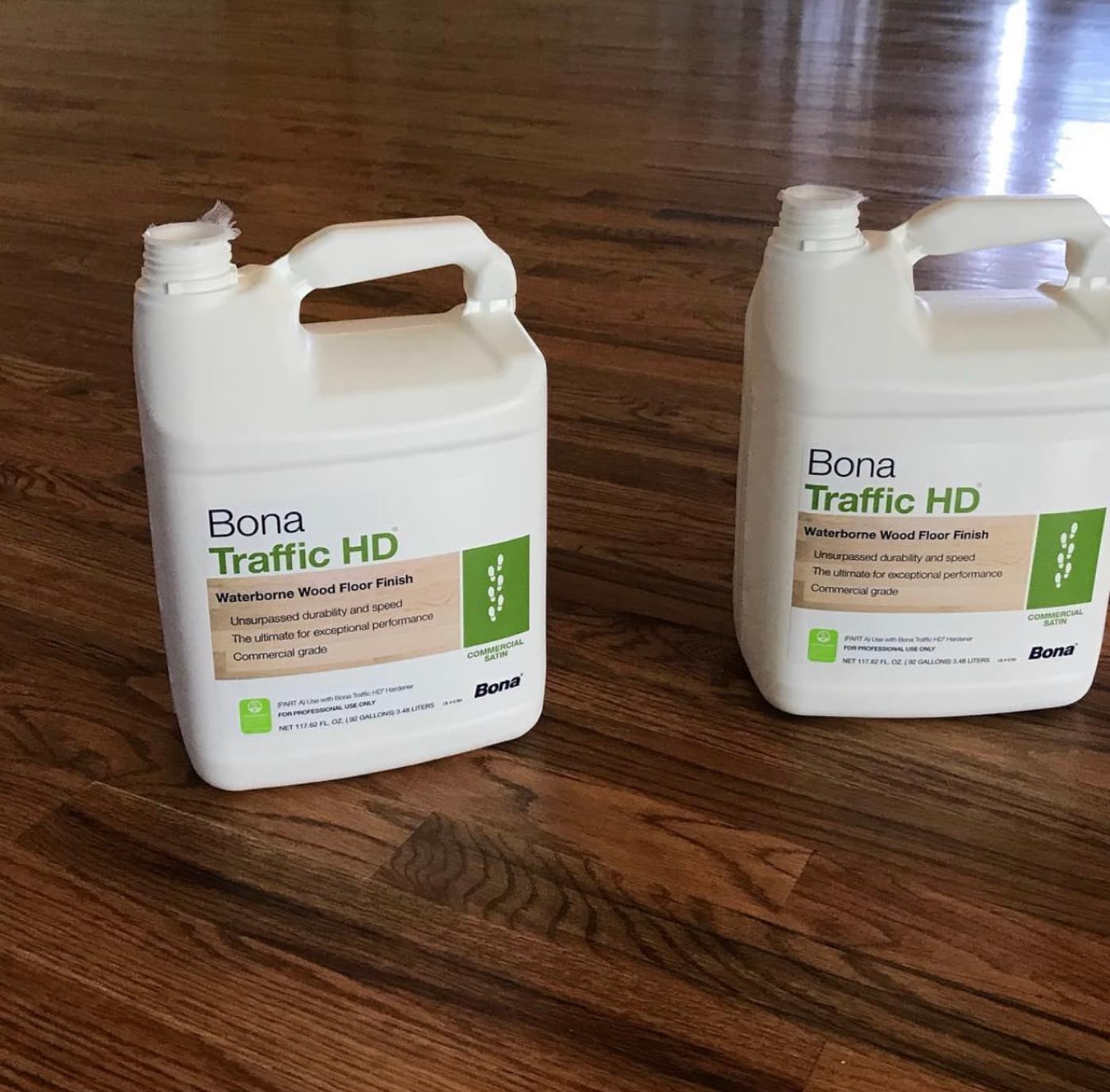
We do not promise a lifespan in years for any finish. Wear depends on the household: dogs, kids, grit at the doors, and how the floor is cleaned. What we recommend in most homes is a recoat every 3 to 5 years, which renews the wear layer before it wears through to the wood. Sanding quality and following the full system matter as much as the label on the can.
What We Use and Why
Our film finishes are waterborne Bona systems, and every waterborne refinish we do is one coat of Bona sealer plus two coats of topcoat.
Bona Traffic HD, the Commercial Collection
Two-component waterborne. The finish we put where the traffic is heaviest.
Bona Mega ONE, the Residential Collection
One-component waterborne, and the best one-component finish we have used.
Bona Domo, the Eco Collection
A one-component waterborne finish, quoted only where it fits the project.
Our reasons are the ones above. A clear finish preserves the tone the client chose without adding an amber cast. The house is livable during the job and back in use within days. And a two-component finish gives us the wear resistance we want on a busy floor. If you are choosing between the first two, our Bona Mega ONE vs Bona Traffic HD comparison covers that decision.
One thing that confuses people: we also offer a hardwax oil, Natura One Coat, as our European Collection. It has "oil" in the name and it is not oil-based polyurethane. A hardwax oil penetrates the wood instead of forming a film on top, and it goes on as a single coat with the color in the oil. It is a different kind of finish with its own look and care, and we explain it in our hardwax oil comparison.
Whatever the finish, the floor under it is sanded and prepared the same way, with water-popped stain preparation on every stained floor, and every project carries a five-year workmanship warranty. The industry standard is one year.
How to Compare an Oil-Based Quote and a Water-Based Quote
A quote that uses oil-based polyurethane is not comparable to one that uses a two-component waterborne finish. Ask each contractor for five things in writing, then compare line by line. A lower price can be a different finish system, not a better deal on the same one, so check before comparing.
The finish, by product name
Not "polyurethane" and not "water-based". The brand and the product, so you can read its data sheet yourself.
Whether there is a sealer
Our system puts a sealer coat under the topcoats. Other systems are built differently, so ask how theirs is built and what goes down before the topcoat.
How many coats of topcoat
Two coats over a sealer is our standard. The quote should state the number.
The cure time
When you can walk on it, when furniture goes back, when rugs go back, and when it is fully cured.
The warranty, in writing
How long, and what it covers.
A two-component waterborne finish costs more in material than oil-based polyurethane, and that shows up in the price. So does a sealer coat, and so does a second coat of topcoat. Once both quotes answer the same five questions, you are comparing two floors instead of two numbers, and the choice is yours to make.
For reference, our refinishing runs $5.50 to $9.00 per square foot, and the written proposal gives the full price for your home with the finish system named. Our Raleigh cost guide explains what moves a project inside that range, and our guide to choosing a hardwood flooring company lists the other questions worth asking.
When Oil-Based Polyurethane Is a Reasonable Choice
Oil-based polyurethane is a reasonable choice when the budget is tight, when you want the amber look on purpose, and when a slower job with more odor is not a problem for your household.
The honest case for it has three parts. The material costs less. The warm color is one some homeowners specifically want, most of all on red oak. And it has a long track record, with a great many floors still in service under it.
We still do not apply it, for reasons that have to do with how we work. Most of our clients live in the home during the job, and odor and long waits between coats are hard on a household. Many of the colors our clients choose are light, natural, or cool, and an ambering topcoat works against them. And we would rather run finish systems we know from sealer to final coat than switch chemistry from one job to the next.
If the amber look and the lower price are what you want, a contractor who applies oil-based polyurethane well can give you a good floor. Just make sure the quote you compare it to is described in the same detail.
Comparing Quotes?
Get a Proposal That Names the Finish
Izral Daniels sees every floor in person before quoting it. Your written proposal names the sealer and the topcoat by product, states the number of coats, and gives the full price for your home. Serving Raleigh, Clayton, Cary, Wake Forest, Garner, Apex, and the rest of the Triangle.
Request Free EstimateQuestions We Hear About Oil-Based and Water-Based Finishes
Which lasts longer, oil-based or water-based polyurethane?
It depends on which water-based finish. A two-component waterborne finish such as Bona Traffic HD, which is mixed with a hardener on site, is a different class of product from a one-component waterborne finish, and the words "water-based" on a quote do not tell you which one you are getting. Oil-modified polyurethane is a durable finish with a long track record. We do not promise a lifespan in years for any finish, because wear depends on the household. In most homes we recommend a recoat every 3 to 5 years.
Does water-based polyurethane look plastic?
Not when the right sheen is chosen and it is applied at the right thickness. The plastic look people worry about usually comes from a high gloss sheen, not from the chemistry. A waterborne finish in matte or satin reads as clear wood, with the color of the species or the stain showing through. What it will not do is add an amber glow on its own, so a natural red oak floor looks lighter and less orange under a waterborne finish than under an oil-based one.
Can you put water-based polyurethane over oil-based when recoating?
In most cases, yes. A fully cured oil-based finish that is in sound condition can be cleaned, abraded, and recoated with a waterborne finish, and our recoat is one coat of Bona Traffic HD. The floor has to be free of wax, acrylic polish, and oily residue, and we test for adhesion before we commit. A recoat does not remove the amber color that is already in the old finish. Changing that color takes a full sand and refinish.
How long before furniture and rugs go back on a water-based finish?
After one of our waterborne refinishes you can walk on the floor in socks after 4 hours, furniture goes back on felt pads after 24 hours, and rugs go back after 3 to 5 days. Bona Traffic HD reaches full cure in 3 days and Bona Mega ONE in 5 days. Oil-based polyurethane typically takes longer at every one of those steps.
Is water-based polyurethane a better fit for a home with kids and pets?
We do not make health claims about any finish. What we can say is that waterborne finishes are lower in odor during the job, they dry faster between coats, and the house is back in use sooner, which is easier on a full household. Bona lists an emissions certification on its Bona Traffic HD data sheet. For wear from dog nails and toys, the product matters more than the category: a two-component waterborne finish is what we recommend where traffic is heaviest.
Why is one refinishing quote cheaper than the other?
In our experience the most common reason is the finish system, though it is not the only one. Oil-based polyurethane costs less in material than a two-component waterborne finish, and quotes also differ in the number of coats, the preparation, the repairs included, and the scope. Little of that is visible the week the job is finished. Ask each contractor for the finish by product name, whether there is a sealer, how many coats of topcoat, the cure time, and the warranty in writing, then compare the two quotes on those lines.
Is hardwax oil the same thing as oil-based polyurethane?
No. They share a word and almost nothing else. Oil-based polyurethane is a film that sits on top of the wood. A hardwax oil such as Natura One Coat penetrates the wood, goes on as a single coat with the color in the oil, and leaves a matte, natural surface that can be spot repaired. We apply hardwax oil.
We explain this difference at assessments every week, because in our experience it is the most common reason two refinishing quotes do not match. We handle hardwood floor refinishing across the Triangle, including Clayton, Raleigh, and Cary. Request a free estimate and we will look at your floor in person before we talk numbers.