
The Short Answer
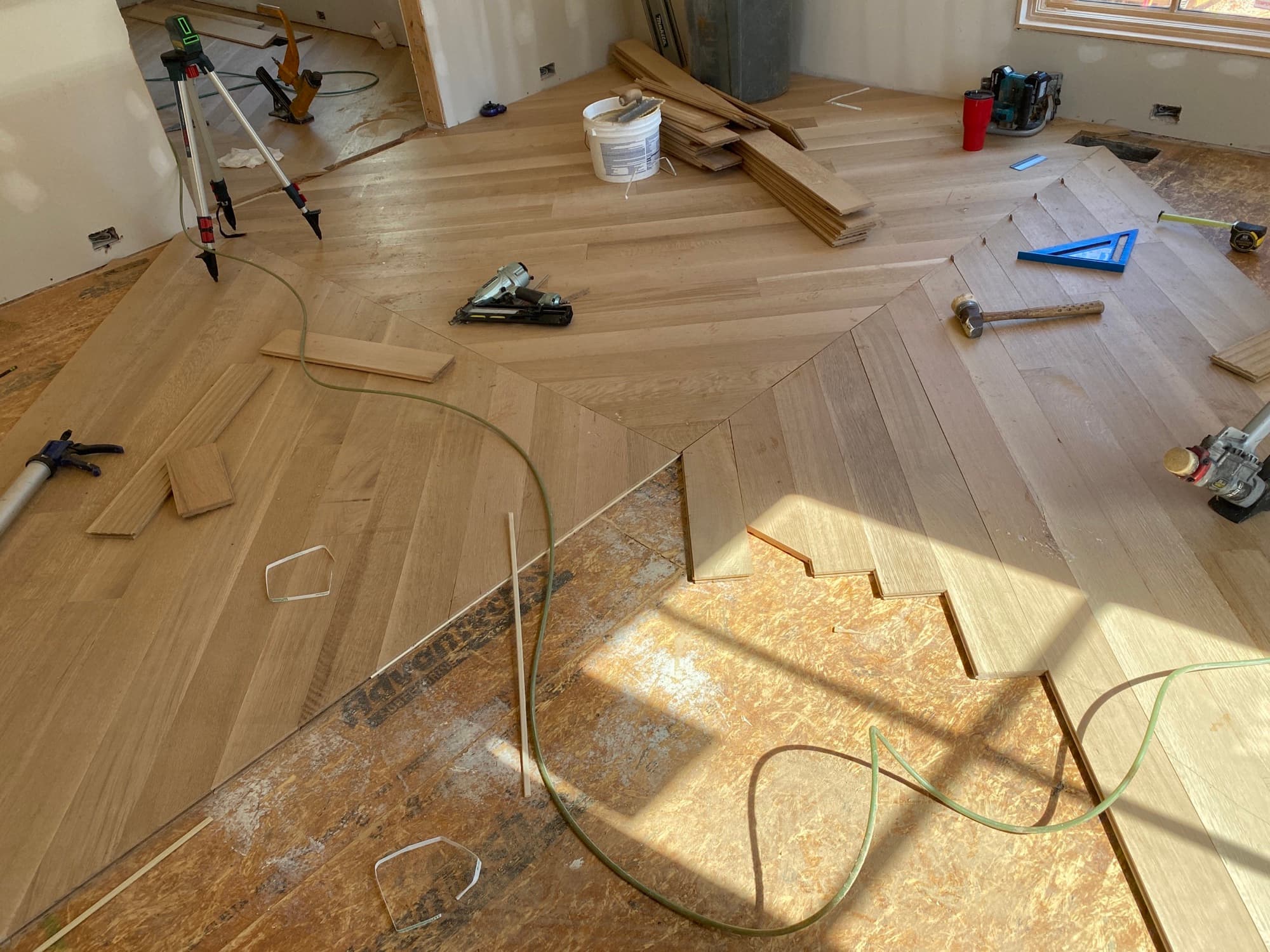
Prefinished hardwood is real wood with a finish applied at the factory instead of in your home. Once that finish wears, the floor can be sanded back to bare wood and refinished, provided there is enough wood above the tongue (on solid) or above the core (on engineered) to sand. After sanding, it is no longer a prefinished floor. It is a site-finished floor, and it is stained and finished like any other hardwood floor refinish. Our comparison of site-finished and pre-finished hardwood explains how the two differ when they are new.
Step One: Solid or Engineered, and How Much Wear Layer
Prefinished flooring comes in both solid and engineered construction, and that decides everything. Solid prefinished hardwood is the same wood top to bottom, and it can be sanded much like any solid floor. Engineered prefinished hardwood is a layer of real wood, the wear layer, bonded to a plywood or composite core. Only the wear layer can be sanded. If it is generous, the floor can be refinished. If it is thin, sanding would go through to the core, and that floor cannot be refinished at all.
We check this before we quote. The easiest place is the edge of a board where one is exposed: at a floor vent after the register is lifted out, or at a threshold where the floor ends. From the edge we can see whether the board is solid or layered, and on engineered we measure how much real wood sits above the core. The thinnest wear layer we will sand is 2mm, and on a floor that thin we plan a single light sanding. Our guide to engineered vs. solid hardwood covers wear layers in more depth, and how many times a floor can be refinished explains why light sanding matters so much on any floor.
What Is Different About Sanding a Prefinished Floor
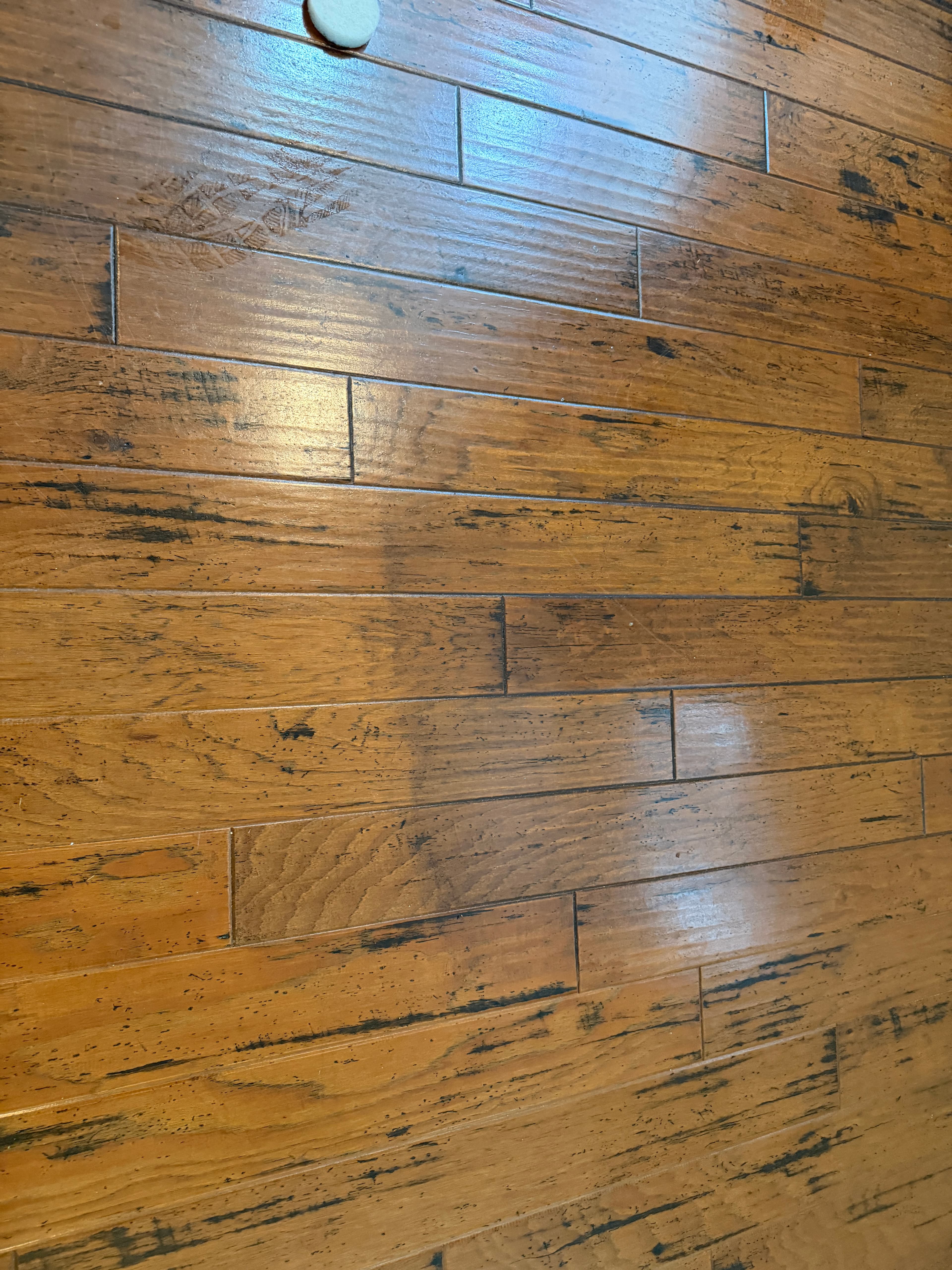
The micro-bevels. Prefinished boards are milled with a small bevel along each top edge, so every board joint shows a slight groove once the floor is down. A site-finished floor does not have them, because it is sanded flat after it is installed. When we sand a prefinished floor, we take the floor flat and the bevels come down with it, leaving a continuous surface.
The factory finish. Most prefinished floors carry a very hard factory finish, usually with aluminum oxide in it. It is built to resist wear, and it resists the sander too. Cutting through it takes more work than a typical site-applied finish.
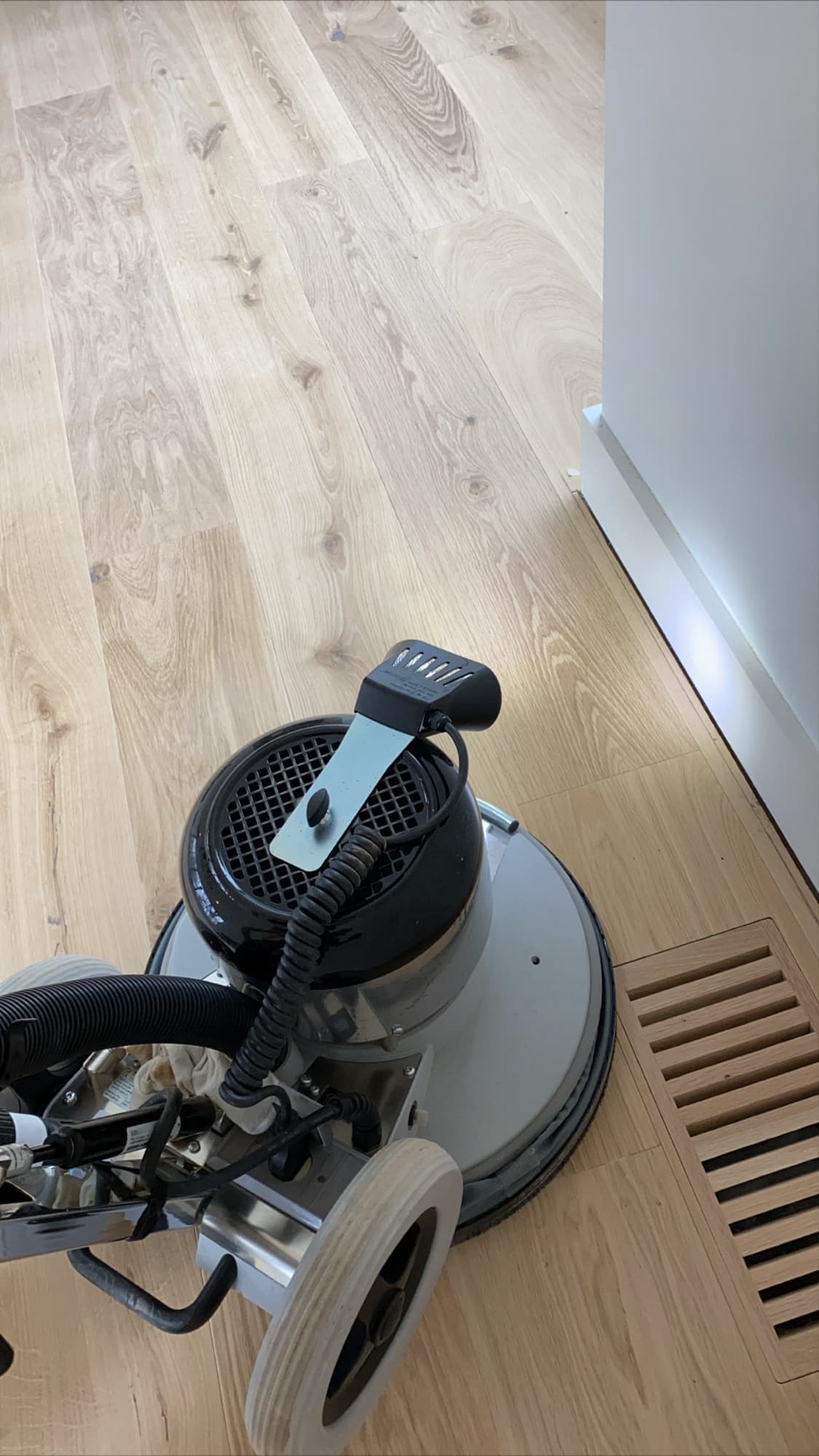
We sand with the Bona PowerDrive on every job, starting with the least aggressive grit that will do the work. On a prefinished floor that first pass does more work than usual, and then the floor is treated like any other.
Why It Costs a Little More
Because the bevels have to come down and the factory finish takes more work to cut through, we price a prefinished refinish a little above a standard refinish. A standard refinish of existing hardwood runs $5.50 to $8.00 per square foot, with specialty work such as wire brushing, cerusing, or distressing above that range. Your written proposal confirms the price for your floor. Our post on what affects hardwood floor refinishing cost covers the other factors.
After Sanding, You Choose Like Any Refinish
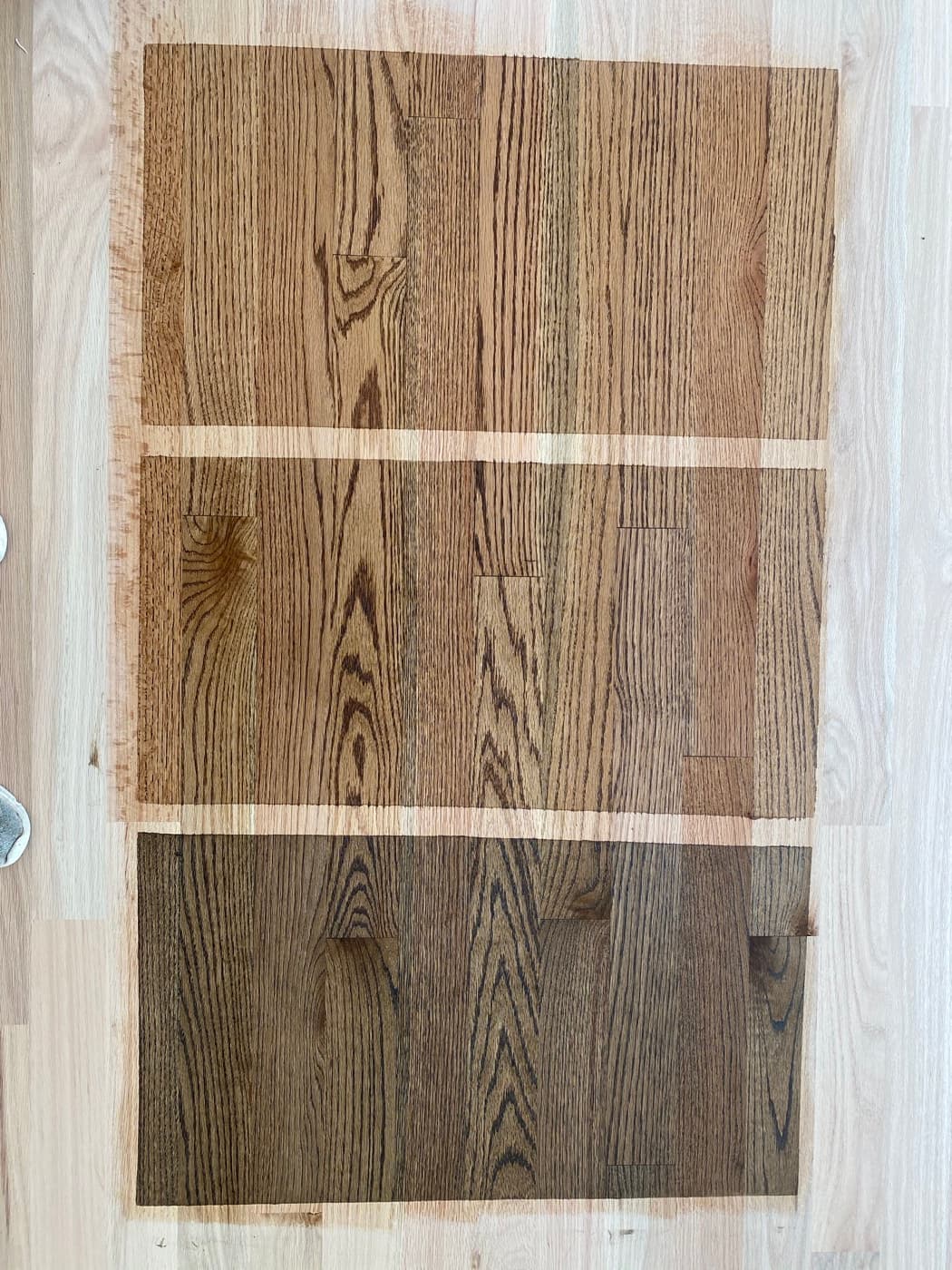
A prefinished floor gives you the color the factory chose. Once it is sanded, you choose. We water pop the floor before color when a stain is going down, which opens the grain so the color goes on deeper and more evenly, and we put samples down on your own floor in your own light before committing. Then you pick the finish system:
Waterborne polyurethane goes on as one sealer coat plus two coats of finish. Socks are fine at 4 hours after the final coat, furniture on felt pads at 24 hours, and rugs at 3 to 5 days. Bona Traffic HD reaches full cure in 3 days and Mega ONE in 5 days.
Hardwax oil: our system, Natura One Coat, goes down in one coat. It is pads only for 24 hours, walking and furniture at 36 hours, and rugs at 5 days, with full cure at 5 days.
Either way, the whole job takes 4 to 6 days, and pets can come back 24 hours after the final coat.
What About a Recoat Instead?
A recoat, a fresh coat of finish over the existing one without sanding to bare wood, runs $2.25 to $3.00 per square foot. On a prefinished floor we approach it cautiously. A factory finish is very hard and slick, and new finish does not bond to it easily. There are two ways to get new finish to bond. The usual one is mechanical: we clean the floor thoroughly and abrade the surface so the new coat has something to grip. On some floors we use a chemical bonding system instead, such as Bona's guaranteed recoat system, which prepares the existing finish without sanding it. Either way, we run an adhesion test in an out-of-the-way spot first. Polish, wax, and residue from maintenance products can stop a recoat from bonding even when the original finish is otherwise sound, so we look for them before anything else. If the test passes, a recoat can refresh a floor whose finish is dull but not worn through. If it fails, or the finish is worn to bare wood in traffic lanes, sanding is the answer.
Recoating Is Not the Same as Sanding to Bare Wood
A recoat, sometimes called a screen and recoat, only lightly abrades the existing finish and adds a fresh coat on top. It removes almost no wood. A full refinish sands through the finish to bare wood and takes the floor flat. That difference matters on engineered floors: a floor with a thin wear layer can often take a recoat and still not have enough wood for a full sanding. If the finish is sound and the wear layer is thin, a recoat may be the better choice, and we tell you which one your floor can take after checking the wear layer.
When Sanding Is Part of a Repair
Prefinished floors that take water damage raise the same question from a different direction. New boards woven into an aged prefinished floor will not match in color, and sanding the whole floor afterward is what makes old and new start over together. Our post on whether a water-damaged patch can match walks through those options.
Frequently Asked Questions
Can prefinished hardwood floors be sanded and refinished?
Yes, if the floor is solid hardwood, or engineered hardwood with a limited but sufficient wear layer. Sanding removes the factory finish and the micro-bevels and takes the floor back to bare wood, and from there it is stained and finished like any site-finished floor. Engineered floors with too thin a wear layer cannot be sanded, so we check before quoting.
How do you know if a prefinished floor has enough wear layer to sand?
We look at the edge of a board where one is exposed, usually at a floor vent or a threshold. On solid hardwood the board is the same wood all the way through. On engineered hardwood the top layer of real wood sits on a plywood or composite core, and we measure how thick that top layer is. If there is not enough wood above the core, the floor cannot be sanded.
What happens to the beveled edges when a prefinished floor is sanded?
Sanding takes the floor flat, and the factory micro-bevels between boards come down with it. The result is a flat, continuous surface like a site-finished floor instead of a small groove at every board edge.
Does refinishing a prefinished floor cost more?
Yes, a little. Prefinished floors have a very hard factory finish, usually with aluminum oxide in it, and the bevels have to come down, so the first sanding takes more work than a standard refinish. We price a prefinished refinish a little above a standard refinish, which runs $5.50 to $8.00 per square foot. Your written proposal confirms the price for your floor.
Can I change the color of a prefinished floor?
Yes. Once it is sanded to bare wood, it is a site-finished floor. You choose the stain color and the finish system, the same as any refinish, and we water pop the floor before color when a stain is going down.
Can a prefinished floor be recoated instead of sanded?
Sometimes, with care. A factory finish is very hard and slick, and new finish does not bond to it easily. Before any recoat we clean the floor thoroughly, then either abrade the surface or, on some floors, use a chemical bonding system such as Bona’s guaranteed recoat system, and run an adhesion test in an out-of-the-way spot. Polish, wax, or residue from cleaning products can stop a recoat from bonding even when the original finish is sound. If the test fails, a recoat is not an option and sanding is the answer.
How long does it take to refinish a prefinished floor?
A refinish takes 4 to 6 days. On a waterborne system that is one sealer coat plus two coats of finish; our hardwax oil, Natura One Coat, goes down in one coat. With waterborne finish, socks are fine at 4 hours after the final coat, furniture on felt pads at 24 hours, and rugs at 3 to 5 days. Pets can come back 24 hours after the final coat.
Not sure whether your prefinished floor can be sanded? Request a free estimate. Send us photos and a few details for a free preliminary estimate. If your floor needs an in-home check of the wear layer, we confirm any assessment fee before booking, then tell you plainly whether a refinish, a recoat, or neither is the right call.
Prefinished floors from the 1990s and 2000s are common across newer Triangle subdivisions, and many are ready for their first sanding. We handle hardwood floor refinishing across the Triangle, including Wake Forest, Fuquay-Varina, and Clayton. Request a free estimate and we will look at your floor in person before we talk numbers.