
Owner · Bona Certified Craftsman · NWFA Member
A true 3/4 inch solid hardwood floor, or an engineered floor with a 6 mm wear layer, can be refinished eight to ten times when each sanding removes as little wood as the job allows, and more than ten is possible on a floor that has been maintained between sandings. The number is set at the sander, not by the board.
What decides the number: the board or the sander?
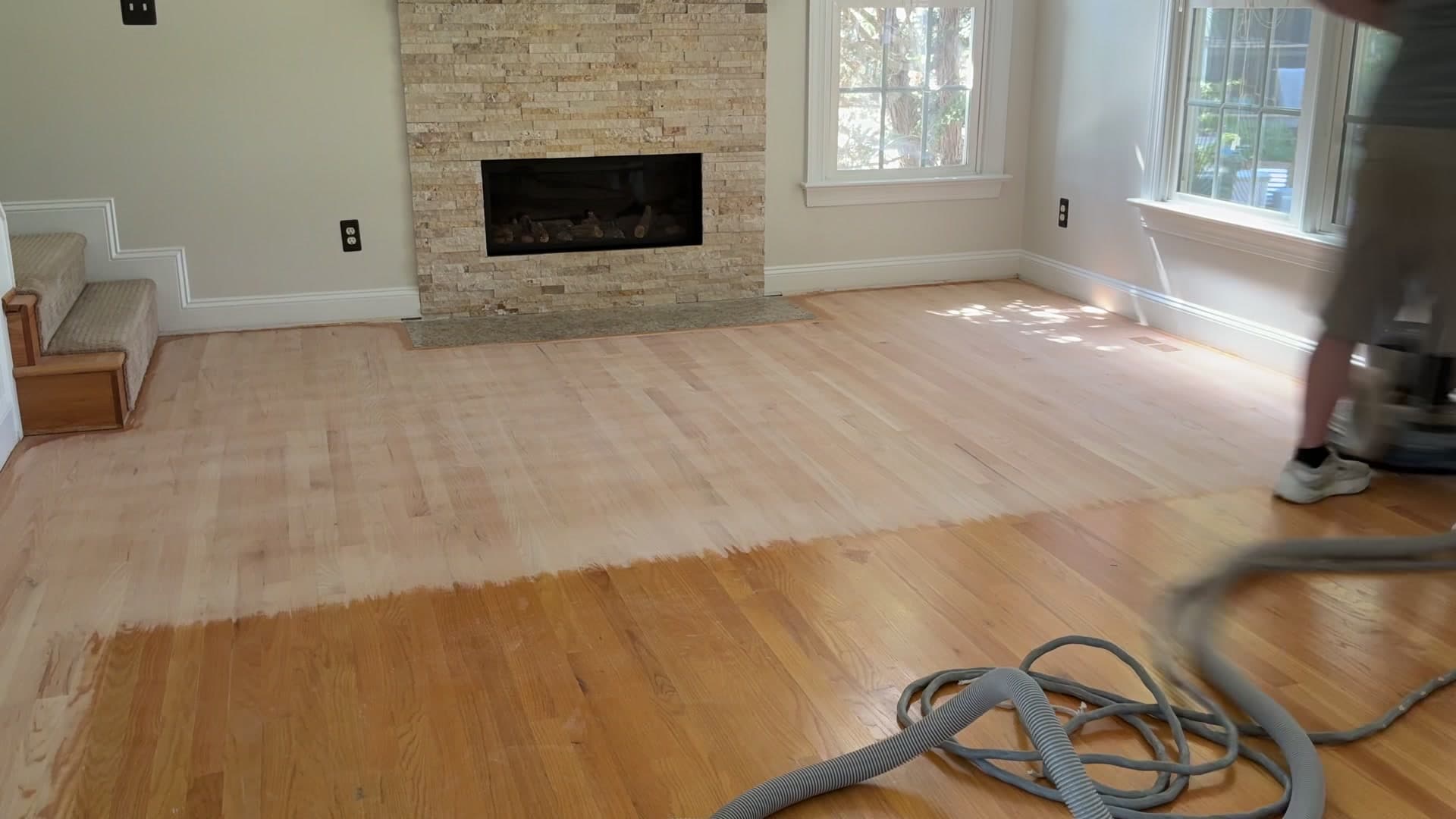
Every full refinish removes wood. That is unavoidable, and it is why a floor has a finite number of sandings in it. What is not fixed is how much wood each sanding takes. That is a decision, and most of the industry makes it the same way on every floor: 36 grit on the big machine, then 80, then a 120 buff. It works, it is fast, and it takes off far more oak than most floors need to lose.
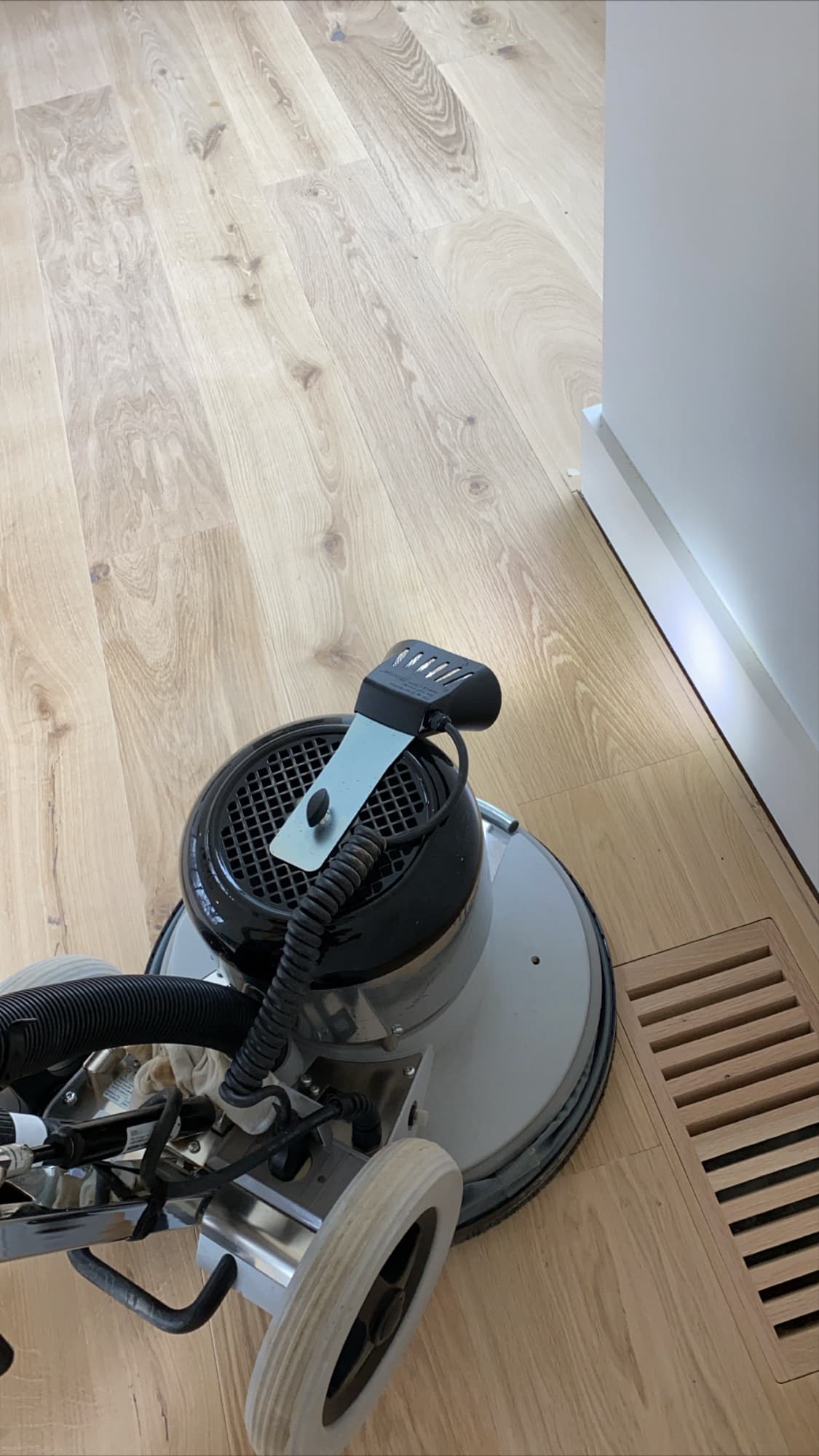
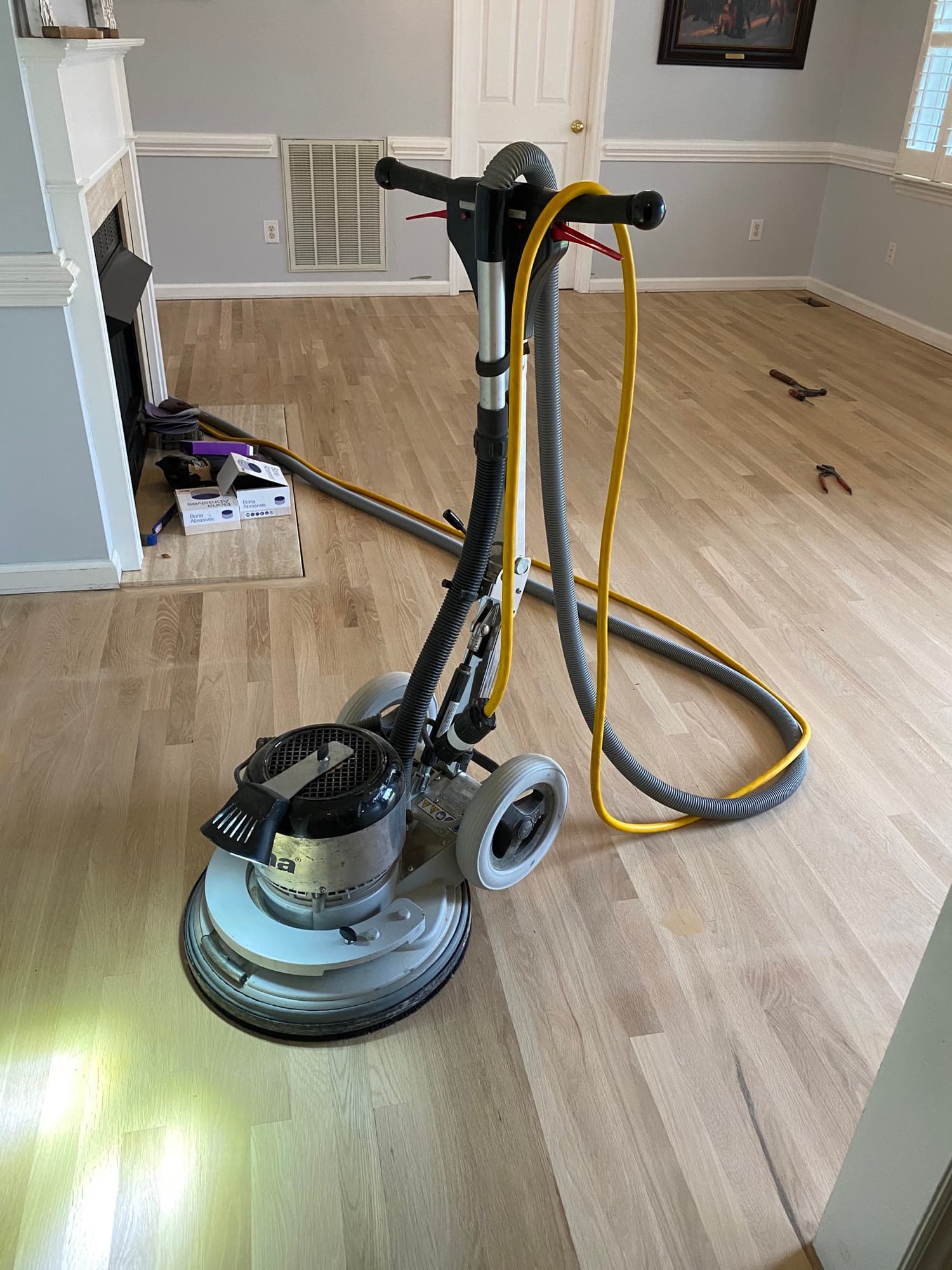
Our rule is the opposite. We start with the least aggressive grit that will still flatten the floor and remove the old finish, and we only go coarser when the floor makes us. With the Bona PowerDrive we can dictate removal three ways: how fast the machine moves, the grit number, and the grit type. In our experience that approach gets roughly double the number of sandings out of a floor compared with the standard sequence. The floor looks the same when we leave. It just has more of itself left for next time.
How many times can a solid 3/4 inch floor be refinished?
On a true 3/4 inch solid floor, eight to ten full refinishes is a very reasonable expectation with the approach above, and more than ten is possible depending on how the floor is maintained between them. That is several generations of use. Most homeowners sand a floor once every ten to fifteen years, so a floor sanded with care outlives the house's plumbing, its roof, and usually its owners.
The limit is the tongue. A solid board is milled with a tongue and groove partway down its edge, and the wood above the tongue is all a sander can ever use. Every heavy sanding spends more of it. When we walk an older floor we look at the exposed edges, at a floor vent, a threshold, or a board that has to come out anyway, to see how much is left before we recommend a full sanding over a lighter one. On a floor that was sanded hard by a previous crew, the right answer is sometimes a screen and recoat instead.
How many times can engineered hardwood be refinished?
With engineered flooring the question is the wear layer, the real hardwood veneer on top of the plywood core. Thicker is more sandings, and how the surface was made matters as much as how thick it is.
| Floor | Refinishes, sanded conservatively | Note |
|---|---|---|
| True 3/4 inch solid | 8 to 10, more with maintenance | The wood above the tongue is the budget |
| Engineered, 6 mm wear layer | About the same as solid | A 6 mm veneer is real wood; treat it like a solid floor |
| Engineered, 3 to 4 mm | 3 to 7, depending on texture and bevels | Light sandings only; a heavy sequence uses it up fast |
| Engineered, 2 mm | 1 to 3, depending on texture and bevels | The thinnest we will sand; a smooth, square-edged face gets the most |
| Engineered under 2 mm | None | Recoat only; the finish can be renewed, the wood cannot be cut |
Two millimeters is the thinnest wear layer we are comfortable sanding. How many times it can take depends on texture and bevels: a smooth, square-edged face can go one to three times, while a hand-scraped surface or deep bevels have to be flattened first, and that spends most of what 2 mm has. The same two things decide where a 3 to 4 mm layer lands in its three-to-seven range. If you are choosing an engineered product now and want refinishing in its future, the wear layer is the number to ask for, which is covered in our engineered vs solid guide.
What uses up a floor faster?
The standard grit sequence
Sanding every floor at 36, 80, 120 regardless of what it needs. It is the industry habit, and it is the single biggest reason floors run out of sandings early.
Prefinished flooring
The factory aluminum oxide finish has to be cut through and the bevels between boards sanded out. Both force a more aggressive grit than a site-finished floor ever needs.
Damaged wood
Deep pet stains, water damage, and gouges have to be sanded past. Sometimes replacing the boards costs the floor less wood than sanding down to clean fibers across a whole room.
Cupping and crowning
A floor that moved with moisture has to be flattened before it can be finished, which is a heavy cut. Fixing the moisture source first, and letting the floor settle, saves wood.
A previous crew
We inherit floors that were sanded hard once or twice already. The board is the same age; the budget left in it is not.
The best way to get more refinishes is to need fewer
A floor does not need a full sanding when the finish dulls. It needs a new coat of finish. A screen and recoat, or a deep clean and recoat, renews the wear surface without removing any wood at all, and a floor that gets recoated when the finish first shows traffic patterns can go many years between sandings. That is what “depending on how the floor is maintained” means in practice: a well-kept floor spends its sandings slowly. Our guide to the signs a floor needs refinishing covers how to tell a tired finish from tired wood.
When it is time to sand, ask whoever quotes it what grit they plan to start with and why. The answer tells you more about how much of your floor will be left than anything on the estimate. It is the question we would want asked of our own hardwood floor refinishing crew.
Questions and Answers
How many times can a 3/4 inch solid hardwood floor be refinished?
Eight to ten full refinishes is very reasonable on a true 3/4 inch solid floor when each sanding takes off as little wood as the job allows, and more than ten is possible on a floor that has been maintained between sandings. Floors sanded the standard heavy way get fewer.
How many times can engineered hardwood be refinished?
It depends on the wear layer, the texture, and the bevels. A 6 mm wear layer, sanded conservatively, can be refinished about as many times as a solid floor. A 3 to 4 mm layer can take three to seven refinishes. A 2 mm layer, the thinnest we are comfortable sanding, can take one to three. In each case a smooth, square-edged face gets the high end; hand-scraped textures and deep bevels have to be flattened first and use up the difference.
Does refinishing thin the floor?
Yes, every full sanding removes wood. How much is the decision that matters. The industry default sands every floor with the same aggressive sequence. Starting with the least aggressive grit that still flattens the floor and removes the finish takes off far less, which is where the extra refinishes come from.
Can a prefinished hardwood floor be refinished?
Yes, but it costs the floor more wood than a site-finished floor does. The factory aluminum oxide finish has to be cut through and the bevels between boards have to be sanded out, which forces a more aggressive grit. Budget on fewer lifetime refinishes for a prefinished floor than for the same wood finished on site.
How do I make my floor last more refinishes?
Refinish less often. A screen and recoat, or a deep clean and recoat, renews the finish without removing wood, and a floor that is recoated when the finish first dulls can go many years between full sandings. When it is finally time to sand, ask the contractor what grit they plan to start with and why.
What happens when a floor cannot be sanded again?
It can still be recoated for as long as the finish is sound, and individual damaged boards can be replaced and blended. When the wood above the tongue is gone or the wear layer is through, the floor is replaced. That is decades away on most floors that were sanded with care.
Refinish counts above are our experience on floors we have sanded and floors we have inherited, not a laboratory figure. Sanding and finishing standards follow the National Wood Flooring Association guidelines.
Wondering How Much Floor You Have Left?
We look at the board edges, the finish, and the wear before recommending a full sanding or a lighter one, and we tell you which grit we plan to start with. Request an estimate and we will price the right option for your floor. Serving Raleigh, Clayton, Cary, Wake Forest, Garner, Apex, Knightdale, Fuquay-Varina, Holly Springs, Wendell, Zebulon, Selma, and Smithfield.
Request an EstimateEvery refinishing quote starts with how much floor is left, in every town we work in. We handle hardwood floor refinishing across the Triangle, including Raleigh, Clayton, and Wake Forest. Request a free estimate and we will look at your floor in person before we talk numbers.