
Owner · Bona Certified Craftsman · NWFA Member
For most homes in the Triangle, satin is the safe choice and matte is the current look. Both hide dust and scratches far better than semi-gloss, which shows everything and belongs in formal, low-traffic rooms. Sheen changes how the floor reflects light, not how well it is protected: the durability lives in the finish underneath.
What does sheen actually change?
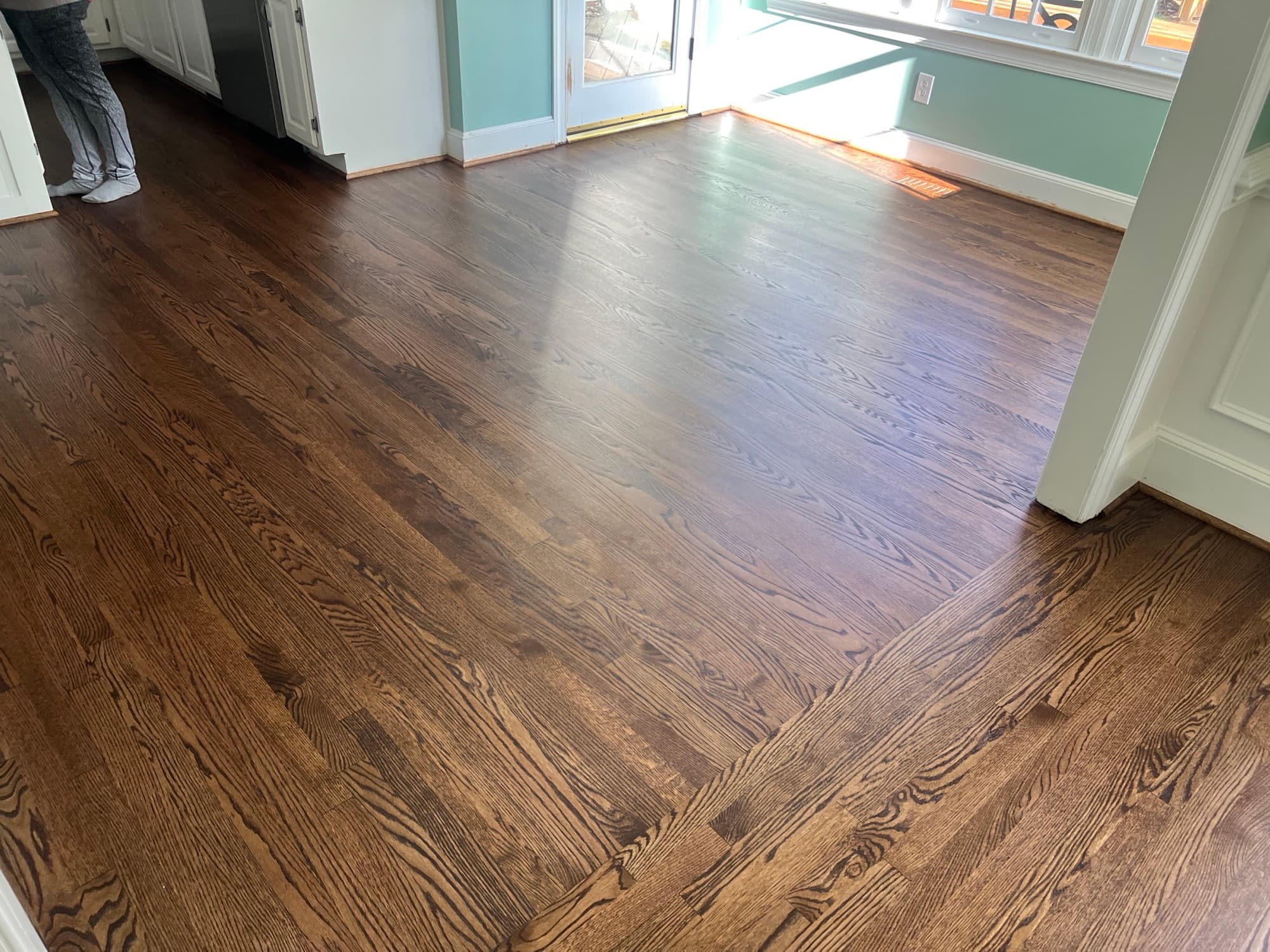
Sheen is how much light bounces straight back at you from the surface. Manufacturers measure it with a gloss meter, but your eye does not need one. Stand at the far end of a room and look toward a window: a matte floor stays the same color all the way across, a satin floor picks up a soft glow near the window, and a semi-gloss floor throws the window back at you.
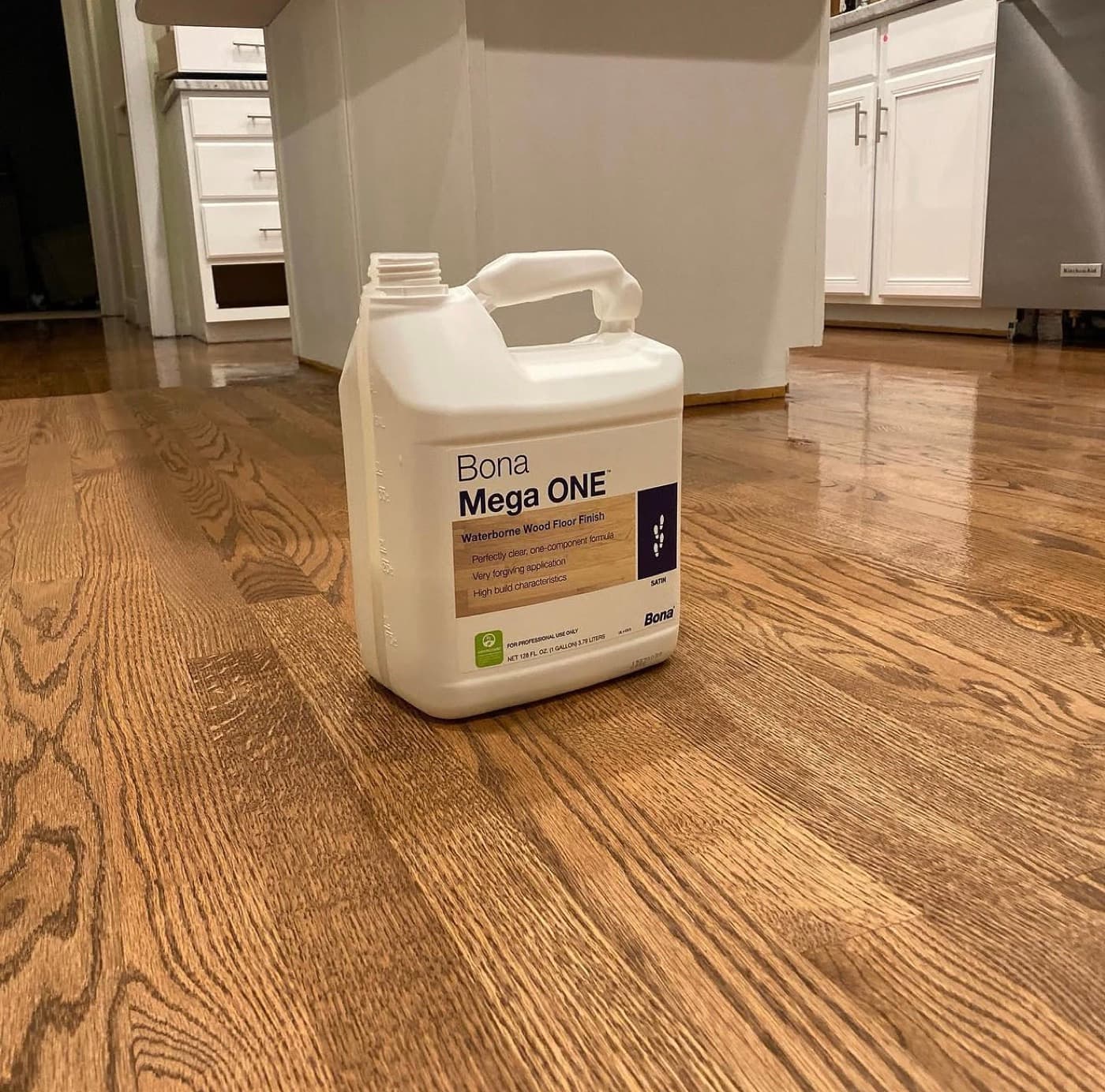
Here is the part that surprises people. On a waterborne finish like Bona Mega One or Traffic HD, only the last coat carries the sheen. The sealer and the build coats underneath are the same regardless. Within the same system, choosing matte instead of semi-gloss does not meaningfully change the protection you are getting. The durability comes from the finish system itself, not from how shiny the final coat looks. Sheen is a look, not a grade of protection.
Which sheen hides scratches, dust, and footprints?
Matte, then satin, then semi-gloss, and the gap is bigger than most people expect. A scratch shows because it reflects light differently from the surface around it. A matte surface already scatters light in every direction, so the scratch has almost nothing to contrast with. On a semi-gloss floor the same scratch reads as a dull line in a mirror. Dust, pet hair, dried water drops, and sock prints follow the same rule.
This is why the sheen question gets louder as the floor gets darker. A dark walnut stain under semi-gloss is the least forgiving floor we install: beautiful for a week, then a daily conversation with a dust mop. The same color under matte hides a month of normal life. If you are set on a dark color and you have dogs or kids, matte or satin is the honest recommendation, and our guide to fixing scratched hardwood floors explains why the scratches you can see on a glossy floor are usually only in the finish, not the wood.
Which sheen is most popular in the Triangle right now?
Matte is our most common choice right now, with satin close behind. Hardwax oils are naturally matte, and they are a major part of the hardwood floor refinishingwork we do. Among the waterborne film finishes we apply, matte and satin outnumber semi-gloss many times over. This month a builder's spec sheet for a 3,100 square foot white oak floor in Durham called for Traffic HD in its flattest sheen, which would have been an unusual request ten years ago and is now the default from designers.
Semi-gloss still has a place, particularly in formal rooms, traditional interiors, and older homes where we are matching an existing sheen. Gloss is rare in a house; it belongs on a gym floor.
How does the finish you choose limit your sheen?
Not every finish comes in every sheen, so the finish decision and the sheen decision travel together.
| Finish | Sheens available | How the sheen is made |
|---|---|---|
| Hardwax oil (Rubio Monocoat, Natura OneCoat) | Matte, very low sheen | Oil cures inside the wood, so the floor starts matte; many oiled floors can be coated later if more sheen is wanted, depending on the manufacturer |
| Bona Traffic HD | Raw, Extra Matte, Satin, Semi-Gloss, Gloss | Sheen is in the final coat; Raw is the flattest, below Extra Matte, and the range is the widest of the finishes we apply |
| Bona Mega One | Matte through semi-gloss | Sheen is in the final coat |
| Prefinished engineered plank | Set at the factory, usually matte or satin | A buff and recoat puts a new top coat over the factory finish, in the sheen you choose, no sanding needed |
If you want a matte floor, both of the two-component systems get you there, and they get there differently. Traffic HD Raw is the flattest floor we can give you; in our experience it reads flatter than an oiled floor, and Extra Matte is close behind it. A hardwax oil gives you a matte floor with the in-the-wood feel that a film finish does not quite match, even at its flattest. If you want satin or semi-gloss, you are choosing a film finish, and our Traffic HD vs Rubio Monocoat guide covers the rest of that decision.
Does sheen change how your stain color looks?
Yes, and this is the reason we never pick sheen from a chart. More sheen reads deeper and a shade darker, because the reflective surface adds contrast to the grain. Matte reads lighter and softer. On a pale floor with no stain at all, matte can look almost raw, which is exactly the natural white oak look most people are asking for. The same board under semi-gloss looks like it has been varnished, because it has.
On a refinishing job we apply the sample colors on your own floor, sanded and water-popped the same way the real job will be, and we put the sheen on top of the sample so you are judging the finished combination in your own light. The process is on our stain colors page. Sheen that looked right on a showroom panel under fluorescent light has surprised more than one homeowner in a north-facing living room.
Can you change the sheen later?
On a film finish, yes, and it is one of the cheaper changes you can make to a floor. A buff and recoat scuffs the existing top coat and lays down a new one, and the new coat carries whatever sheen you choose. Most floors are done in a day and walkable the next. The catch is that the finish underneath has to be clean and sound: a floor that has had an acrylic polish or a paste wax on it will not take a recoat until that is stripped, which is a job of its own.
A hardwax oil floor starts matte, and many times it can be coated later too, depending on the manufacturer. The oil is maintained with a fresh coat of oil, and some makers allow a compatible topcoat over a properly prepared oiled floor down the road if you decide you want more sheen. It is not always a one-way door. What it takes depends on the product and how the floor has been cared for, which is something we look at on site rather than promise from a chart.
How to decide
Choose matte if
you want the natural, in-the-wood look, you have dogs or kids, the floor is dark, or you are going with a hardwax oil. It forgives the most and photographs the way floors look in magazines right now.
Choose satin if
you want the floor to read as clearly finished without showing every footprint. It is the default for kitchens, hallways, and whole-house refinishing when the homeowner has no strong preference.
Choose semi-gloss if
the room is formal and lightly used, you are matching the rest of the house, or you like the traditional look and you are prepared to keep up with it. Not for dark stains in busy rooms.
Skip gloss
unless it is a gym or a stage. In a house it shows every mark and needs the most upkeep of any sheen.
Questions and Answers
Is a matte finish less durable than a semi-gloss finish?
No. Within the same finish system, choosing matte instead of semi-gloss does not meaningfully change the protection you are getting. The durability comes from the finish system, not from how shiny the last coat looks. What changes is how much light the surface reflects.
Which sheen hides scratches and dust best?
Matte, then satin, then semi-gloss. A matte surface scatters light, so a scratch has little to contrast with. On semi-gloss the same scratch reads as a dull line in a mirror. Dust, pet hair, and footprints follow the same rule, most of all on dark floors.
What is the most popular hardwood floor sheen right now?
Matte, with satin close behind. Hardwax oils are naturally matte and are a major part of the refinishing work we do, and among the waterborne finishes we apply, matte and satin far outnumber semi-gloss. Semi-gloss comes up in formal rooms, traditional interiors, and older homes where we are matching an existing sheen.
Does the sheen change how the stain color looks?
Yes. More sheen reads deeper and slightly darker. Matte reads a shade lighter and softer, and on very pale floors it can look almost unfinished, which is the natural white oak look. That is why we sample sheen on your own floor with the stain under it, never from a chart.
Can I change the sheen later without sanding the floor?
On a film finish, yes. A buff and recoat replaces the top coat with the sheen you choose, as long as the finish underneath is clean and sound. Most floors are done in a day. A hardwax oil floor starts matte, and many times it can be coated later as well, depending on the manufacturer; what that takes depends on the product and the floor, so we confirm it on site.
What sheen is best for a kitchen or a hallway?
Matte or satin. Those rooms collect grit, drips, and traffic patterns, and a lower sheen keeps daily wear invisible longer between cleanings. Under it, a hardwax oil like Rubio Monocoat or Natura OneCoat and Bona Traffic HD handle kitchens equally well.
Sheen names and availability are the manufacturers' own; each product's technical data sheet has the current list. Application and maintenance standards follow the National Wood Flooring Association guidelines.
Not Sure Whether Matte or Satin Will Look Right?
We sample the stain and the sheen on your actual floor, in your home's lighting, before the final finish goes down. Request an estimate and we will help you choose the combination that fits your floor and how you actually live. Serving Raleigh, Clayton, Cary, Wake Forest, Garner, Apex, Knightdale, Fuquay-Varina, Holly Springs, Wendell, Zebulon, Selma, and Smithfield.
Request an EstimateSheen gets decided on site, on your floor, in every town we refinish in. We handle hardwood floor refinishing across the Triangle, including Raleigh, Cary, and Clayton. Request a free estimate and we will look at your floor in person before we talk numbers.