Owner · Bona Certified Craftsman · NWFA Member
Eco-friendly hardwood floor refinishing comes down to three real things: a Zero VOC or low-VOC finish system (catalyzed hardwax oils like Rubio Monocoat and Natura OneCoat are Zero VOC; modern water-based polyurethanes are low-VOC), professional dust containment during sanding, and the fact that refinishing itself keeps your existing wood in service instead of in a landfill.
Everything else on this topic is mostly marketing. Here is how we handle each of the three at 12th & Oak refinishing jobs across Clayton and the Triangle, and what to ask any contractor who says the word "eco."
The Finish Chemistry Is Most of the Answer
| Finish system | VOC profile | Notes |
|---|---|---|
| Catalyzed hardwax oil (Rubio Monocoat, Natura OneCoat) | Zero VOC | Penetrates and bonds with the wood rather than building a film; locally repairable |
| Water-based polyurethane (Bona Traffic HD, Mega One) | Low VOC | Mild odor; re-entry per manufacturer recommendations |
| Oil-modified polyurethane | High VOC | We do not apply it, on any job |
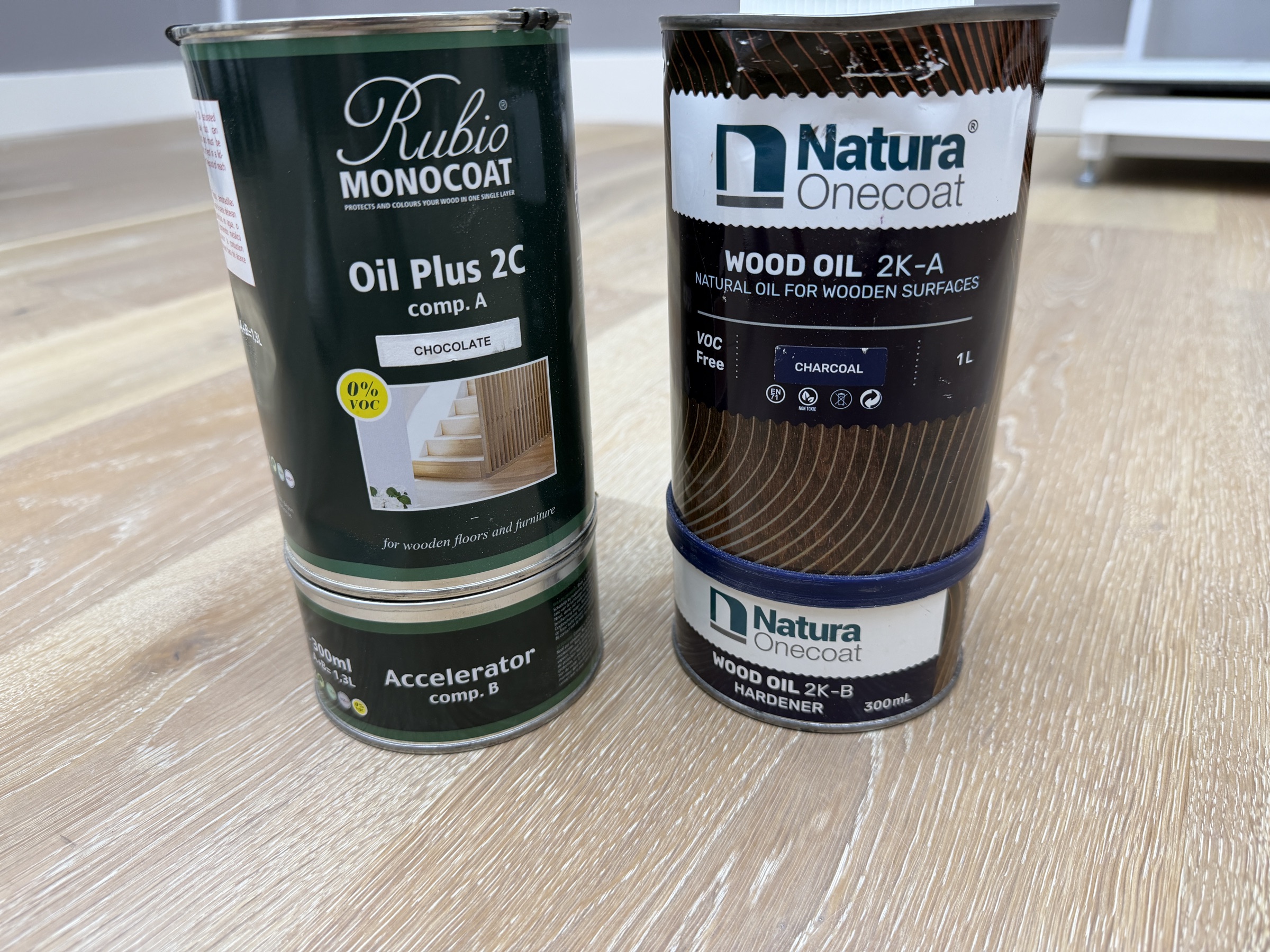
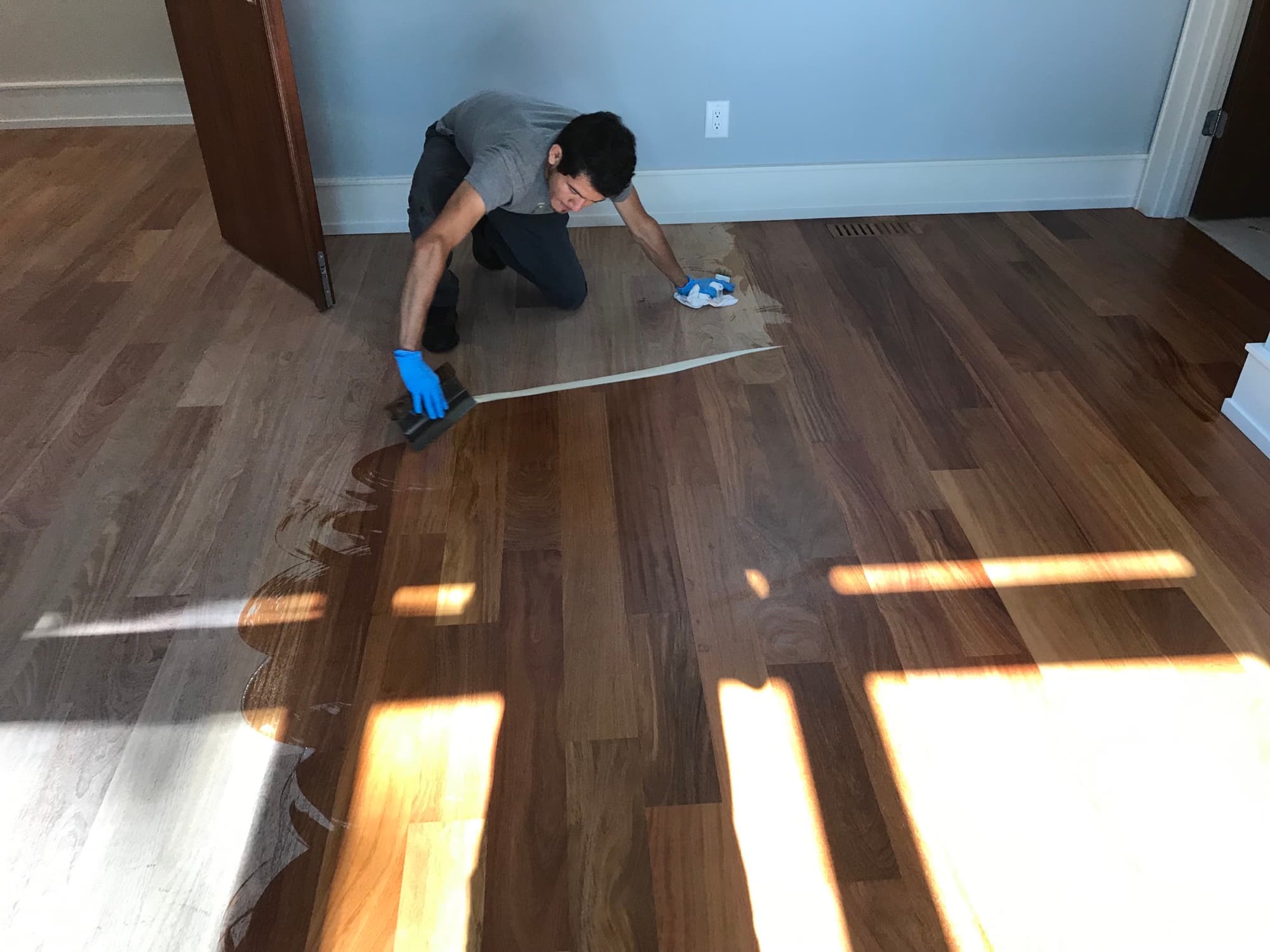
One clarification we always make: Zero VOC refers specifically to the product's VOC content. It does not mean a finish has no odor, or that normal ventilation and jobsite precautions are unnecessary. The hardwax oils deserve their reputation here: Zero VOC, penetrating and bonding with the wood rather than building a traditional polyurethane film, and localized scratches can often be repaired without refinishing the entire room. They are also simply beautiful, which is why they are our most-requested look. The Natura vs Rubio head-to-head compares the two directly, and our full finish guide sets them against the water-based systems.
Dust Is the Other Half
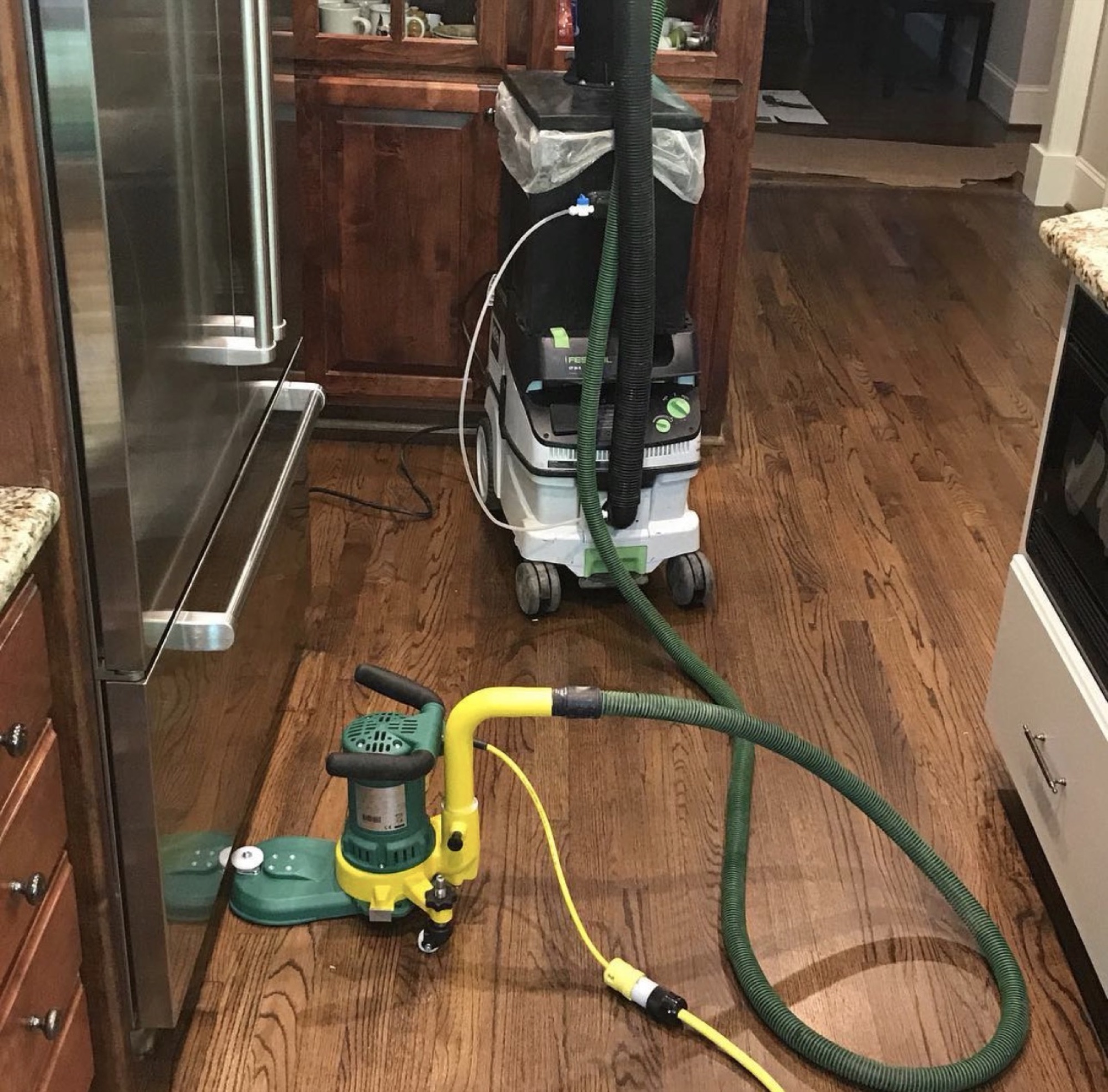
Sanding a floor without containment sends fine wood dust, and whatever old finish is on it, through the whole house. We run professional dust containment on every sanding job, capturing the vast majority of sanding dust at its source. No sanding system eliminates every particle, but professional containment dramatically reduces the amount of airborne and settled dust compared with uncontained sanding.
Refinishing Is the Green Choice to Begin With
The most sustainable floor is the one already nailed to your joists. Refinishing keeps existing hardwood in service for decades instead of manufacturing, shipping, and installing replacement material, and a solid floor can take multiple refinishes over its life. If you are weighing that decision, our refinishing vs replacement guide runs the numbers.
Eco-Friendly Does Not Automatically Mean Better
VOC content matters, but it is not the only measure of a responsible finish system. Durability, maintenance, repairability, and service life matter too: a finish that lasts longer, or can be locally repaired instead of completely sanded again, may reduce material and energy use over the life of the floor. We look at the entire system rather than choosing a finish based on one number on the label.
The Greenwashing to Watch For
"Eco-friendly" on a flooring ad deserves two questions: which finish products, by name, and what is their VOC rating? Ask for the manufacturer, the exact product name, and the technical data sheet. A contractor with a real answer names the systems and can produce the sheets. Vague answers usually mean ordinary products with a green label. The same goes for dust: "dustless" should mean visible containment equipment on the job, not a shop vac and optimism.
Zero-VOC, Seen in Person
See the Hardwax Oil Finishes on Real Wood
Compare Zero VOC hardwax oils next to water-based systems on real oak in our Clayton showroom, and get your floor priced in the system that fits your home. Serving Clayton, Raleigh, and the Triangle.
Request Free EstimateEco Claims, Straight Answers
Is refinishing hardwood floors eco-friendly?
In many cases, refinishing an existing hardwood floor is more resource-efficient than replacing it: it keeps usable wood in service and avoids the material, manufacturing, transportation, and disposal associated with replacement. A solid hardwood floor can be refinished multiple times over its life. The environmental questions worth asking are about what goes ON the floor, the finish chemistry, and what happens to the dust.
What is the most eco-friendly hardwood floor finish?
Catalyzed hardwax oils, Rubio Monocoat and Natura OneCoat, carry a Zero VOC rating and cure inside the wood rather than forming a plastic film on top. Modern water-based finishes like Bona Traffic HD and Bona Mega One are low-VOC and dramatically cleaner than the oil-modified polyurethanes of past decades. We apply water-based and hardwax oil systems exclusively, and do not apply oil-modified polyurethane at all.
Can my family stay home during eco-friendly refinishing?
Often, but it depends on the finish system, ventilation, the layout of the home, and the people and pets in the household. Water-based and Zero-VOC systems generally create far less odor and VOC exposure than traditional oil-modified polyurethane, but we still follow the finish manufacturer’s ventilation and re-entry recommendations, and we seal work areas and use dust containment on every sanding job.
Does dustless sanding really make a difference?
Yes, for air quality during and after the job. Professional dust containment captures the overwhelming majority of sanding dust at the machine instead of letting it settle through the house. Some fine dust is unavoidable, but professional containment dramatically reduces the amount of airborne and settled dust compared with uncontained sanding.
Are zero-VOC finishes durable enough for busy households?
Yes. Modern catalyzed hardwax oils are durable enough for many busy households, but they protect differently from a commercial-grade polyurethane: a 2K water-based finish like Bona Traffic HD provides a highly abrasion-resistant film, while hardwax oil’s major advantage is that localized wear and scratches can be maintained or repaired without sanding an entire room. Roughly 60% of the floors we finish go with a hardwax oil system, most of them in busy family homes.
Want low-VOC finishes without paying extra for them? Request a free estimate. They are our standard systems. We walk you through the options in your home and put them all on one proposal.
Low-VOC systems are our default, not an upgrade, on every refinish we do. We handle hardwood floor refinishing across the Triangle, including Clayton, Smithfield, and Selma. Request a free estimate and we will look at your floor in person before we talk numbers.