Historic Heart Pine Refinishing, Downtown Morrisville
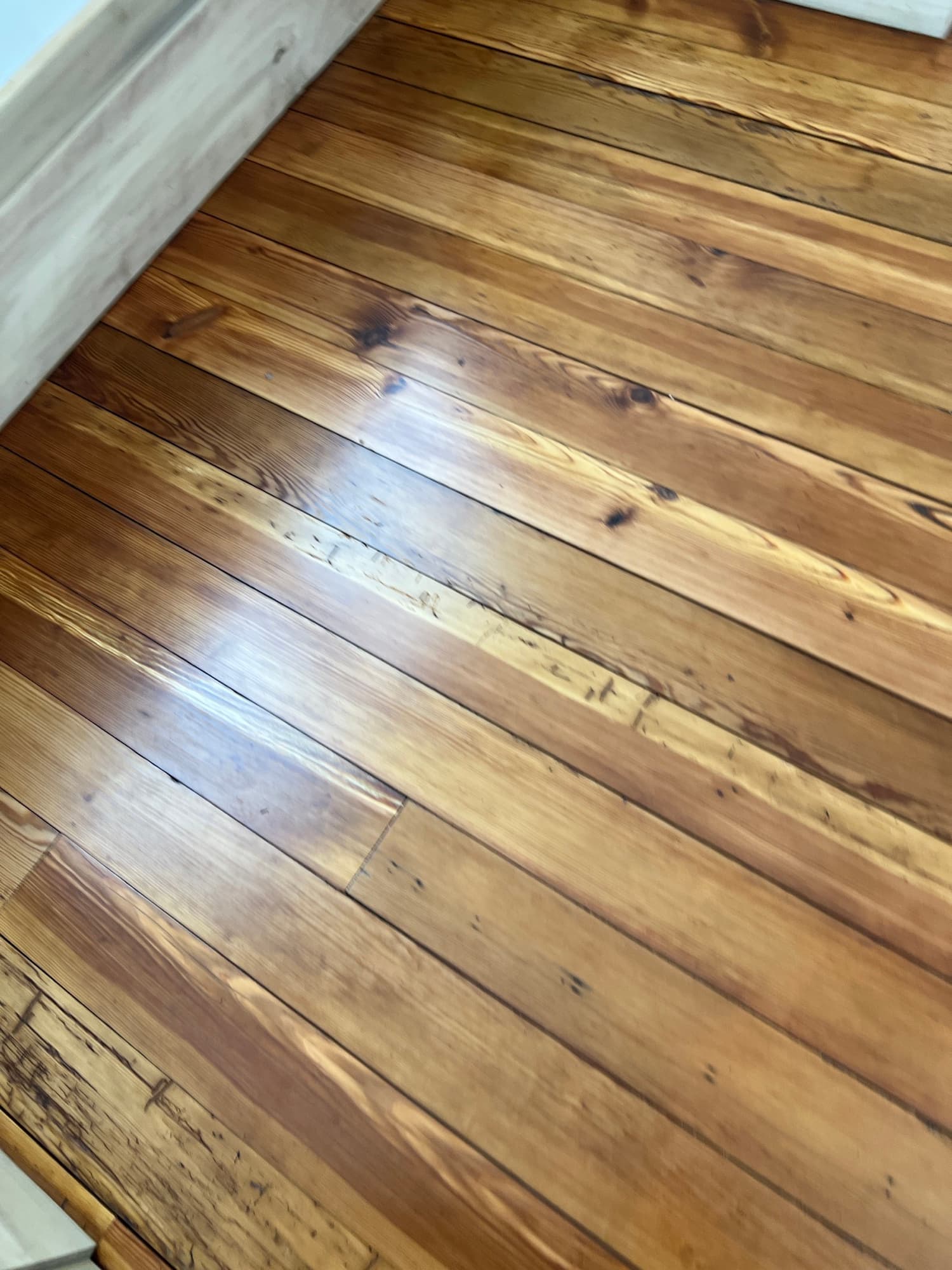
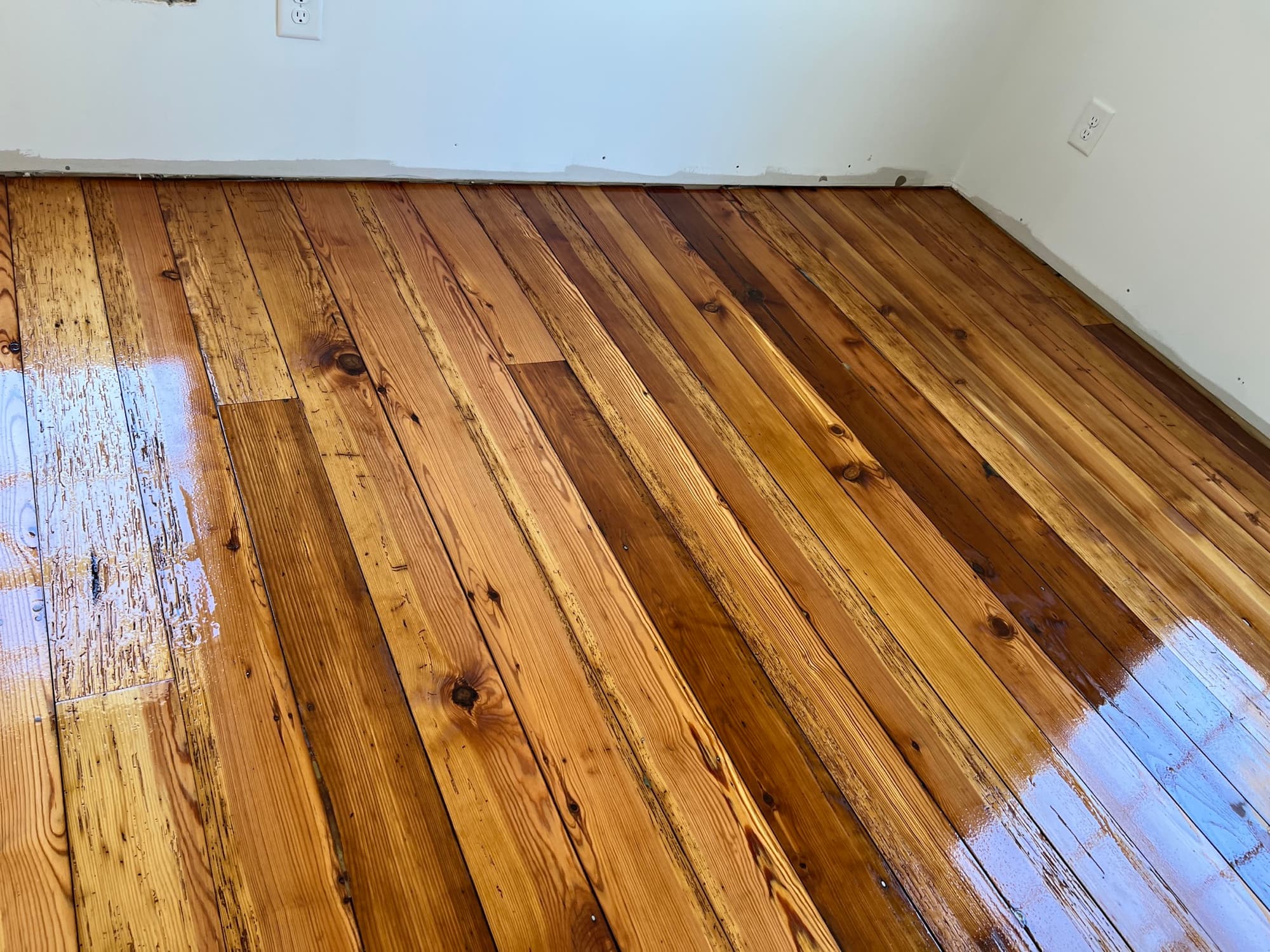
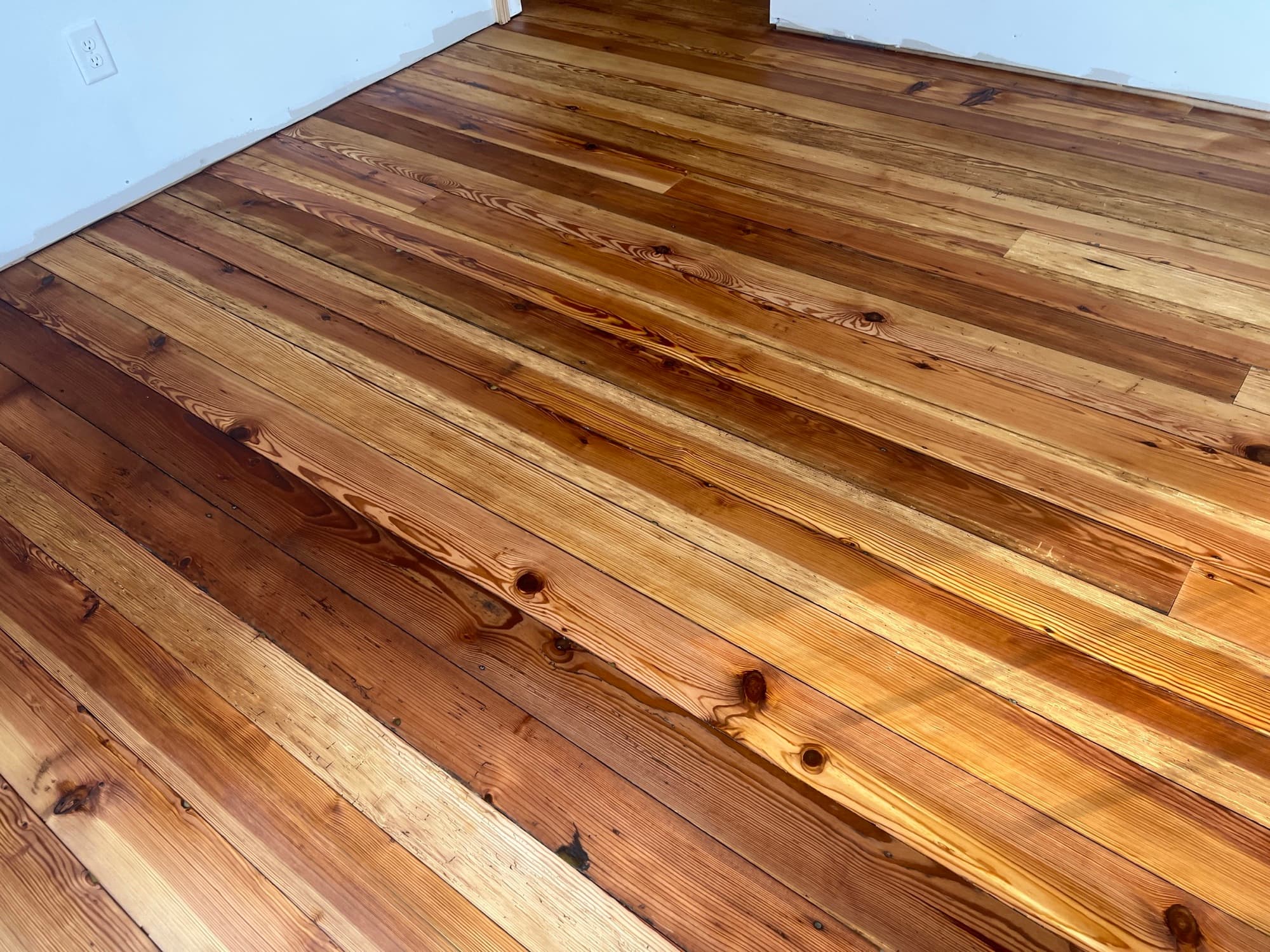
One-hundred-year-old heart pine floors in a historic Morrisville property. Sanded and refinished while preserving the character of the wood. Damaged boards repaired with epoxy, patched with salvaged period-correct pine from a nearby historic house, and finished with a tinted water-based system to match existing hardwood in the home.
Location
Downtown Morrisville, Morrisville, NC
Species
Heart Pine (100+ years old)
Finish
Tinted water-based finish
Completed
2026
This Morrisville hardwood refinishing project involved 100-year-old heart pine floors in a historic property: sanded carefully with the Lagler Hummel, repaired with epoxy fills and salvaged period-matched pine from a nearby historic house being deconstructed, and finished with a tinted water-based system to align with the existing hardwood in the rest of the home.
The Challenge
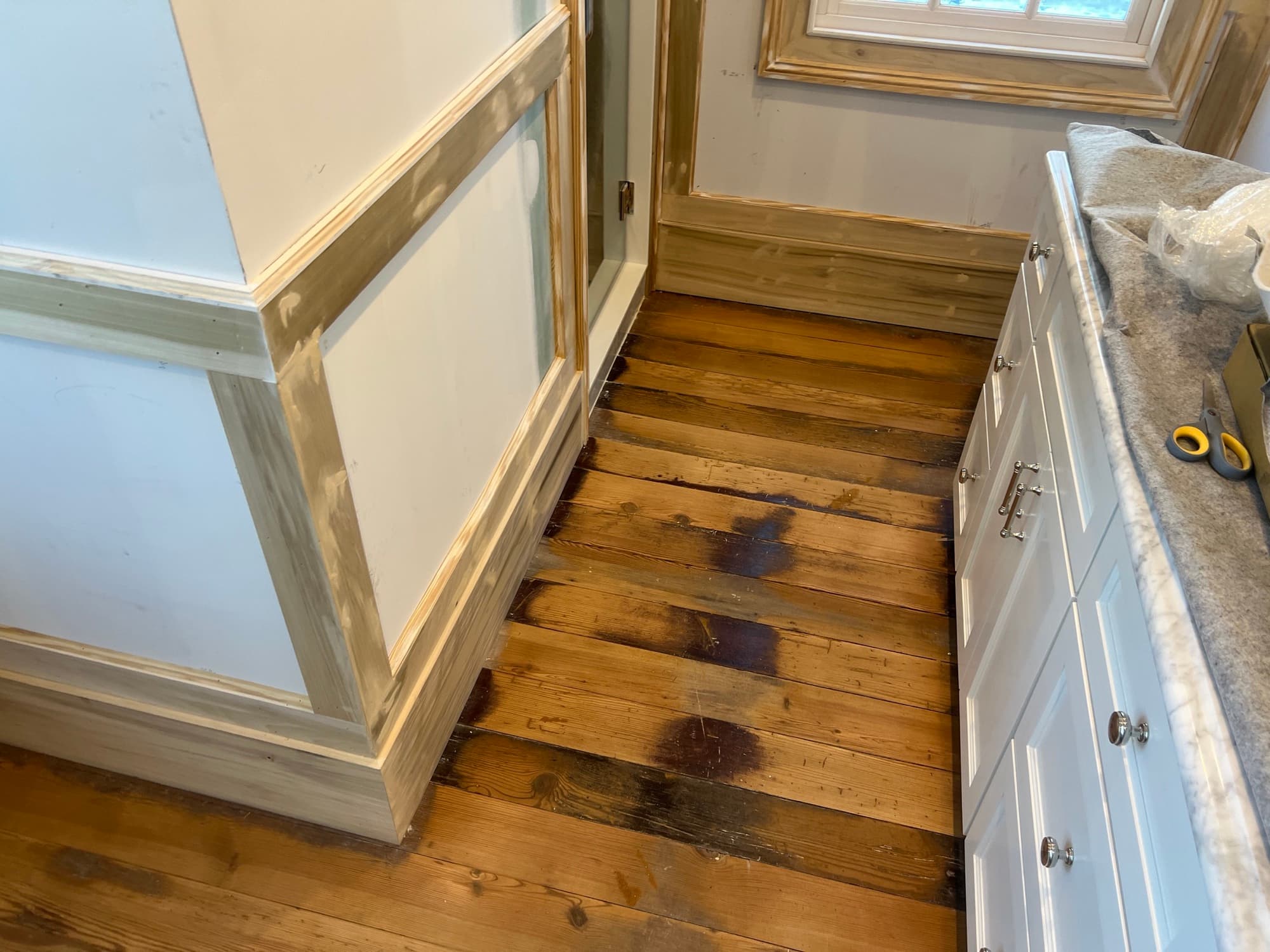
Heart pine of this age is irreplaceable. The floors had accumulated a century of wear: dark stains, damaged boards, splits, and sections that had opened up over time. The homeowners wanted the floors refinished but not sanitized. Character, knots, and the history of the wood had to survive the process. Matching the tinted finish to the existing hardwood in areas of the home not being refinished added another layer: the new finish had to read as part of the same floor, not a fresh patch. Sourcing patch material was equally important. Where boards needed replacement, the team sourced salvaged heart pine from a nearby historic house being deconstructed, keeping the age and grain character consistent throughout.
What We Did
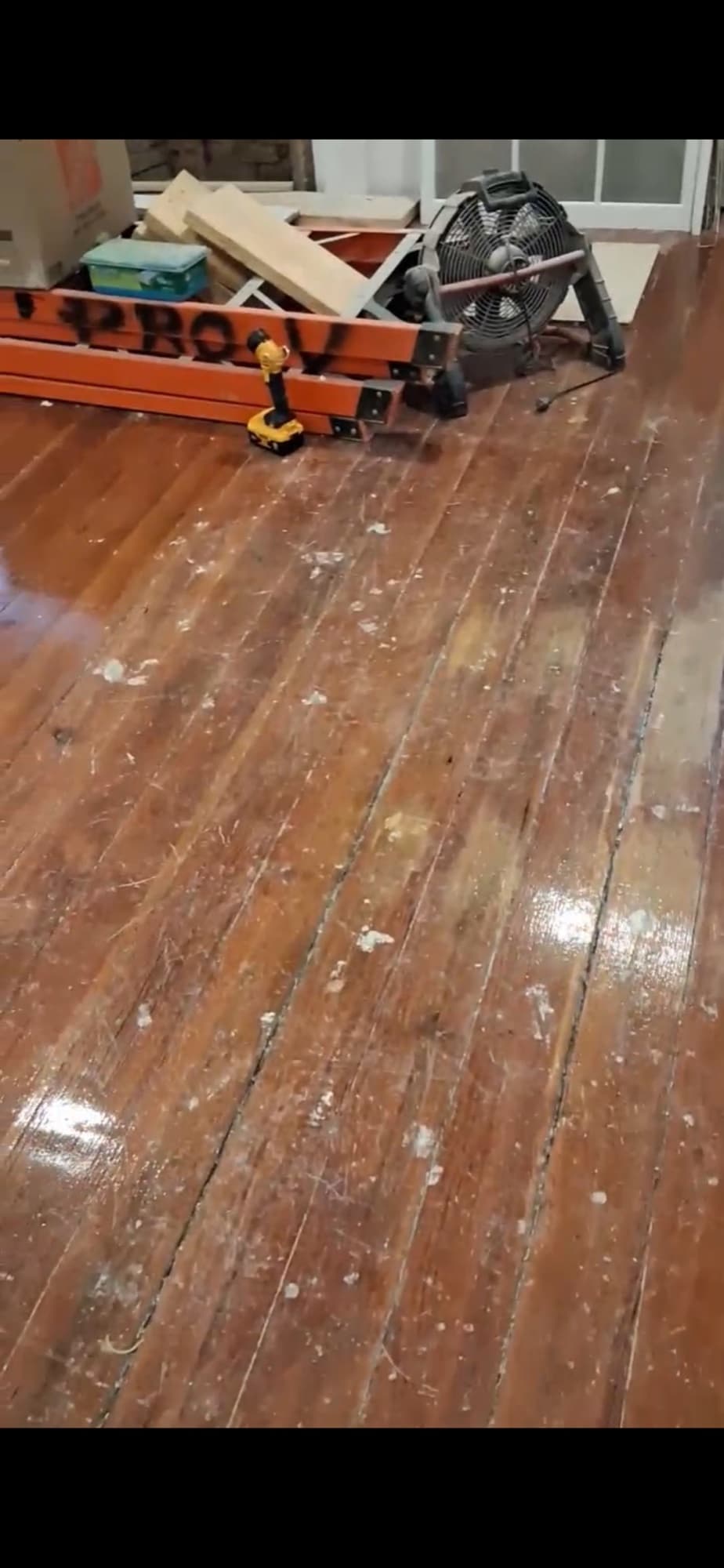
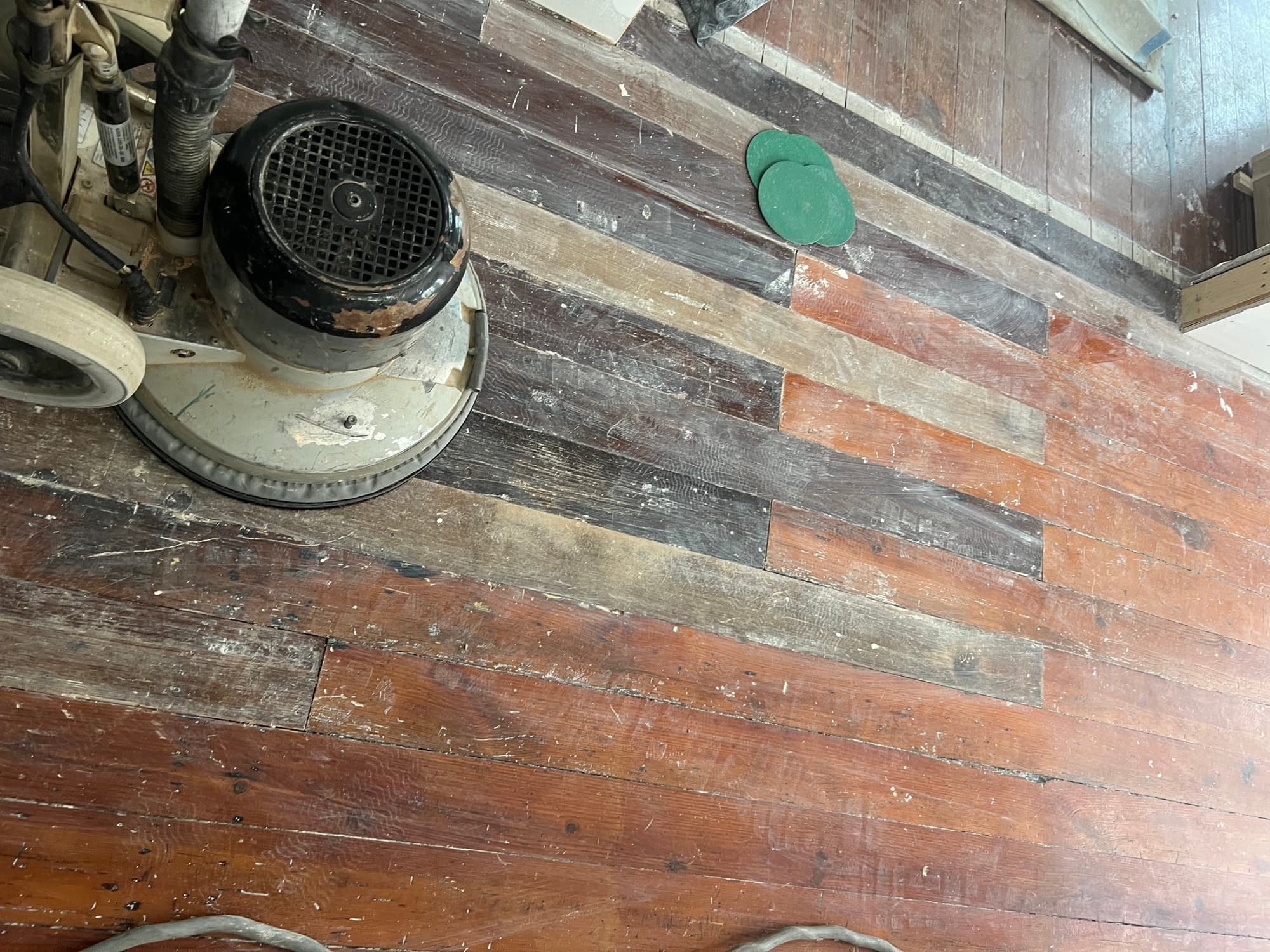
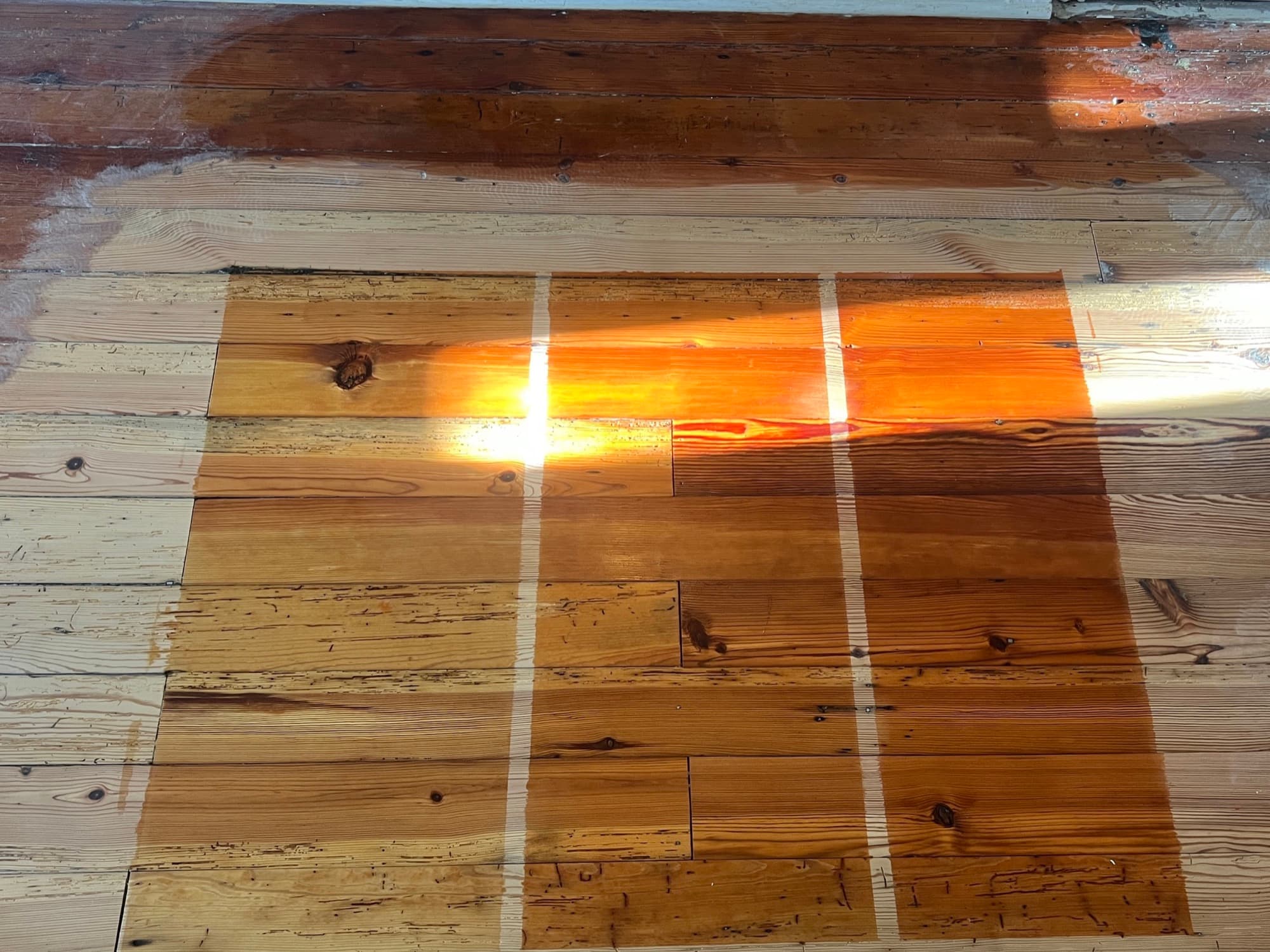
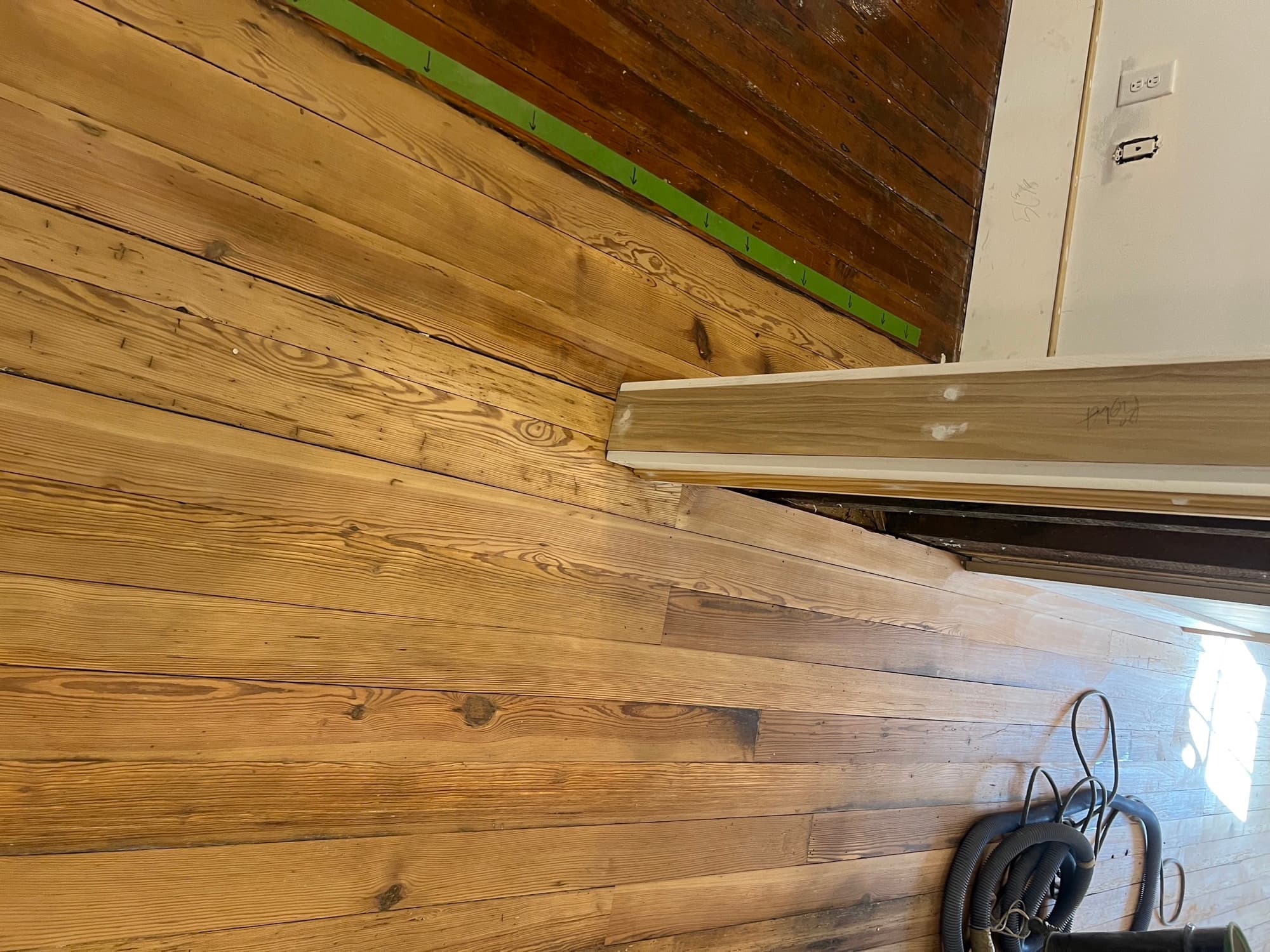
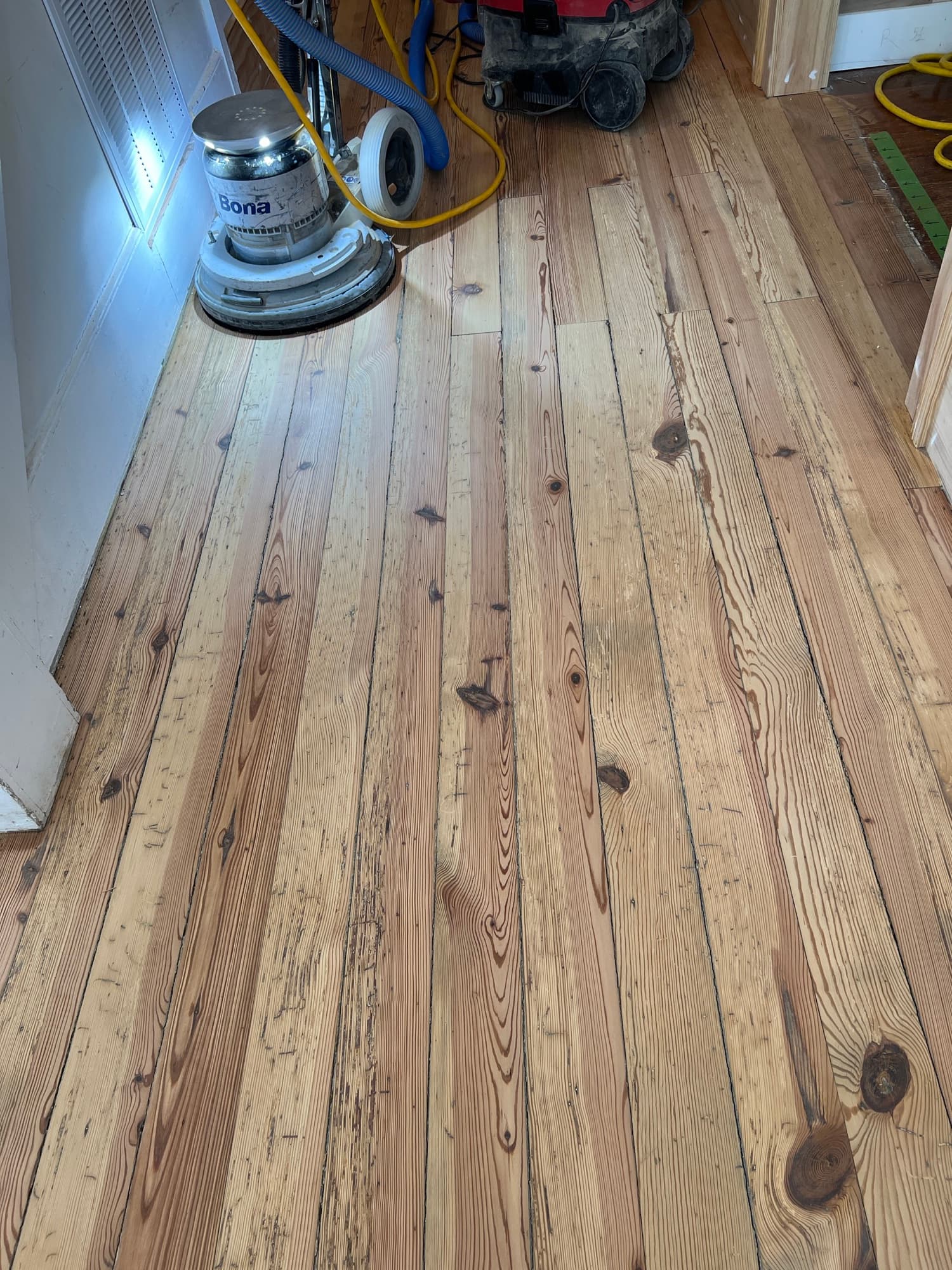
We sanded the entire floor with the Lagler Hummel drum sander and Bona Edge Sander, removing the old finish while leaving as much material as possible. Heart pine at this age has a limited wear layer and every pass counts. Split and damaged boards were stabilized with epoxy fills before any finish work began. Boards beyond saving were replaced with salvaged heart pine from a period-matched source, keeping the grain, color, and character in line with the original floor. Finish selection was driven by the need to match: we tinted a water-based system to align with the existing hardwood in the rest of the house that was not being refinished. The tint panels were tested directly on the sanded pine before committing. The result is a floor that reads as one continuous historic surface.
Before
During
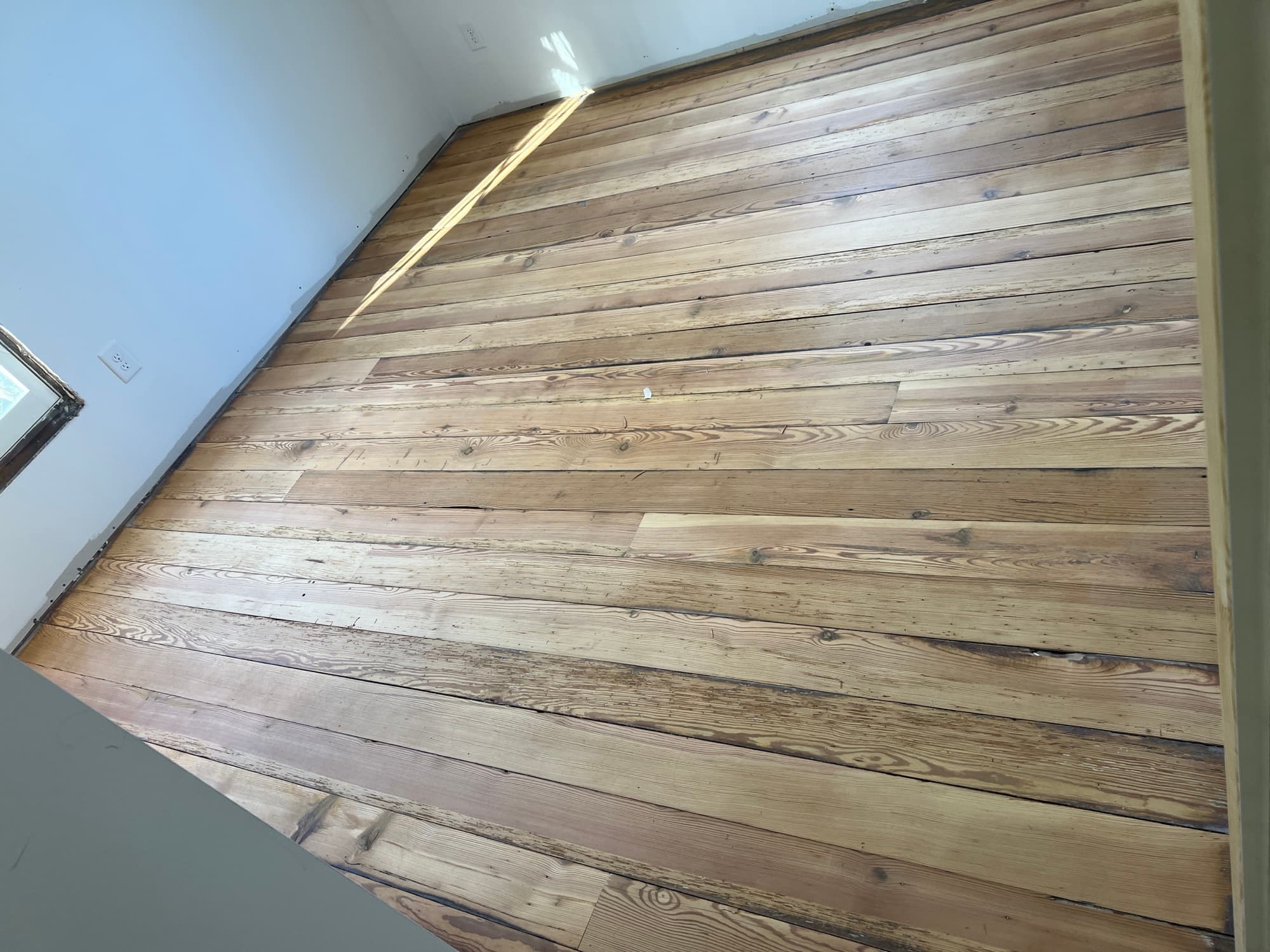
After
Products Used on This Project
Project Investment
What Does a Project Like This Cost?
No two floors price the same. Square footage, wood species, repairs, stair configuration, subfloor preparation, and finish selection all move the number, which is why we quote from an in-home assessment instead of over the phone. Our cost guide publishes our current starting rates and typical ranges for every service, and the written proposal you receive covers every line item with no surprises.
Common Questions
Can 100-year-old heart pine floors be refinished?
Yes, with the right approach. Old-growth heart pine is among the densest and hardest wood flooring found in historic North Carolina properties. The tight grain and high resin content mean it holds up well under sanding. The key constraint is material: floors this age have likely been sanded before, and the wear layer is finite. We sand with the minimum material removal required to achieve a flat, clean surface and inspect carefully at each grit stage.
How do you match salvaged patches to original heart pine?
Matching requires sourcing material from the same era. Modern pine is farmed, faster growing, and has significantly wider ring spacing than old-growth heart pine. The Morrisville project used salvaged heart pine from a nearby historic house being deconstructed. Period-matched material keeps the ring density, grain width, and resin content consistent with the original boards. Once sanded and finished together, the patches are invisible.
What is epoxy repair in hardwood flooring?
Epoxy fills are used to stabilize split or cracked boards where full replacement is not warranted. The epoxy penetrates the split, bonds the wood fibers together, and cures hard. Once sanded, the fill reads as a color-matched line in the board rather than an open crack. On historic floors we use epoxy fills wherever possible to preserve original material rather than replacing boards that still have structural integrity.
How do you match a new finish to existing hardwood that is not being refinished?
The target is the existing finish in areas of the home not being touched. We pull reference panels from those areas, test tint ratios on the sanded wood under the actual light conditions of the room, and confirm the cured tint matches the adjacent floor before committing. Evaluating color under the actual room conditions, not showroom lighting, is the only reliable way to get a true match.
What finish systems work on historic heart pine?
Water-based finishes work well on heart pine and are the standard choice on historic restoration projects where controlling amber is important. The high resin content of old heart pine means oil-modified finishes can react unpredictably. Tinted water-based systems give you color control and a consistent cure. The Morrisville project used a tinted water-based finish matched to the existing hardwood in the rest of the home.
Ready to Start Your Project?
Every project starts with an in-home consultation. We come to you, assess the floor, and give you a written estimate before any work begins.
Back to all projects