
For Our Clients
The Homeowner Guide to Your LVP Project
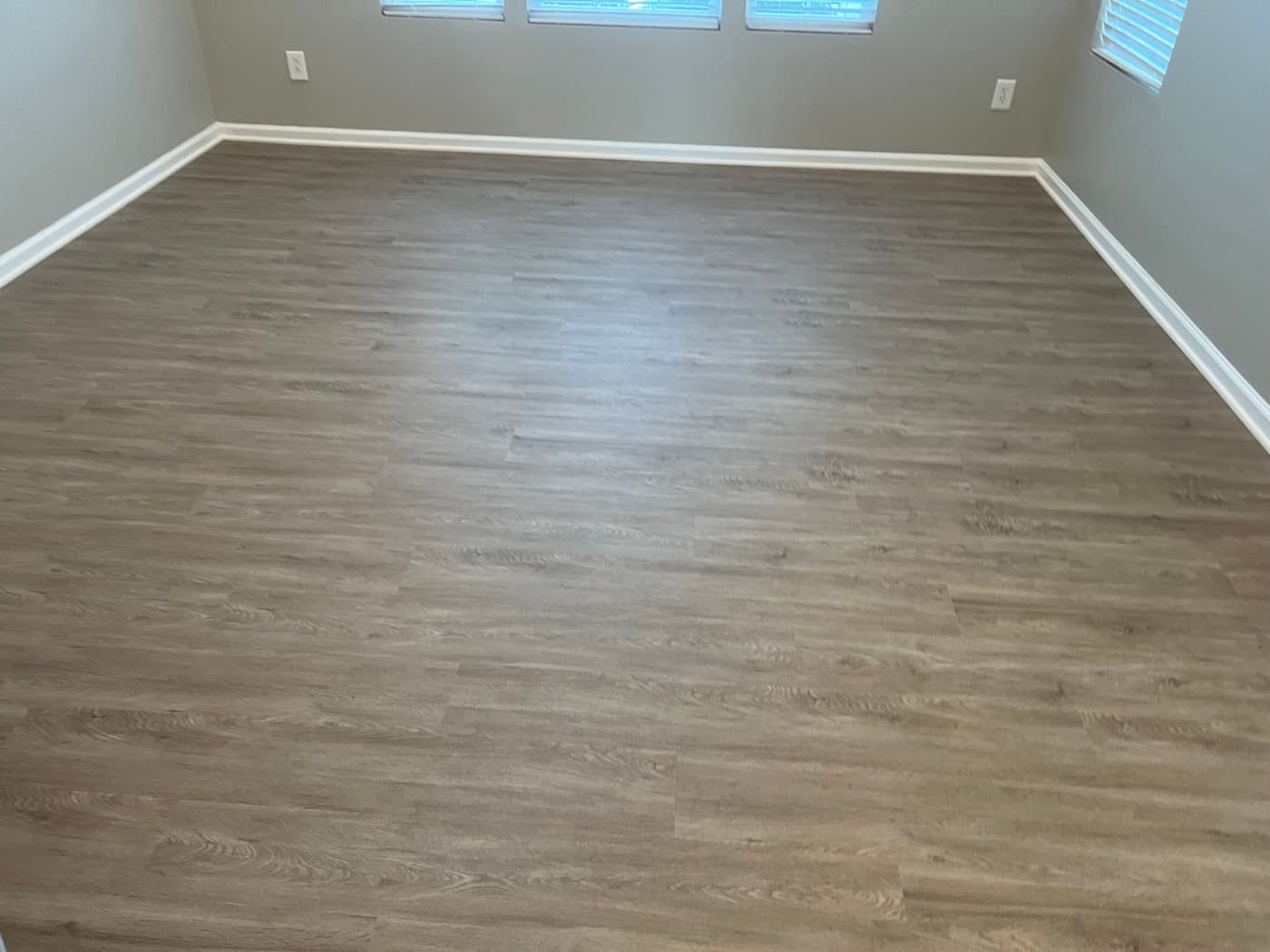
Everything to expect from your luxury vinyl plank project: preparing your home, the plank lines we install, what the install days look like, and caring for your floors after.
Before Your Project
Preparing Your Home
LVP projects move fast, most run 1 to 3 days, and a prepared house is what keeps them that way.
Clear the work areas
Furniture, appliances, and belongings come out of the rooms being floored before crew arrival. Protecting or storing electronics, artwork, and window treatments is yours to arrange. When moving help is needed, we coordinate a professional moving company for you, and moving an appliance never includes disconnecting or reconnecting it.
Toilets and pedestal sinks
Fixtures sitting on floors being replaced must be removed before work begins. Removal and reconnection are handled by you or your plumber.
Normal indoor conditions
Run your HVAC normally. LVP is far more forgiving than hardwood, but planks still acclimate best in a conditioned home at everyday temperatures.
Other trades first
Cabinetry, plumbing, and electrical work complete before flooring goes down.
Painting and touch-ups
You can paint before or after your floors, but expect some touch-ups after any flooring work: baseboards, door jambs, and the lower walls commonly pick up scuffs during demo and installation. At your request we can coordinate paint work with our painter, priced by change order or included in your proposal.
Pets and children
Keep them clear of work areas during demo and installation.
Scope
What Is Not Included
Your proposal prices flooring work. These are the seven things homeowners most often assume come with it, and they do not, so there are no surprises once the crew is in your home. The same list appears on every proposal we send, and the full detail is in the Terms and Conditions.
- Painting, caulking, and touch-up of new baseboard and adjacent walls. We can coordinate our painter for you at your request.
- Plumbing, electrical, and HVAC work, including the removal and reinstallation of toilets and other fixtures.
- Furniture and appliance moving, unless it is added to your proposal. Moving an appliance never includes disconnecting or reconnecting it.
- Repairs to concealed or unforeseen conditions discovered during or after demolition or installation, including damaged subfloor, framing, plumbing, electrical, or moisture-related damage.
- Testing, removal, or remediation of mold, asbestos, lead, or other hazardous materials.
- Subfloor leveling or flattening beyond normal installation preparation. If required, this work is completed only by written change order. Self-leveling compound, when required, is billed per bag, and that price includes the labor and preparation to install it.
- Protection, removal, or storage of personal belongings, electronics, artwork, window treatments, and other items outside our flooring scope.
If any of these items become necessary, we document the condition, provide pricing, and obtain your written approval before additional work proceeds. When appropriate, we can also coordinate qualified third-party professionals on your behalf, with all additional costs approved in advance.
The Plank Lines We Install
Browse Colors Before Your Selection
Your proposal prices the specific plank lines quoted for your project, and every option carries the same professional installation over a properly prepared subfloor. The difference between options is the plank itself: wear layer, core construction, and the look. Browse the collections we install:
Color availability changes by season; your proposal names the exact line and the colors in stock for your project.
During the Project
What the Install Days Look Like
Day one is demo and preparation: the old flooring comes out, and the subfloor gets the attention that decides how the floor performs for the next twenty years. We test moisture on concrete slabs, grind down high spots and fill low ones, and set the underlayment the product system calls for. Skipping subfloor prep is how LVP installs fail, so that is where the care goes.
Then the planks go down, click-lock floating or glue-down depending on your project, with transitions and trim fitted to each doorway. Expect saw noise and some dust during demo; installation itself is comparatively quiet.
If anything unexpected turns up during or after demolition or installation, subfloor damage under the old floor is the usual suspect, we document it and price it in a written change order for your approval before that work proceeds.
After Your Project
Living On It, From Day One
No cure times, no socks-only days: floating floors are walkable the moment a room is done, and furniture returns the same day or next morning, lifted into place with felt pads on every leg, never dragged. Caring for LVP is simple:
- Weekly: sweep or vacuum without a beater bar; grit dulls any floor over time.
- As needed: a microfiber mop with a vinyl-safe cleaner. Never steam mops, wax, or polish products.
- Everyday rules: felt pads under furniture, mats at exterior doors, wipe standing water at the edges even on waterproof plank.
Planning hardwood elsewhere in the home? Our Hardwood Homeowner Guide covers those projects, and our LVP installation page has more on the products and process.
Questions
LVP Guide FAQ
Most LVP projects run 1 to 3 days, including demo of the old flooring and subfloor preparation. There is no sanding, staining, or finish curing, so the schedule is dramatically shorter than a hardwood project. Your proposal states the estimated duration for your specific project.
Yes. There is no finish to cure, so floating floors are walkable the moment a room is done. Glue-down installations may ask for a short adhesive set time, which we tell you about on the day. Furniture goes back the same day or the next morning, lifted into place with felt pads, never dragged.
The planks themselves are waterproof, which is why LVP is the right call for kitchens, laundry rooms, and baths where hardwood carries risk. Water can still find seams and edges in a flood situation, so waterproof plank is not a substitute for fixing leaks, but everyday spills and wet shoes are a non-event.
A flat, sound subfloor, and that preparation is most of the real work. We test moisture on concrete slabs, grind high spots flat and fill low ones, and use the underlayment the product system calls for. Skipping subfloor prep is how LVP installs fail; it is where we spend our care.
Painting and touch-ups, plumbing and electrical work, furniture and appliance moving unless added, repairs to concealed conditions found during demo or installation, hazardous-material testing or removal, subfloor leveling beyond normal preparation, and protection of your belongings. Every proposal carries this same short list, and anything on it that becomes necessary is priced by written change order for your approval first.
No. Steam forces heat and moisture into seams and can damage the planks and the locking system, the same rule as hardwood. A microfiber mop with a vinyl-safe cleaner handles everything a steam mop would.
They can. Stair treads, risers, and matching stairnose pieces are quoted separately from the flooring itself, and carpet-to-LVP staircase conversions are one of our regular projects.
Ready to Get Started?
Start With aFree Estimate
Serving Clayton, Garner, Raleigh, Cary, and communities throughout Johnston, Wake, and Durham Counties. We respond within one business day.
Ready to pick a time? Book your in-home assessment online →
After you request an assessment, we review your project details, confirm your location, and schedule an in-home visit. You will receive a written proposal with the scope, products, timeline, and warranty clearly explained.
Want to see our work first? Browse the portfolio →