
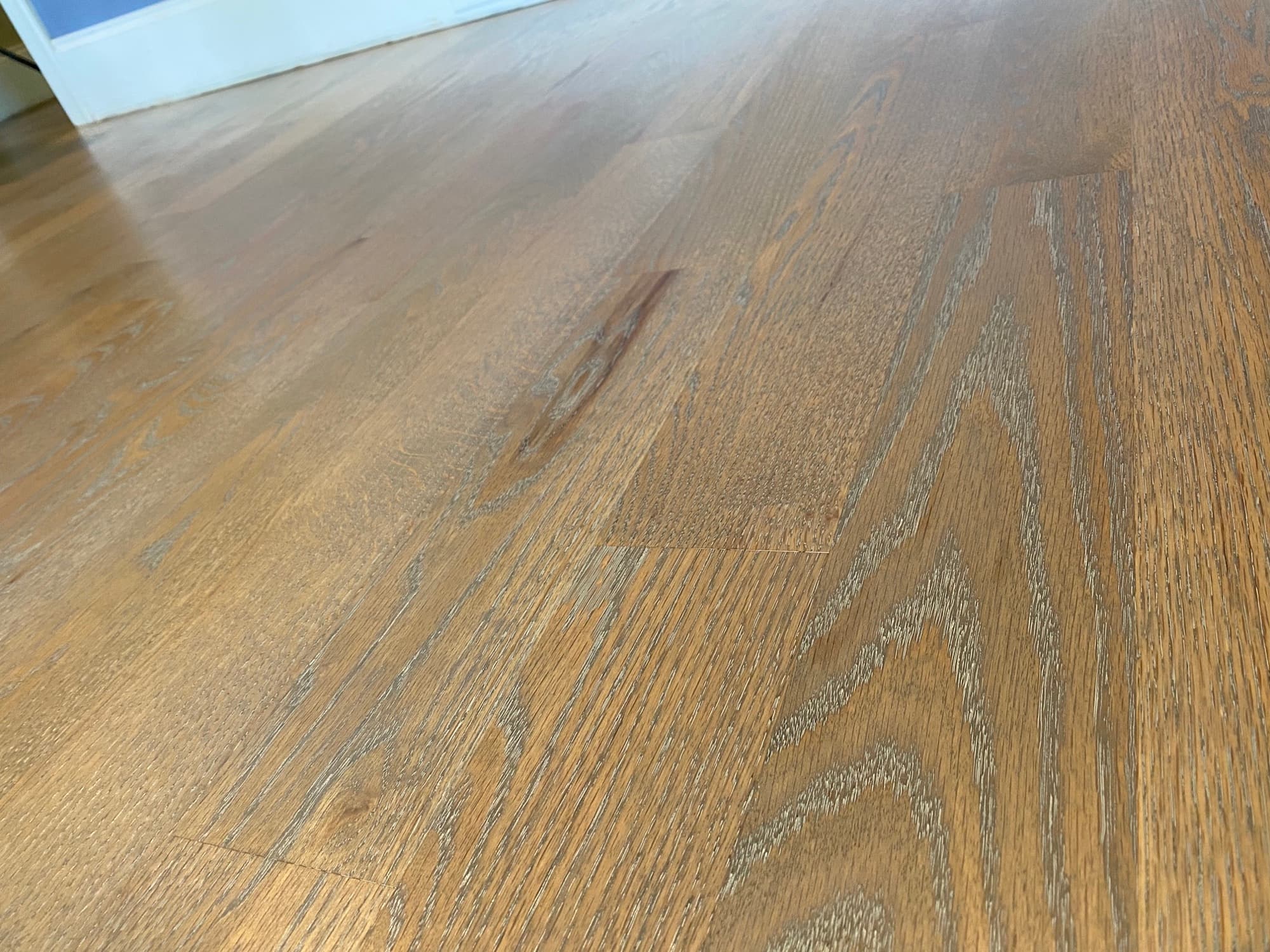
Red Oak Installation with Aged Barrel + Rubio White Oil Ceruse, Turner Downs
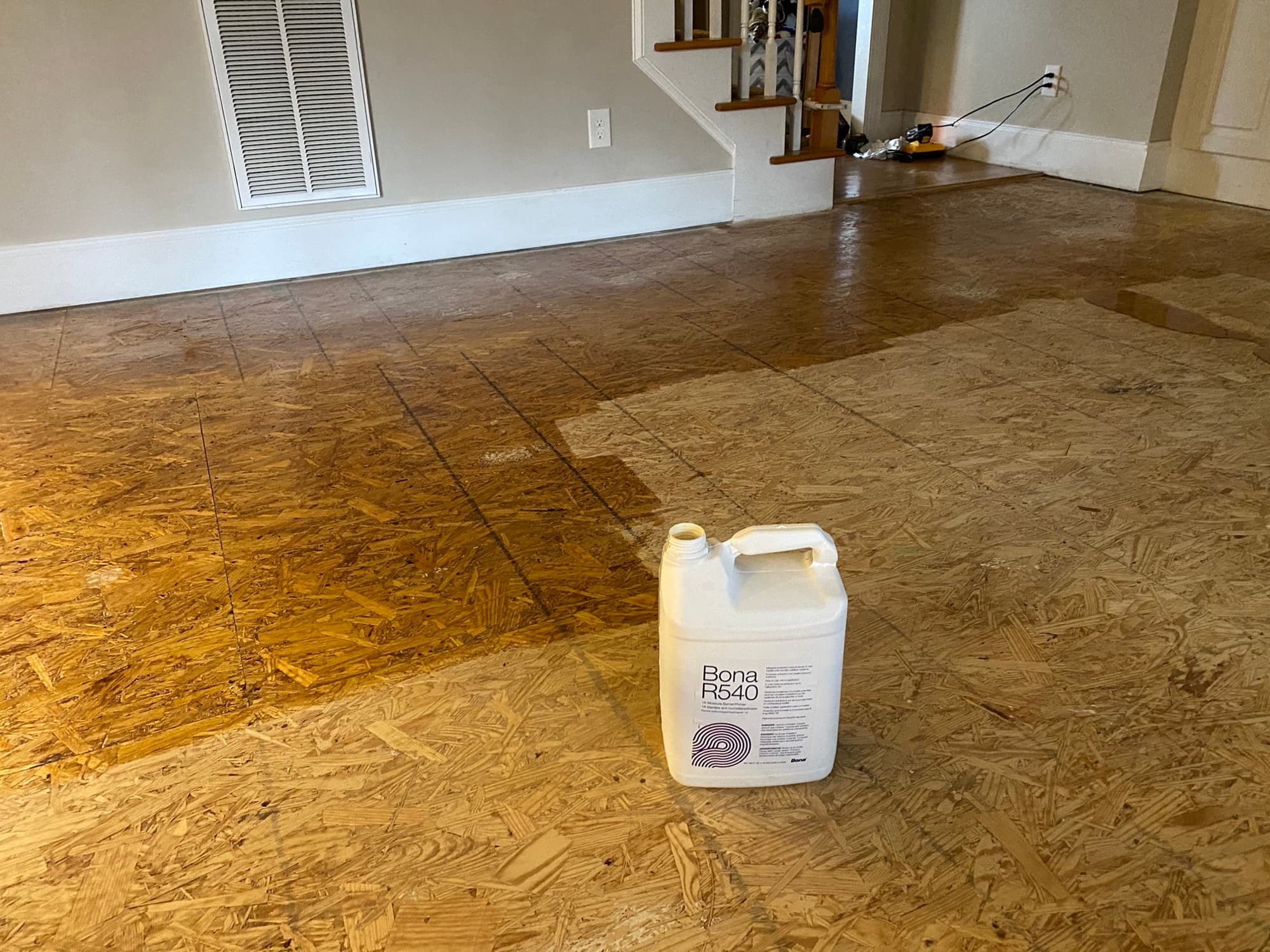
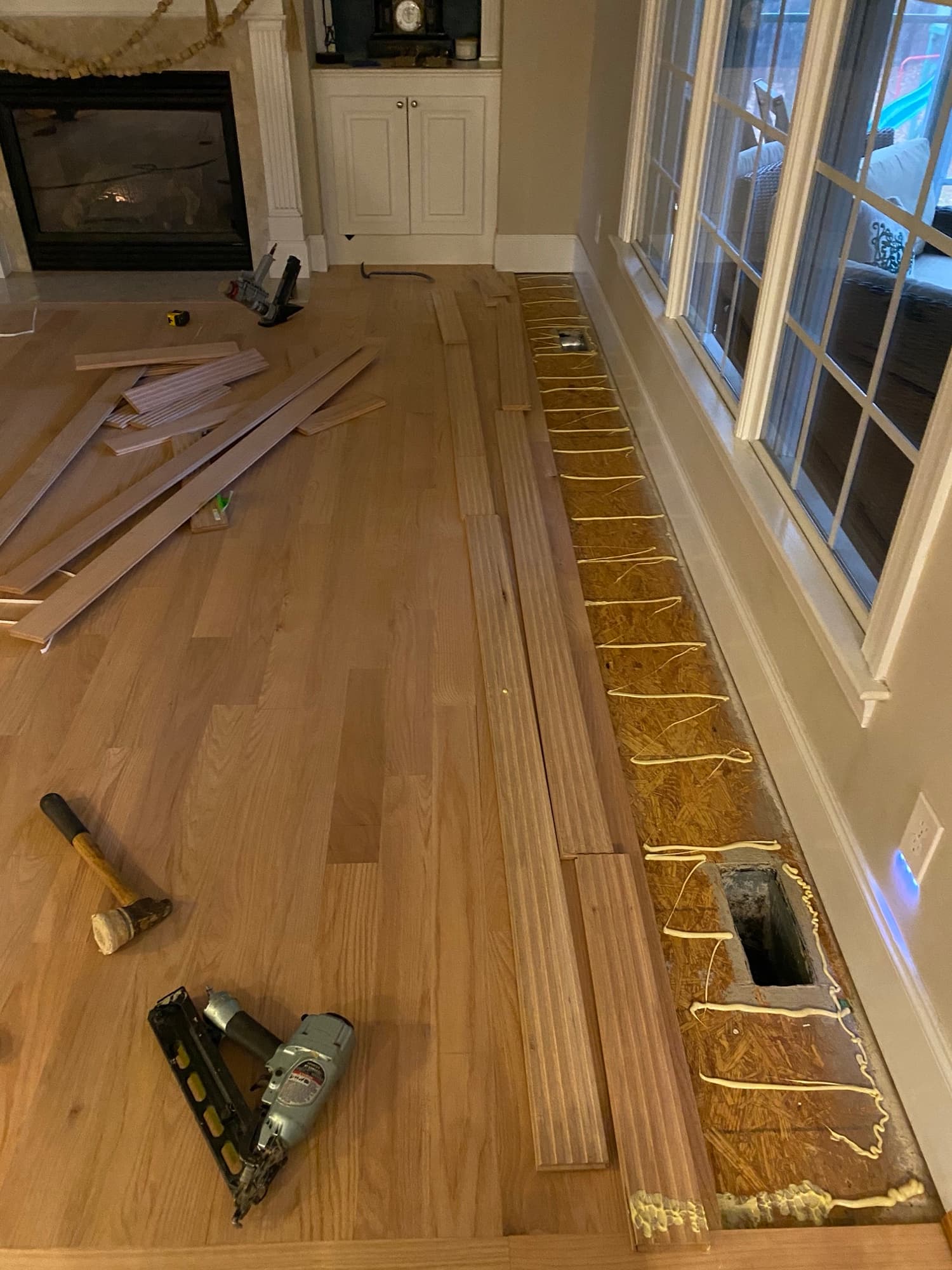
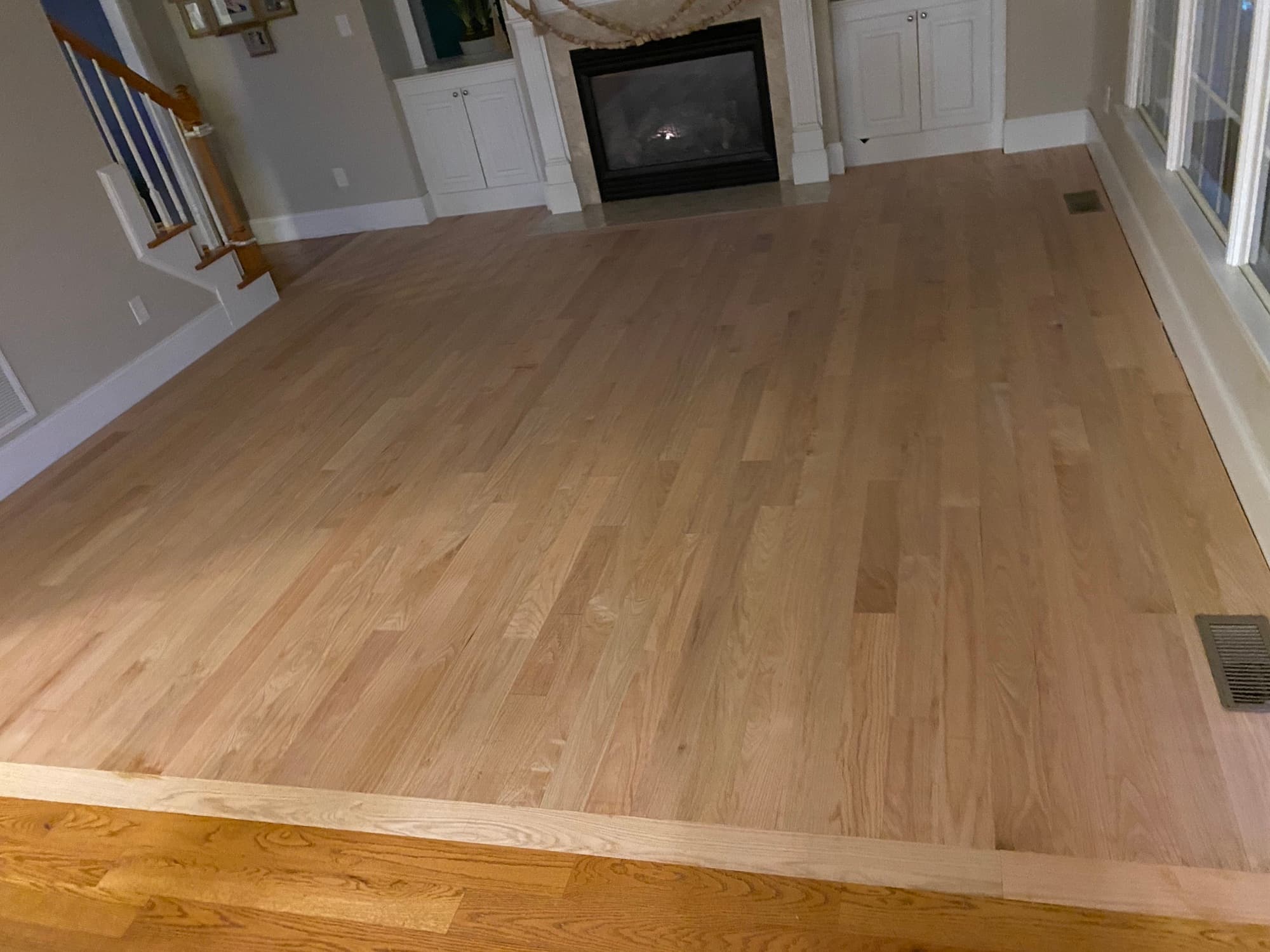
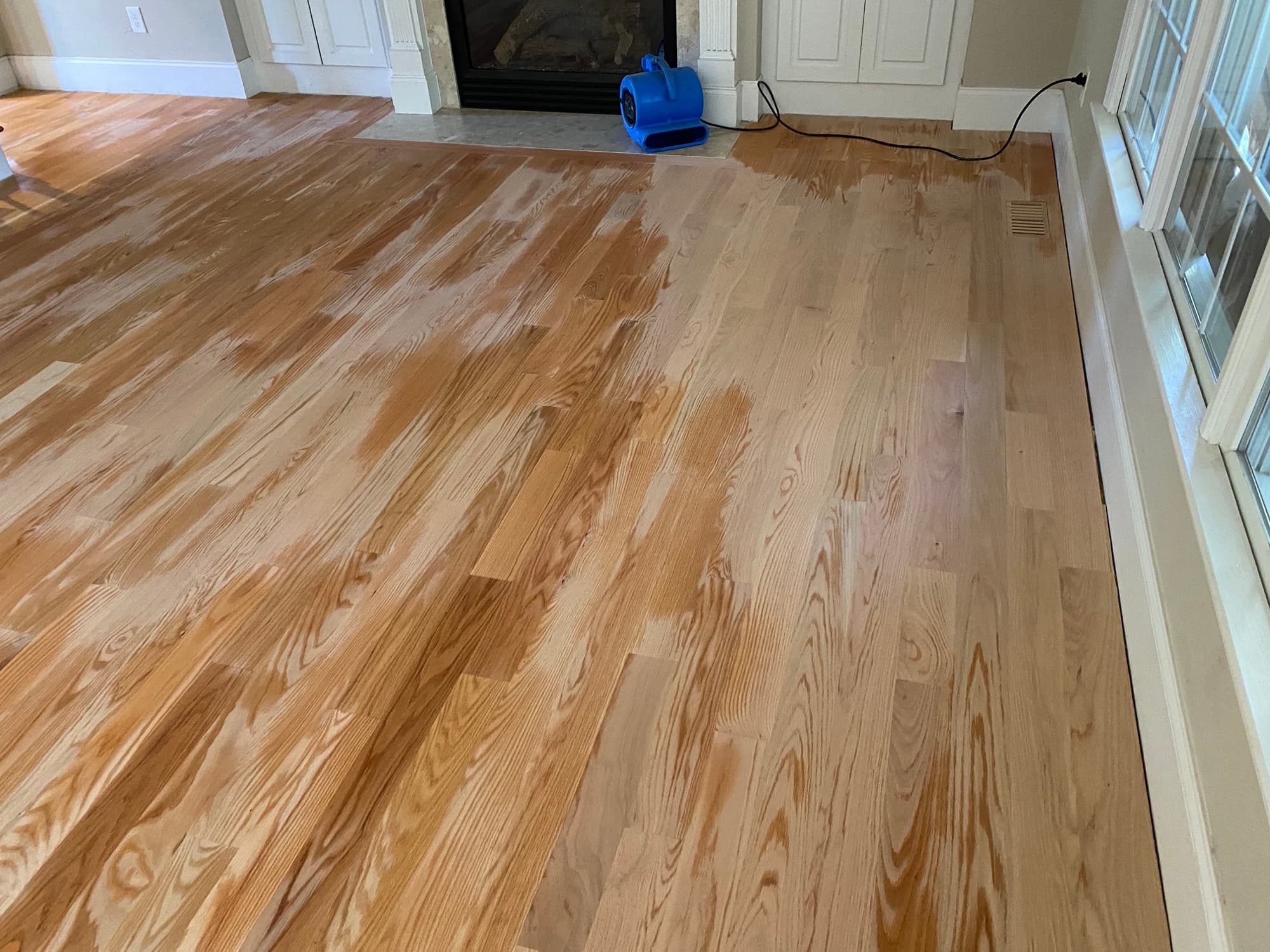
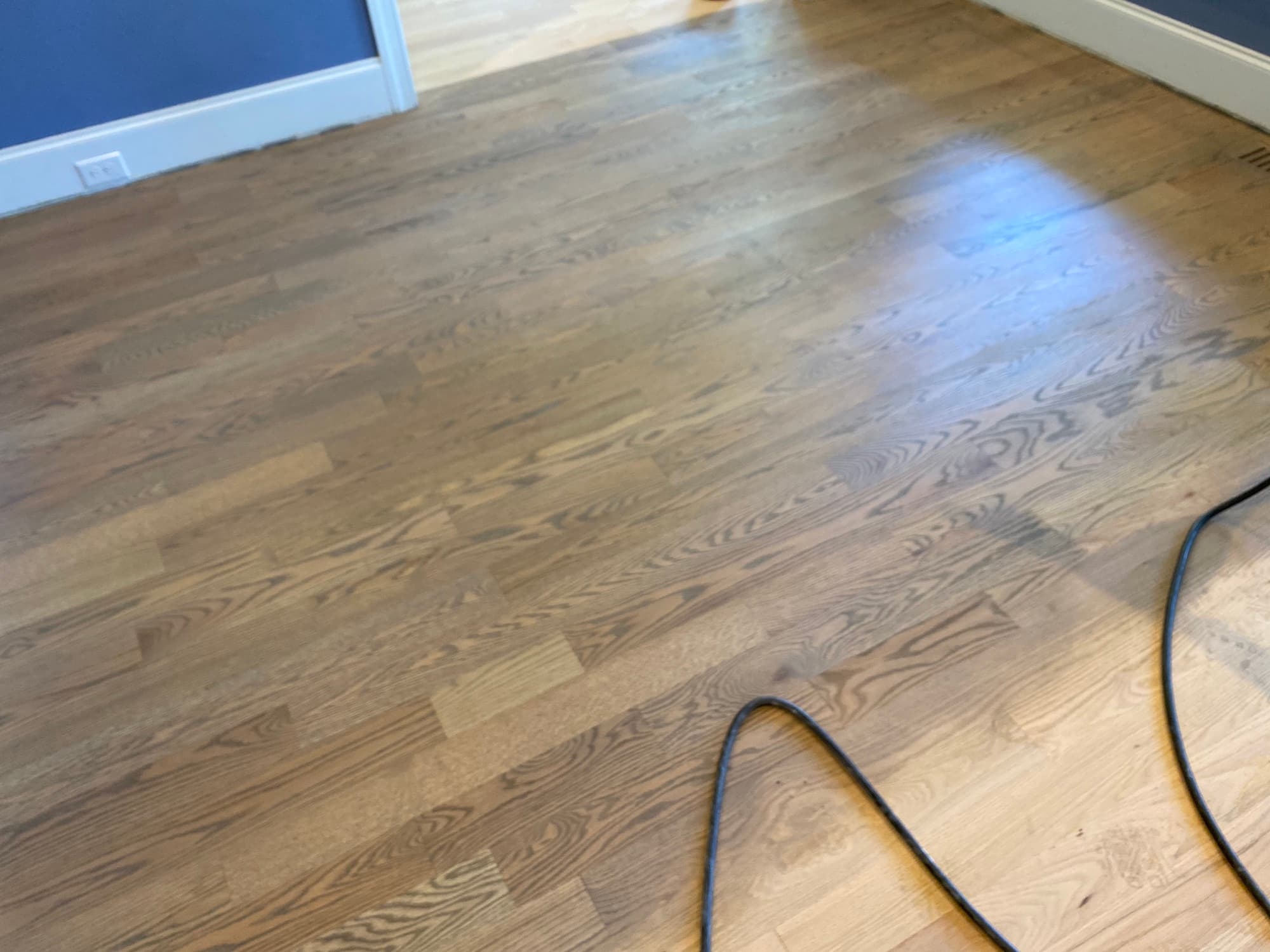
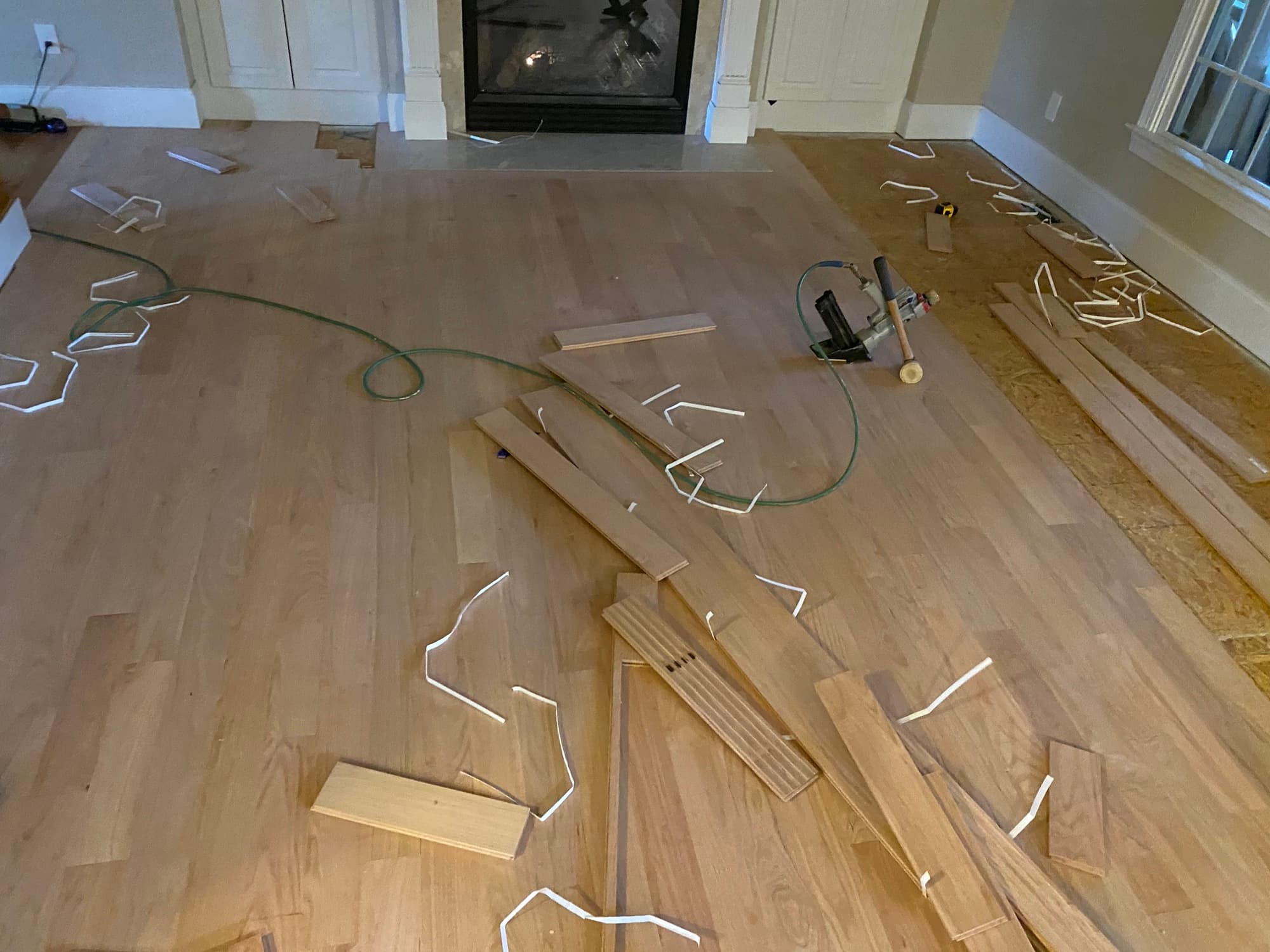
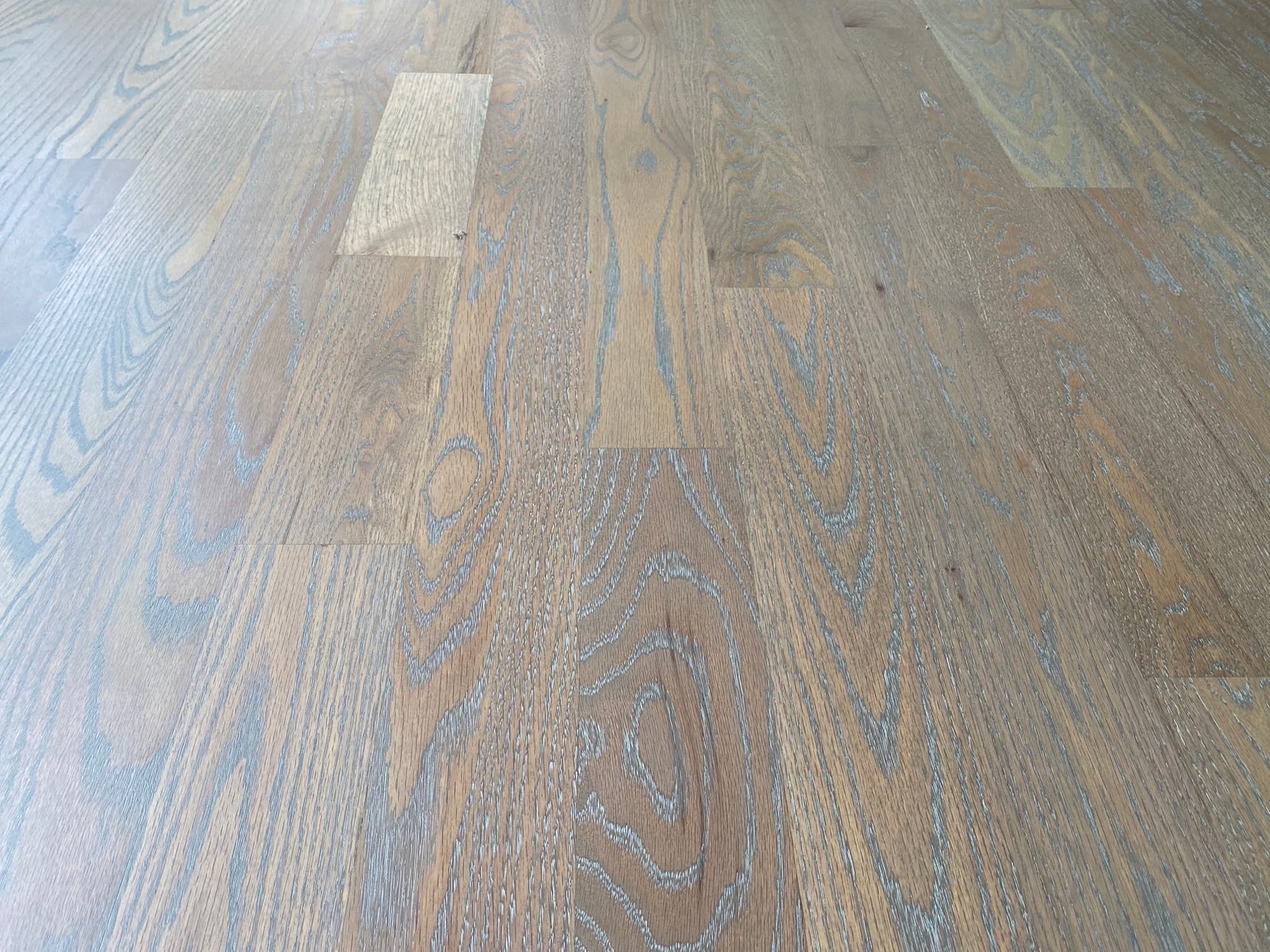
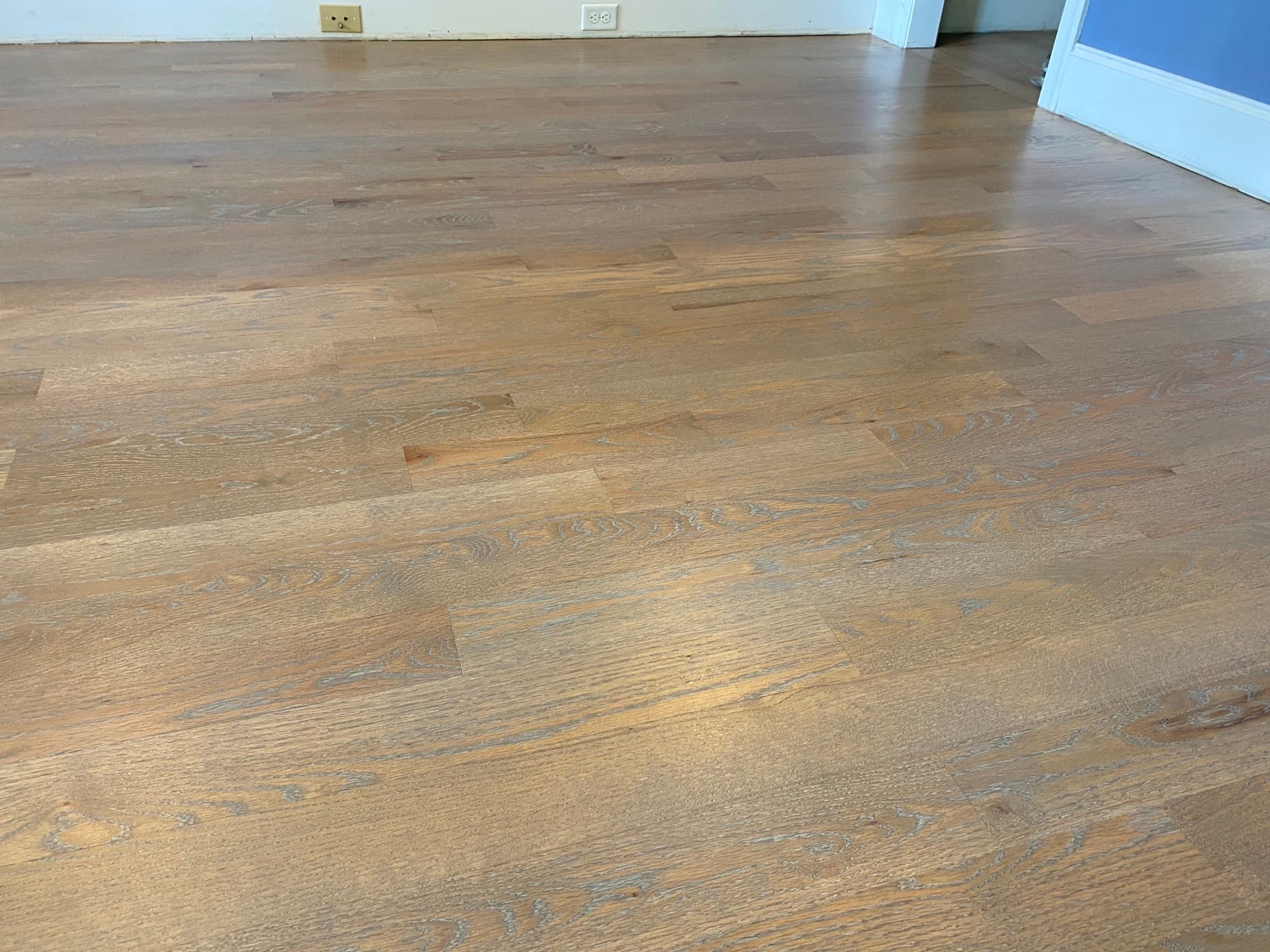
Carpet removed and 4" red oak installed downstairs to match the existing species throughout the house. Glued and nailed over Bona R540 moisture barrier. Returned to sand and finish the entire house: water popped, stained DuraSeal Aged Barrel, then finished with Rubio Monocoat 5% White Oil over the stain to create a two-toned cerused effect.
Location
Turner Downs, Raleigh, NCSpecies
Red Oak, 4"
Finish
DuraSeal Aged Barrel + Rubio Monocoat 5% White Oil
Completed
2025
This Raleigh hardwood installation project put 4-inch red oak in the downstairs of a Turner Downs home using a glue-and-nail method over Bona R540 moisture barrier. Months later we returned to sand and finish the entire house as one surface, applying a two-toned ceruse technique: DuraSeal Aged Barrel as the base, then Rubio Monocoat 5% White Oil over the top to deposit white pigment into the open grain channels of the red oak.
The Challenge
The homeowners wanted something more than a standard stain. They wanted a two-toned or cerused look -- a floor where the grain had visual contrast between the hard and soft wood. A ceruse is usually achieved by rubbing white wax or white pigment into raw wood and wiping it back, leaving white in the grain channels only. This job went further. The floor was stained Aged Barrel first to establish a warm brown base, and then the Rubio Monocoat 5% White Oil went over the top of the dried stain. On a standard refinish, stain darkens the soft grain more than the hard grain. Here the white oil reverses that effect -- the white pigment settles into the same soft grain channels the stain just colored and turns them pale, creating a cool contrast against the darker hard grain of the Aged Barrel underneath. The result is unlike anything you get from a single-product finish.
What We Did
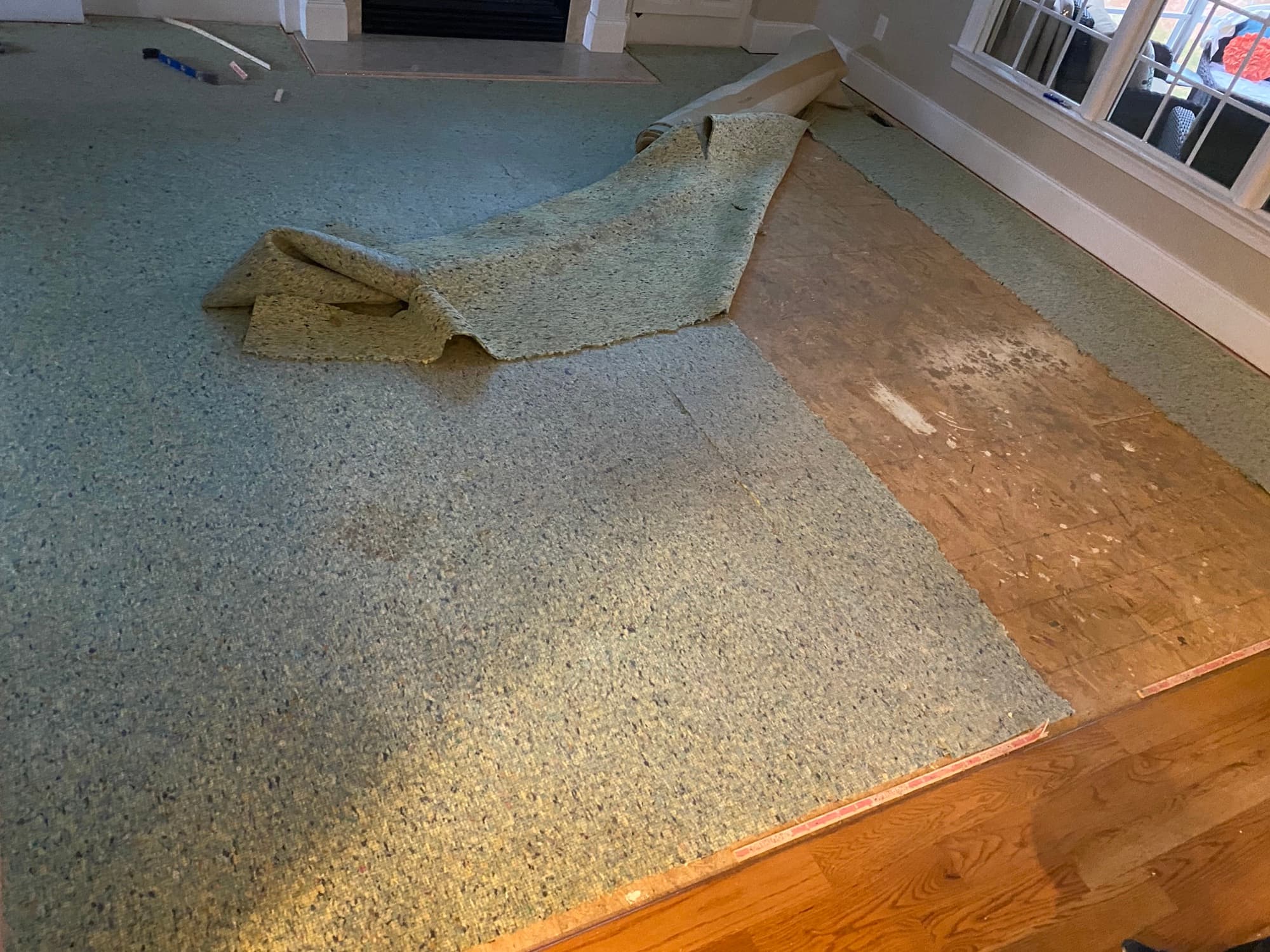
We started with the installation: carpet, pad, and tack strips removed, subfloor sanded flat with the Bona PowerDrive, and Bona R540 moisture barrier rolled on before a single board went down. The 4" red oak was glued and nailed throughout. Glue and nail together on a 4" board eliminates the movement that causes edge-lift and squeaks over time. A couple of months later we returned to sand and finish the entire house as one continuous surface -- new installation and existing floors together. Water popping before color was done throughout to open the grain evenly across both old and new wood. DuraSeal Aged Barrel went down first, a warm brown with enough depth to serve as the base for the two-toned technique. After the stain was fully dry, Rubio Monocoat 5% White Oil was applied over the top. The white oil penetrates into the open grain of the red oak and deposits white pigment into the softer channels. Where you would normally see the grain go darker, it goes white instead. The contrast between the warm Aged Barrel hard grain and the white soft grain is the ceruse. No wax, no paint, no tricks -- just two products working with the natural structure of the wood.
Before
During
After
Products Used on This Project
Project Investment
What Does a Project Like This Cost?
No two floors price the same. Square footage, wood species, repairs, stair configuration, subfloor preparation, and finish selection all move the number, which is why we quote from an in-home assessment instead of over the phone. Our cost guide publishes our current starting rates and typical ranges for every service, and the written proposal you receive covers every line item with no surprises.
Common Questions
What is a ceruse finish on hardwood floors?
A ceruse finish creates visual contrast between the hard and soft grain of the wood by depositing a lighter pigment into the open grain channels while the surrounding harder grain reads in the base color. On this project we went further than a standard wax ceruse: the floor was stained DuraSeal Aged Barrel first to establish a warm brown base, then Rubio Monocoat 5% White Oil was applied over the dried stain. The white oil settles into the soft grain channels of the red oak, turning them pale against the darker hard grain underneath. The result is a two-toned ceruse unlike anything a single product produces.
Why use Rubio Monocoat 5% White Oil for a ceruse effect?
Rubio Monocoat Oil Plus 2C penetrates the wood and bonds to the wood fibers at a molecular level. The 5% White variant carries white pigment in that same oil. When applied over a dried stain base, the white pigment settles into the open soft-grain channels of the red oak, creating the two-toned effect. Because it penetrates rather than coating the surface, the finish is flat and smooth, not cloudy or filled. It is the cleanest way to produce a true ceruse on hardwood.
Why glue and nail a 4-inch red oak floor?
At 4 inches wide, red oak moves enough with seasonal humidity change that nailing alone can allow edge lift and squeaking over time. Adhesive spread across the subfloor before installation acts as a secondary lock, bonding each board flat from the bottom. Glue and nail together on wide-plank installations eliminates the movement that creates squeaks and locks boards against the subfloor for the life of the floor.
What is Bona R540 moisture barrier?
Bona R540 is a roll-on moisture barrier applied to the subfloor before hardwood installation. It creates a vapor seal between the subfloor and the wood, preventing moisture vapor from migrating up through the subfloor and into the new boards. Every installation we do gets a moisture barrier. R540 bonds to the subfloor surface and dries before the wood goes down.
How do you match new installation to existing hardwood that is finished months later?
We sand both the new installation and the existing hardwood as one continuous surface when we return for the finish work. Water popping before color is done throughout to open the grain evenly across old and new wood before stain goes down. Because the same stain, sealer, and topcoat go across everything, the color and sheen read identically. Standing anywhere in the finished house, you cannot see the boundary between new and old.
Ready to Start Your Project?
Every project starts with an in-home consultation. We come to you, assess the floor, and give you a written estimate before any work begins.
Back to all projects